


A SCHOOLS2030 / GPE-KIX PROJECT
Delivering Equitable, Responsive and Empowering Initial Teacher Education through Design Thinking in Kenya, Pakistan and Tanzania
Teacher agency and professional development lie at the heart of quality, inclusive education. This action-research project considers how the Schools2030 model of Human-Centred Design (HCD) can improve equitable, quality Initial Teacher Education (ITE) in Kenya, Tanzania and Pakistan. We are focusing on three key objectives:

ITE forms the foundation of a teacher’s lifelong professional development journey. ITE is recognised as critical for student academic outcomes as well as for promoting social cohesion and social justice.
Yet it is often overly theoretical, centred on passive methods, and focused on external, context-agnostic models and pedagogies.
Achieving SDG4 – high quality, responsive, equitable and inclusive education for all – requires us to equip pre-service teachers with the skills they need throughout their careers.
Show More
Education systems around the world are increasingly shifting from knowledge based to competency-based curricula that focus on “21st century skill” acquisition and active, student-centred learning – requiring new ways of thinking about teachers’ pedagogical practices.
HCD is a method for supporting responsive, equitable and inclusive teacher and learning. HCD fosters holistic skill development – supporting teachers and students to gain the knowledge, skills, attitudes and values they need to excel and thrive.
ITE forms the foundation of a teacher’s lifelong professional development journey. ITE is recognised as critical for student academic outcomes as well as for promoting social cohesion and social justice.
Show More
Yet it is often overly theoretical, centred on passive methods, and focused on external, context-agnostic models and pedagogies.
Achieving SDG4 – high quality, responsive, equitable and inclusive education for all – requires us to equip pre-service teachers with the skills they need throughout their careers.
Education systems around the world are increasingly shifting from knowledge based to competency-based curricula that focus on “21st century skill” acquisition and active, student-centred learning – requiring new ways of thinking about teachers’ pedagogical practices.
HCD is a method for supporting responsive, equitable and inclusive teacher and learning. HCD fosters holistic skill development – supporting teachers and students to gain the knowledge, skills, attitudes and values they need to excel and thrive.
Project Consortium
Aga Khan Foundation (AKF) provides overall project management and leadership. AKF leads on Human-Centred Design aspects of the project and leverages its wider teams and networks in each country and globally to support project objectives.
Aga Khan University Institute for Education Development (AKU-IED) are the lead researchers in each country. AKU-IED coordinate the action research in partnership with ITEs and provide pedagogical support to teacher-educators.
Cambridge University’s Research for Equitable Access and Learning (REAL) Centre provides research support and coordination across the three countries. REAL Centre leads on policy and governance aspects of the project and supports gender equality and social inclusion aspects of the research.
We are also working in partnership with three ITE Institutions in each country: Thogoto Teachers College, Kenya; Marangu Teachers College, Tanzania; and AKU-IED in Pakistan. In each institution, we are working directly with college leadership, teachers and students to adapt and integrate the Schools2030 model into ITE curriculum and pedagogy.
The project is steered by advisory committees in each country, including representatives of Ministries of Education and sub-agencies as well as other key stakeholders, who together ensure the project aligns and responds to policy priorities.
As part of the project, we will be releasing our research findings from each country. We will also release a variety of outputs – including blogs, reports and policy briefs – syntehesising this research and creating recommendations for governments to consider for their ITE institutions.
Watch this space for more on our project findings into 2026!
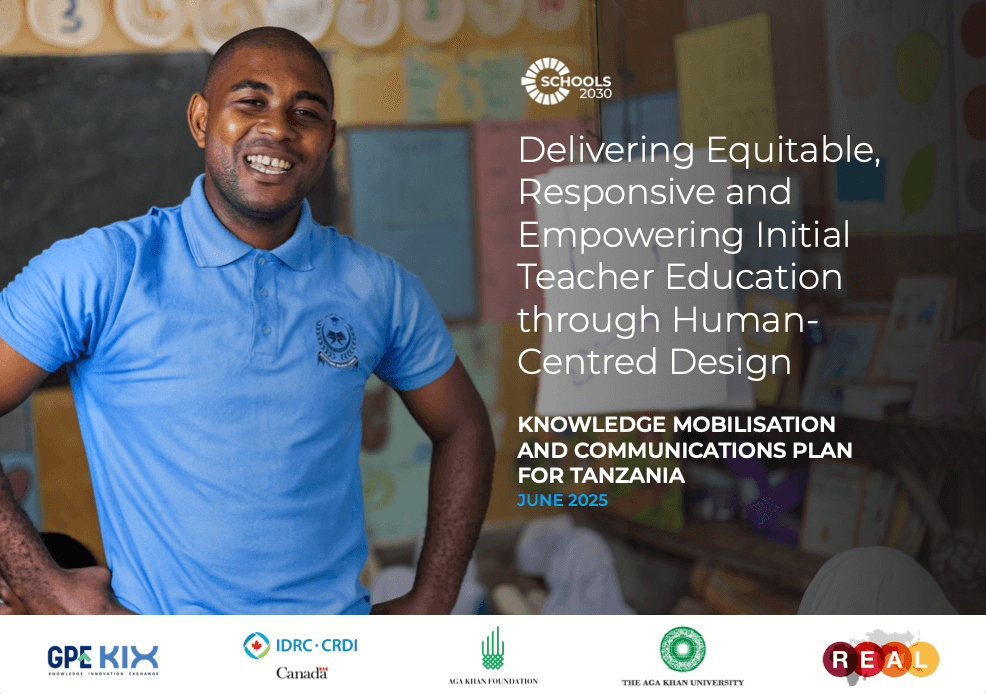
Knowledge Mobilisation Strategy
Tanzania
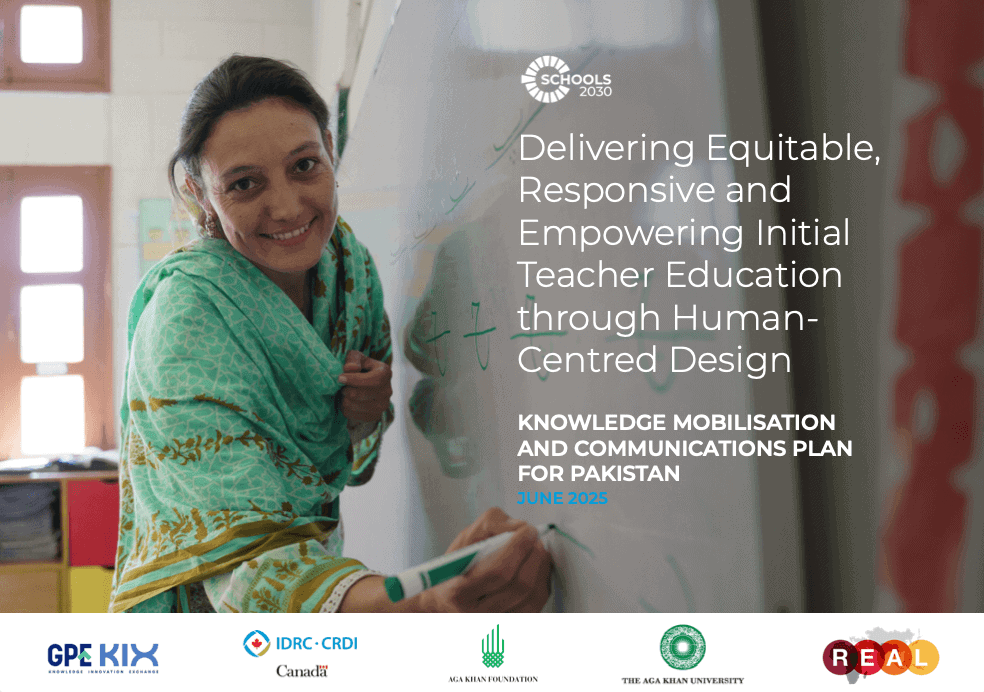
Knowledge Mobilisation Strategy
Pakistan
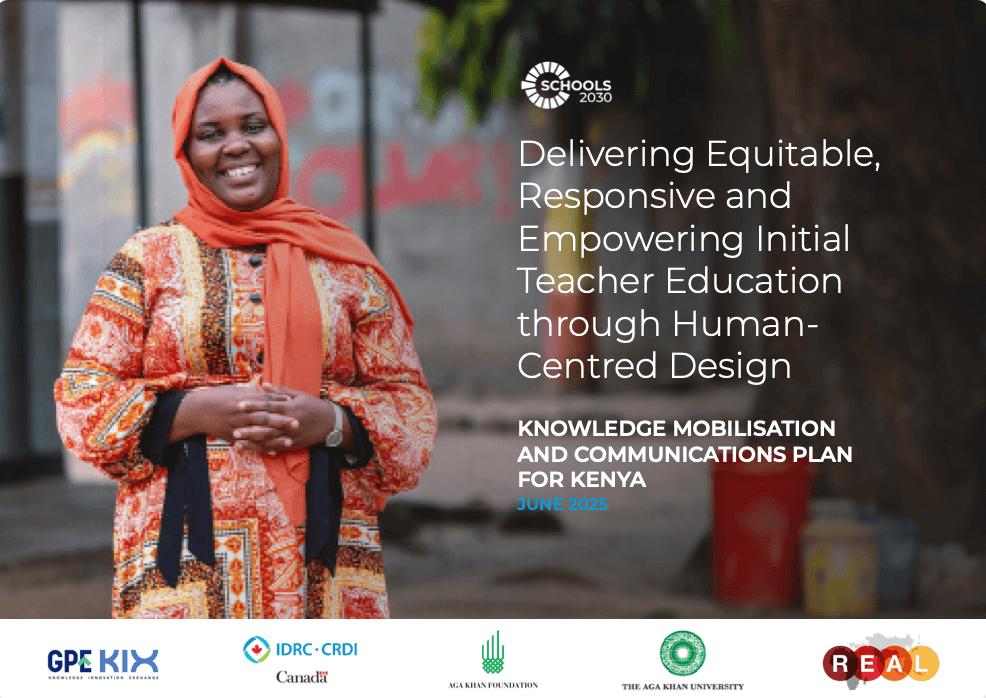
Knowledge Mobilisation Strategy
Kenya
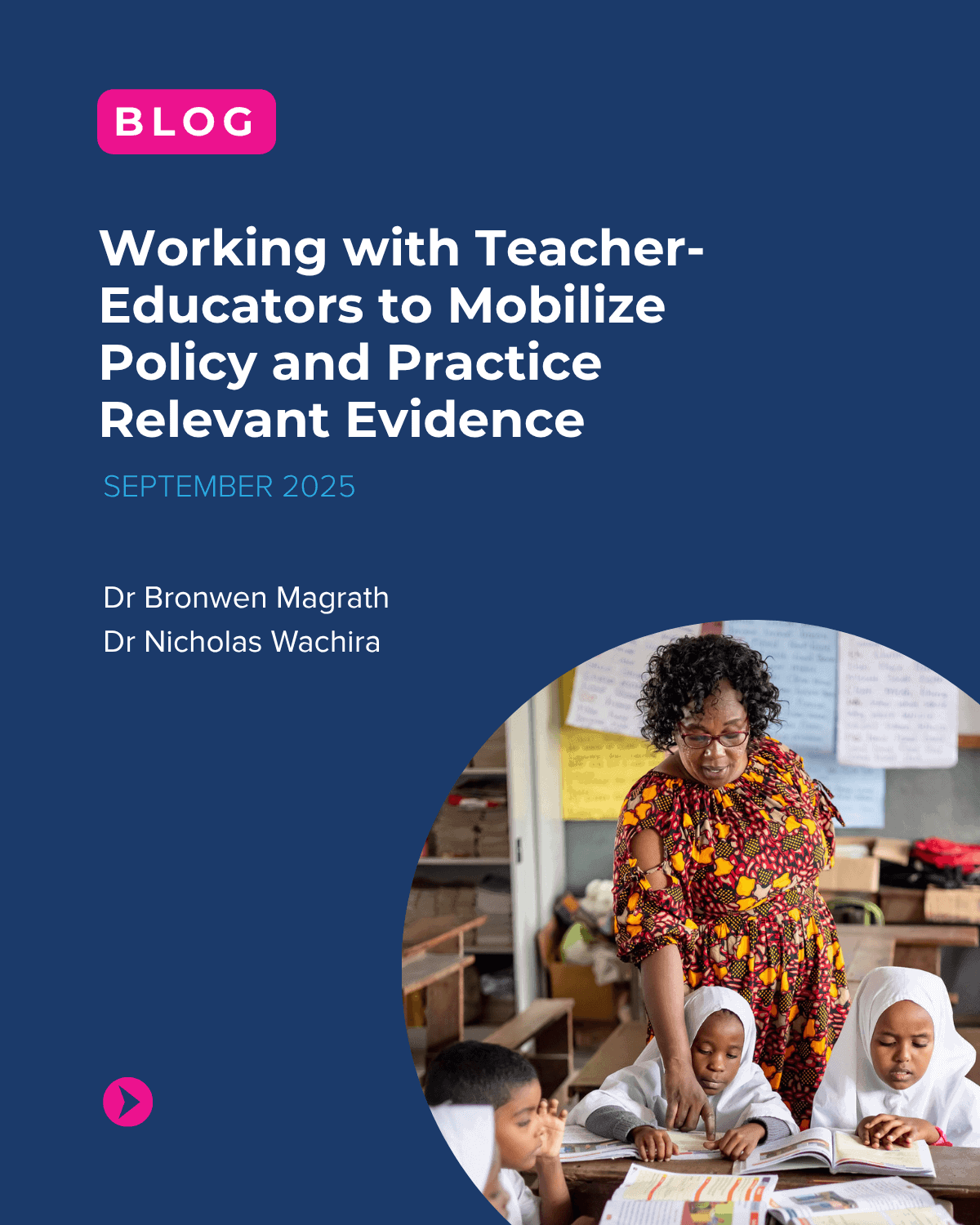

The Global Partnership for Education Knowledge and Innovation Exchange (GPE-KIX) is a joint endeavour between the International Development Research Centre and the Global Partnership for Education to connect expertise, innovation and knowledge to support low- and middle-income countries to build stronger education systems and accelerate progress toward SDG4.
KIX brings together 88 low- and middle-income countries that are partners of the Global Partnership for Education to identify common policy challenges and facilitate knowledge sharing and evidence building. KIX currently funds 89 projects across these 88 countries to build evidence, mobilise knowledge, and strengthen the capacity of partner countries to adapt and scale innovative approaches to address key education priorities. KIX also facilitates knowledge sharing and evidence building among these countries.
The Global Partnership for Education Knowledge and Innovation Exchange (GPE-KIX) is a joint endeavour between the International Development Research Centre and the Global Partnership for Education to connect expertise, innovation and knowledge to support low- and middle-income countries to build stronger education systems and accelerate progress toward SDG4.
KIX brings together 88 low- and middle-income countries that are
partners of the Global Partnership for Education to identify common policy challenges and facilitate knowledge sharing and evidence building. KIX currently funds 89 projects across these 88 countries to build evidence, mobilise knowledge, and strengthen the capacity of partner countries to adapt and scale innovative approaches to address key education priorities. KIX also facilitates knowledge sharing and evidence building among these countries.
