Teacher agency isn’t a slogan: it’s the mechanism through which Schools2030 aims catalyse quality teaching practices to improve learning the world over. From the tools that let teachers see a problem clearly, through the design method that lets them build their own response, the individual classrooms where that response actually plays out, and the systems now being built to ensure this outlasts the programme itself.
This photo essay traces how the tools and mindsets that support teacher agency have been embedded across our programme, and where we want to take this work next.
From compliance to judgement: Co-developing assessment tools with teachers and for teachers
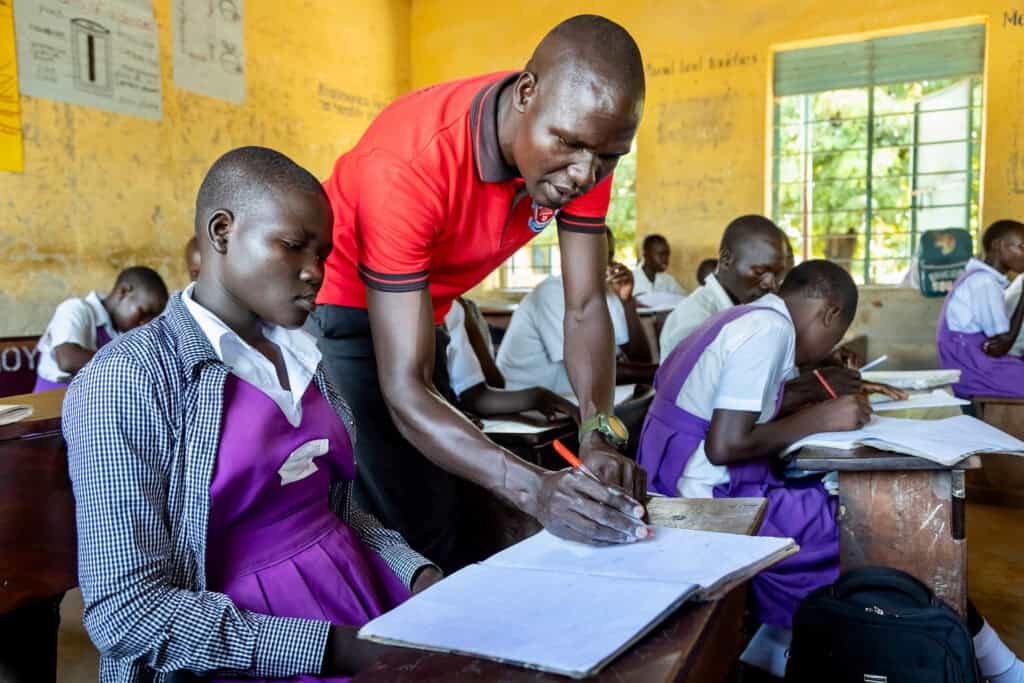
Schools2030’s assessment tools were never simply handed down as a finished product. Back in 2020-2021, National Advisory Committees for each of our countries – which included teacher representatives – chose five priority learning domains per age group (pre-primary, primary and secondary), and the resulting tools that were built over five years were co-developed alongside teachers themselves.
The tools also exist to support the design process that follows: assessment data reveals the learning and teaching gaps that need to be addressed, supports teachers to design and test a new education innovation, and to gather evidence of impact.
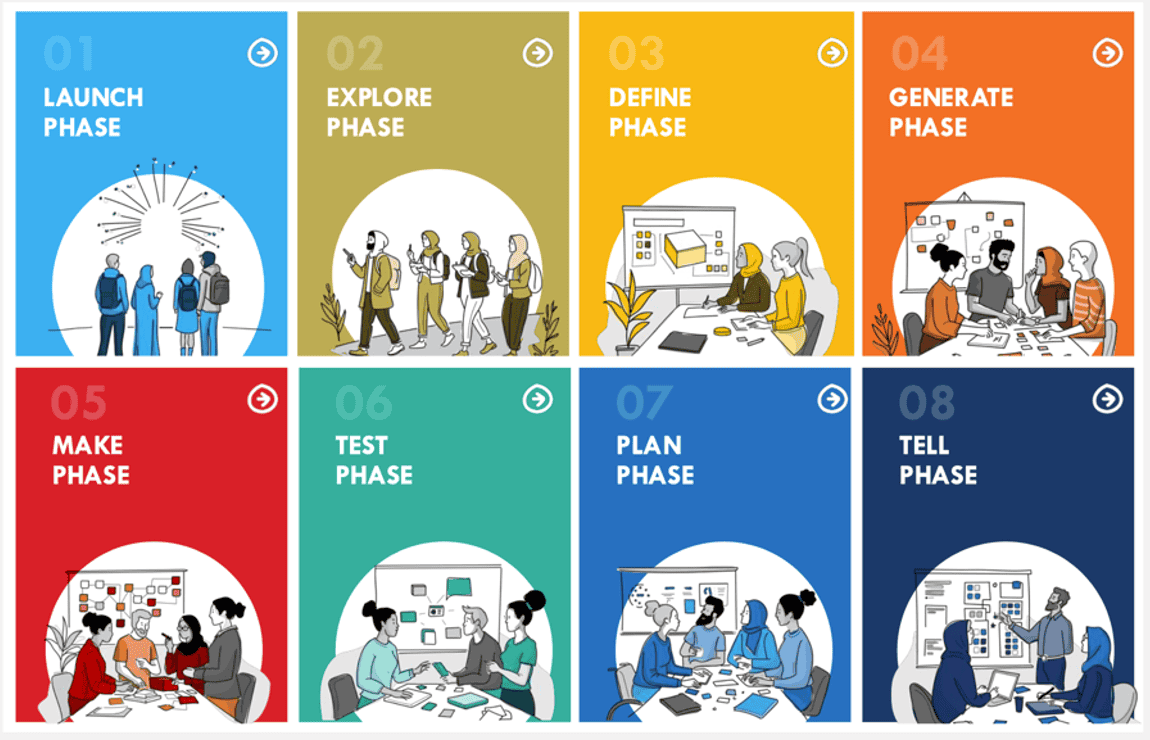
Not handing down lesson plans: Piloting Human-Centred Design with teachers
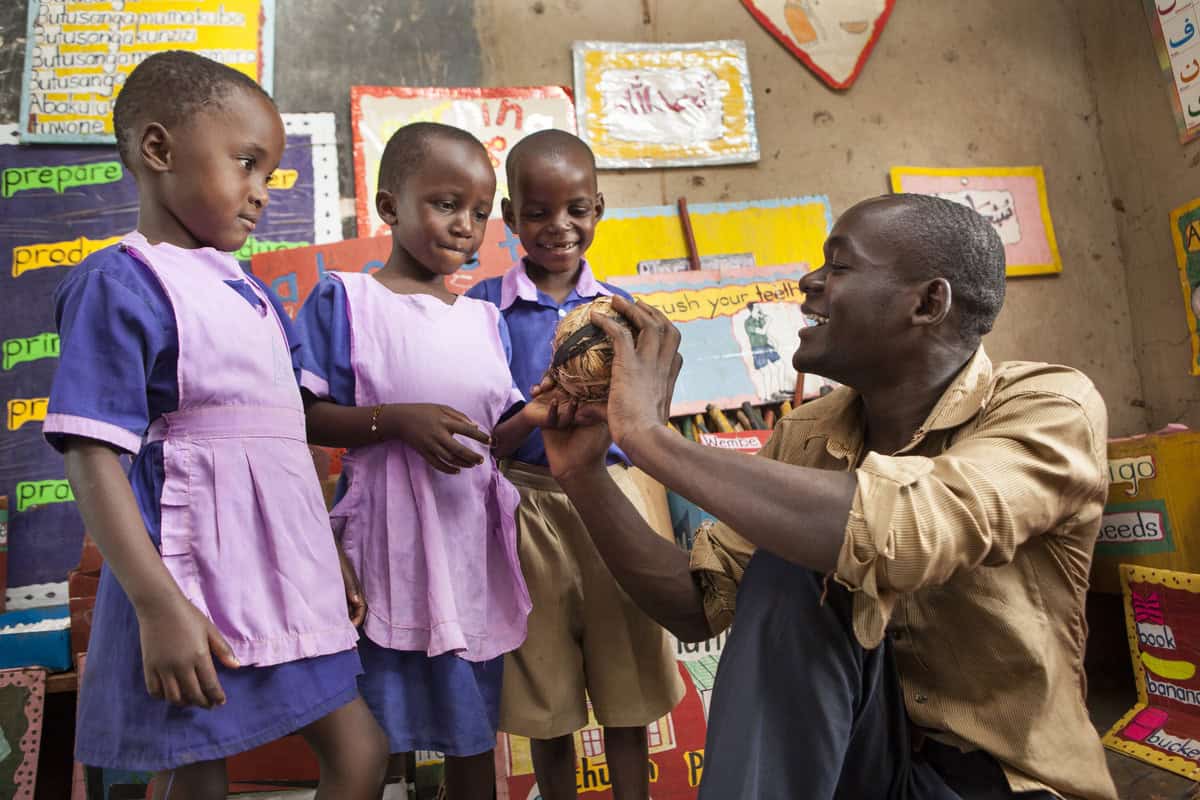
Over 20,000 teachers and school leaders across all ten countries have participated in the Schools2030 Human-Centred Design (HCD) process since the programme began. Their engagement and feedback shaped the toolkit itself, which has gone through several iterations and been translated and contextualised for each country context. HCD training didn’t hand teachers a script to deliver – it gave them a method to design their lesson from.
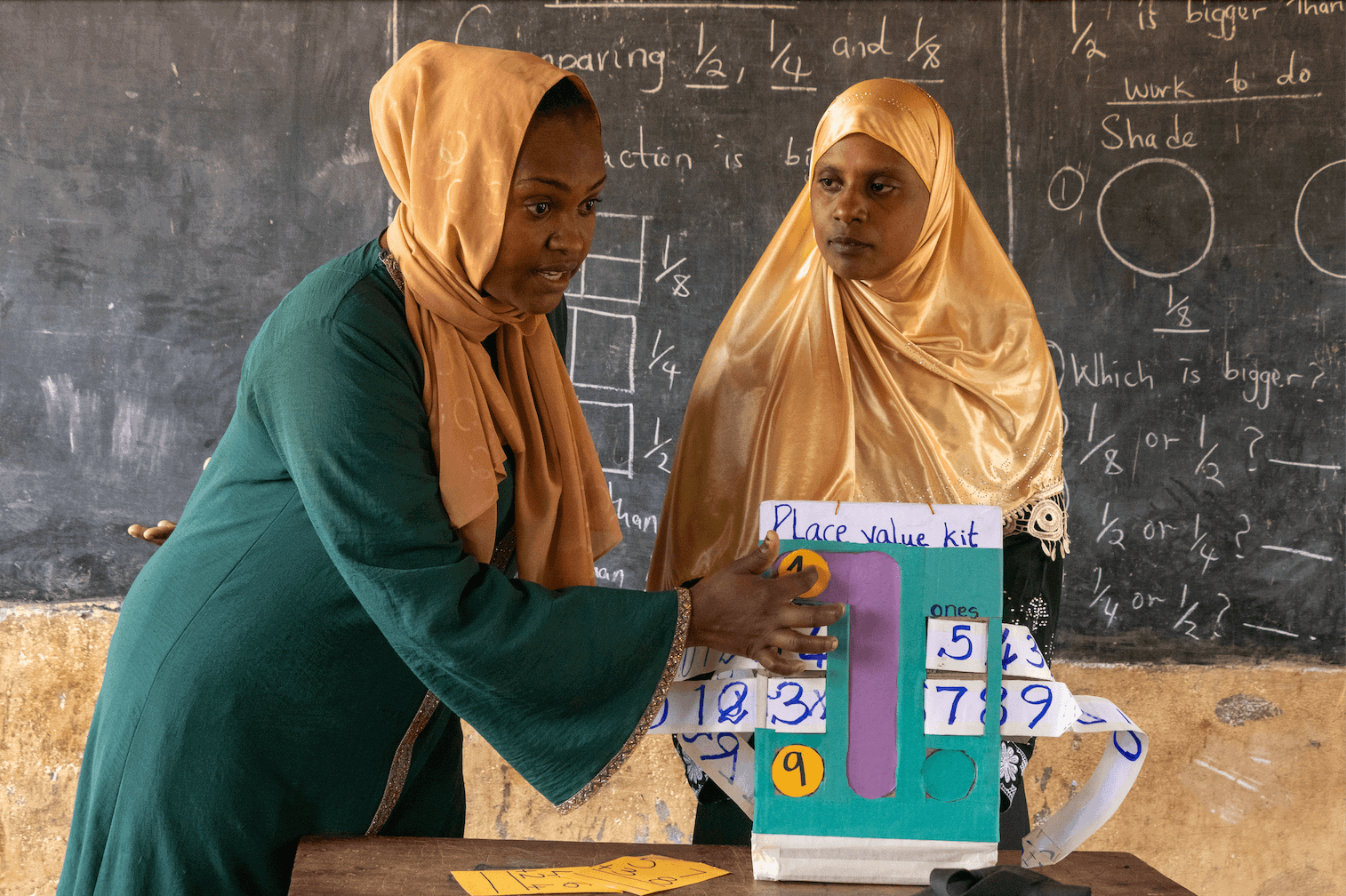
Making maths something you can hold: Teacher Innovation in Kenya
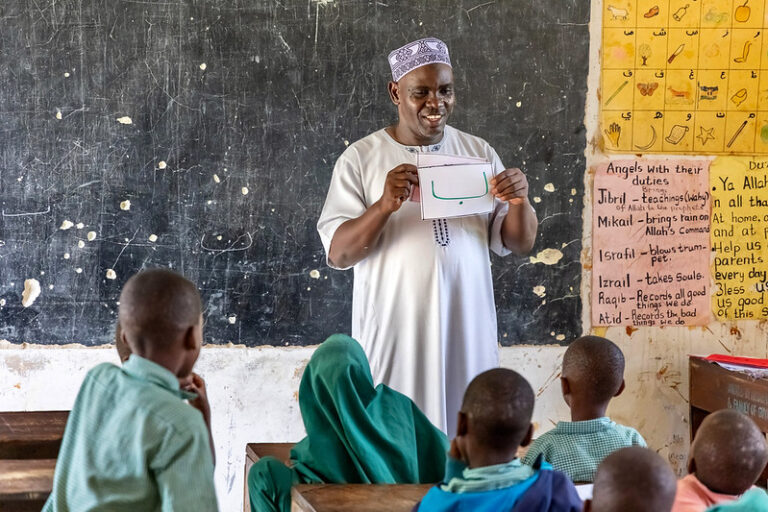
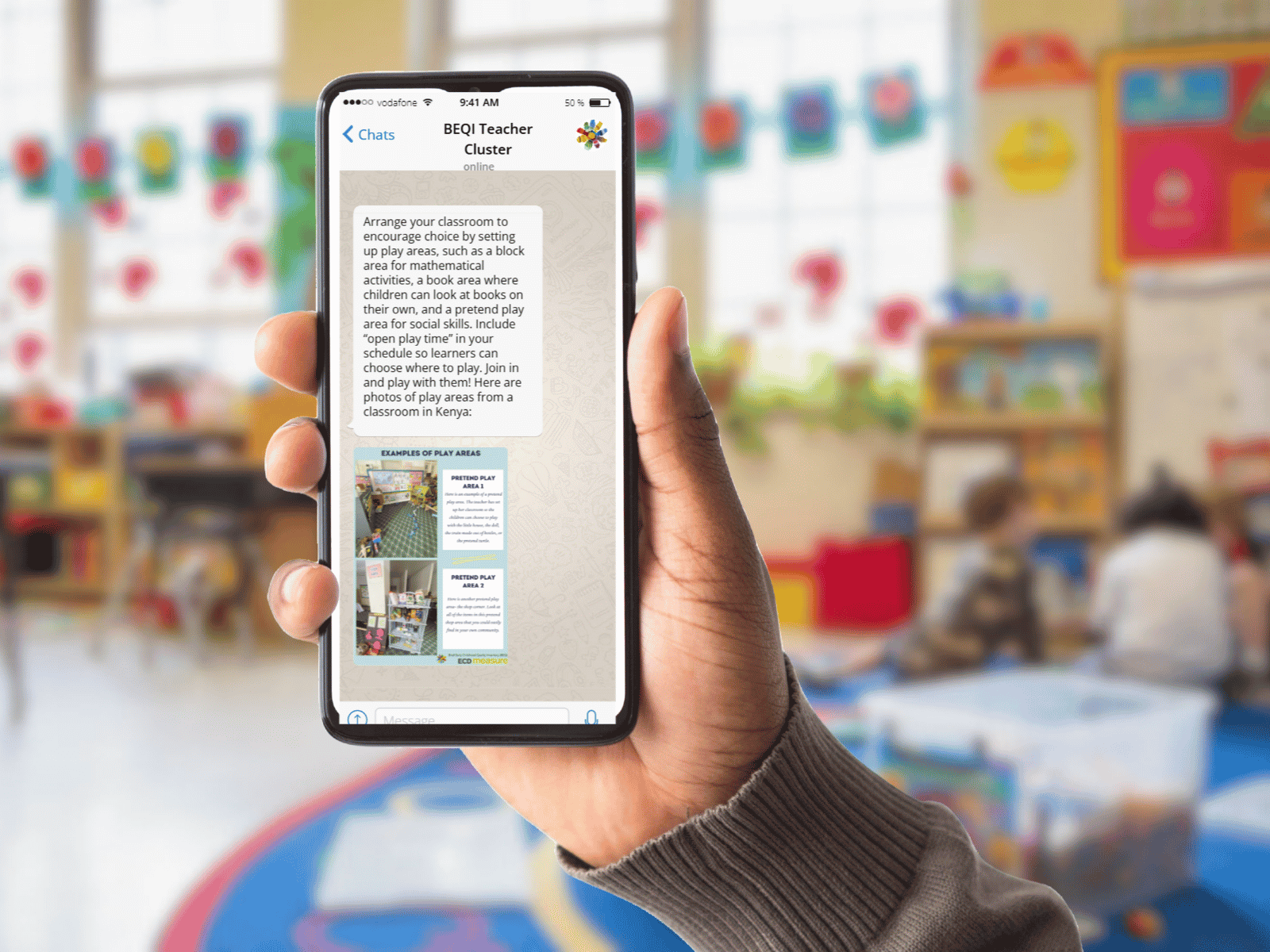
In the years that followed, teachers used Human Centred Design to develop and test new classroom innovations and practices that responded to the needs in their classrooms. Amina Mohamed and Aisha Miswaleh, working across two schools in Mombasa’s informal settlements, kept hearing the same line from students: “Maths is too hard, I can’t do this.” They built the Place Value Kit themselves from physical cards and models, making place value, borrowing and carrying tangible instead of abstract.
Across four classrooms and three primary schools, maths performance rose from 65% to 70%, and play-based activity in lessons nearly doubled.
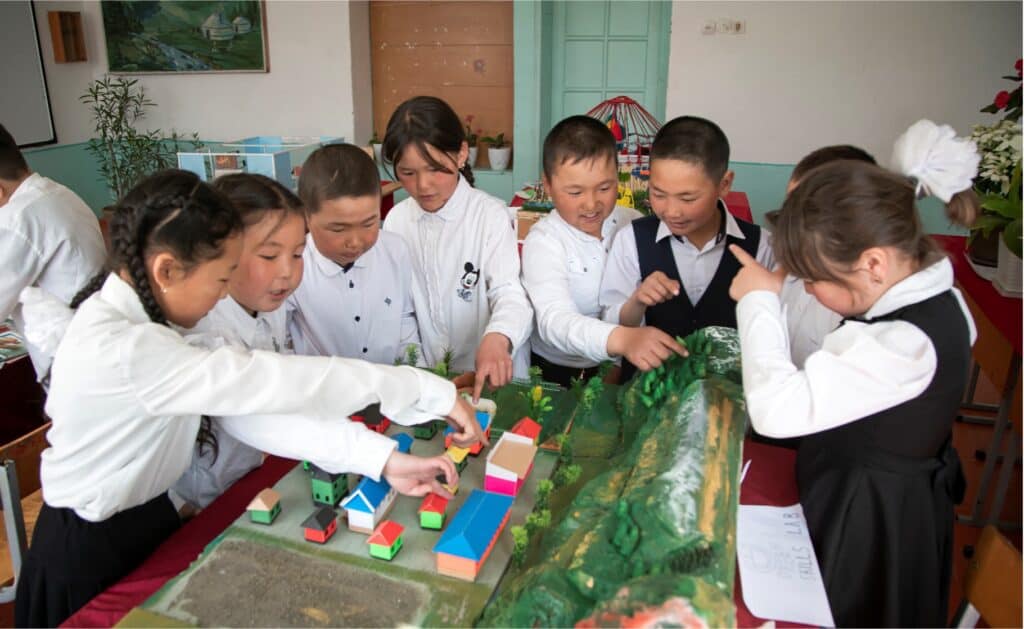
Building critical thinking: Teacher Innovation in Kyrgyzstan
At A. Zhutakeev General Secondary School, a remote mountain school in Jan-Bulak village, five teachers – Mairam Musaeva, Astra Asankozhoeva, Toktonbayeva Kunduz, Zhusup Kyzy Meerim and Aalieva Meerim – noticed their 10-year-olds could decode words but read passively: no main ideas identified, no questions asked, no real comprehension, which was dragging down science and maths too.
They built SMART Club: students read real scientific texts, highlight key points as they go, then turn what they’ve read into diagrams, graphs and summaries, with teachers acting as goal-setting facilitators rather than lecturers. Since the 2023–24 school year, students have shown real gains in comprehension and vocabulary and started reading outside class, unprompted.
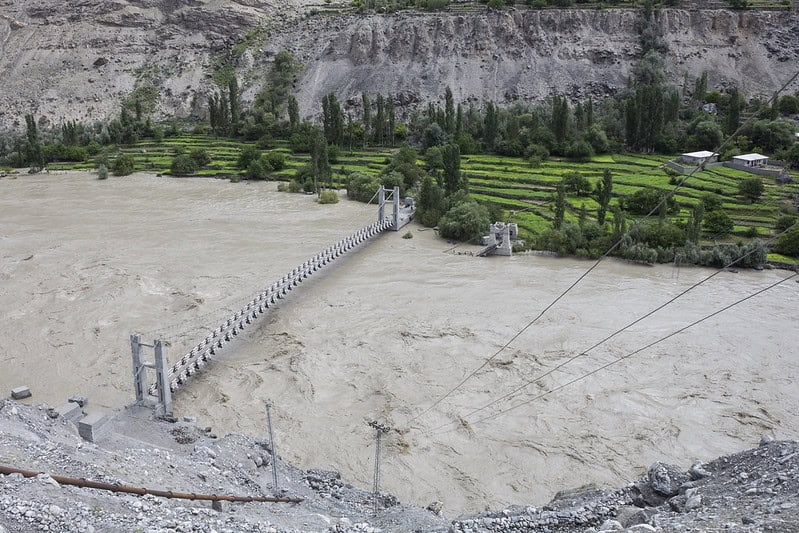
Writing through the floods: Teacher Innovation in Pakistan
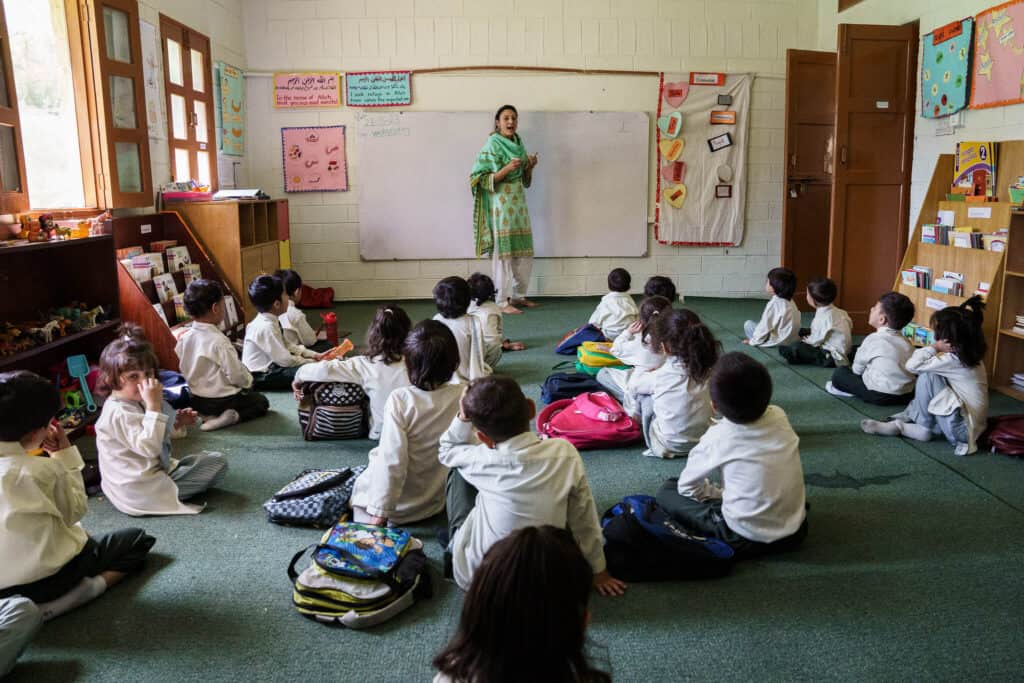
At Government Boys High School Ishkoman in Gilgit-Baltistan, only 2 of 30 Grade 9–10 students met the expected standard for creative writing. Then floods hit the community. Teacher Iqbal Dad redirected his writing class around it: students visited flood-affected sites, interviewed neighbours, and wrote from what they saw, alongside climate clubs, slogans and exhibitions he built into the same lessons.
Students scoring above the creative-writing benchmark rose from under 10% to over 60%. Iqbal Dad didn’t wait for new curriculum guidance when the crisis hit: he redesigned the lesson himself, in real time, around what his students were actually living through.
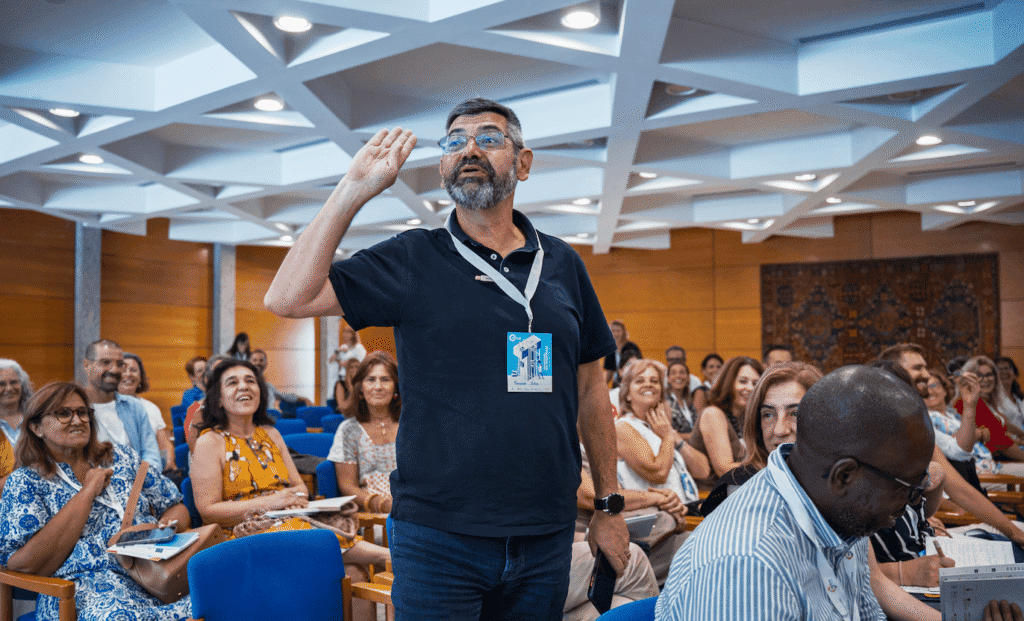
Making the case for their own work: Showcasing across countries and the world
When innovations are showing promise, they can’t just stay in one classroom. Teachers across the programme have been supported to take their ideas to the stage from local, national and through to global events, for example Portugal’s national showcase event from 2025, ‘Teachers Who Transform’, which put innovation, inclusion and resilience stories from 15 school clusters and 92 public schools across Lisbon, Porto, Leiria and Santarém in front of the wider system.
Schools2030 also hosted four Global Forums: Dar es Salaam (2022), Porto (2023), Bishkek (2024), Nairobi (2025). The 2025 edition included the Walimu Soko, a ‘Global Teacher Marketplace’ where teachers presented their own innovations, resources and culture directly to ministers, researchers and international partners and drew commitments from Kenya’s Director-General for Education and the President.
Across the programme, 3,102 teachers – one in seven of all those who’ve taken part – have now presented their own innovations and evidence at one of these events.
No assumptions here: Independent action research exploring what we think we know agency
Schools2030’s 2023–2025 research cohort put teacher agency itself directly under study, rather than treating it as a given. Five projects across six countries, run by different university and research partners, each tested the concept against a different kind of pressure: a tightly controlled teaching profession in Tanzania, a status eroded by decades of political transition in Kyrgyzstan, and systemic capability constraints in India. In Uganda, researchers didn’t start from an academic definition at all – they built one from what 30 schools’ worth of teachers said agency meant to them, then tested it against wellbeing and student outcomes.
The emerging pattern across all of them: agency isn’t something a teacher simply has or lacks. It’s shaped by the system around them, and mapping what enables or blocks it, country by country, is itself part of the evidence we need to make our wider case.
Agency before day one: GPE-KIX project exploring how to embed agency in teacher training
Every innovation we’ve showcased over the last few years came from a teacher already in a classroom. The GPE-KIX project has been asking: can the same HCD approach be built into the training a teacher receives before they ever lead a class?
Run with Aga Khan University’s Institute for Educational Development (AKU-IED) and Cambridge University’s REAL Centre, the project has been working directly with college leadership, teacher-educators and student teachers at three institutions: Thogoto Teachers College (Kenya), Marangu Teachers College (Tanzania), and AKU-IED (Pakistan).
Findings and policy recommendations for each country are still being released through 2026-27.
Agency at scale: Embedding HCD into teacher professional development
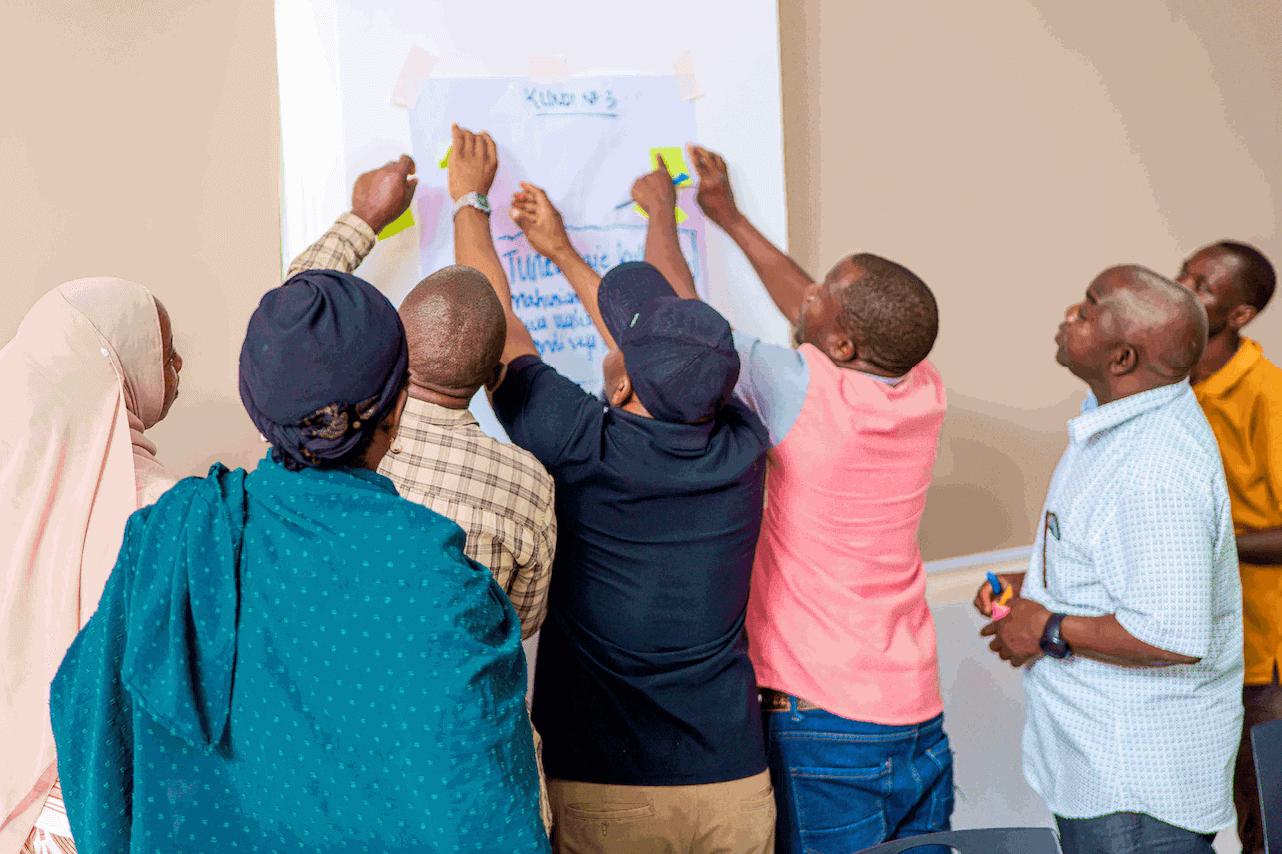
After six years of co-design and implementation at school-level, our teams are now working to leverage Schools2030 tools, approaches and methods for system-level change. Across all programme countries, we are embedding Schools2030’s model into the institutions that train and support teachers, in partnership with local and national governments, universities and teacher colleges.
In Portugal, that means a nationally accredited teacher-training course aiming to reach 600+ teachers. In Kenya, it’s policy dialogue with the Teachers Service Commission and the Curriculum Development Institute to fold Schools2030 into pre- and in-service training. In Brazil, it’s a formal Ministry of Education agreement, riding on the country’s move to extend the school day. In the Kyrgyz Republic, it’s three moves at once: a credit-based HCD training syllabus for national endorsement, HCD folded into in-service teacher institutes for CPD accreditation, and Schools2030’s assessment tools formally added to the Ministry’s national assessment repository.
This is what actually amplifies agency, rather than just proving it works: as long as HCD lives only inside 1,000 Schools2030 schools, teacher agency is something a lucky subset of teachers get access to. The moment it sits inside a national teacher-training curriculum, a CPD accreditation system, or a country’s own assessment repository, every teacher who passes through that system inherits it. This is how AKF and Schools2030 are placing teacher agency at the heart of education transformation.