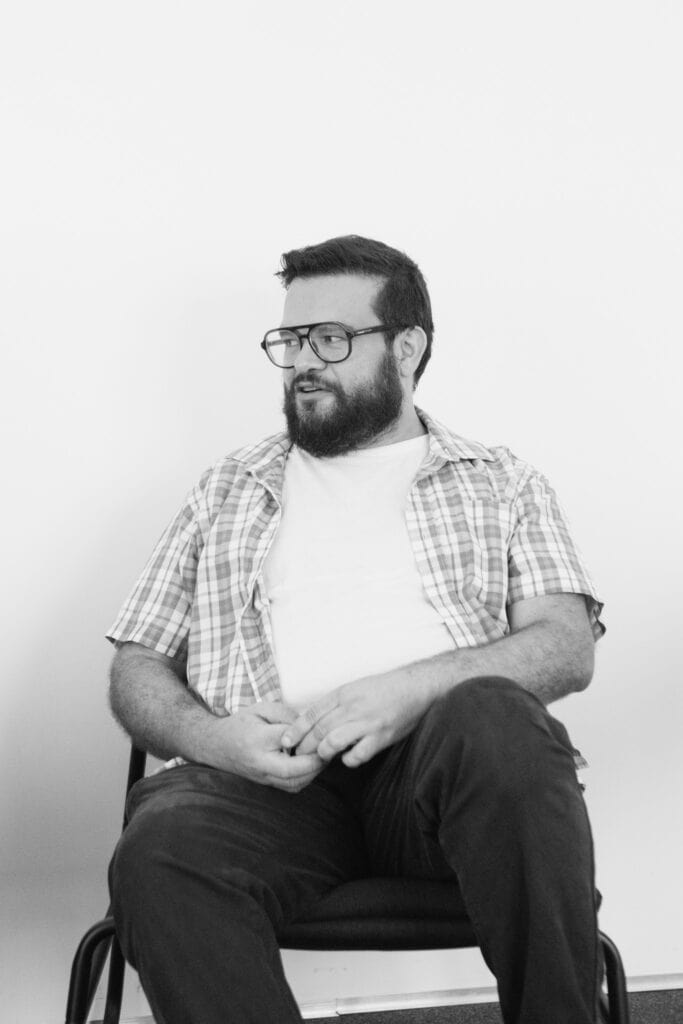
António Luciano Morais teaches History to students aged twelve to fifteen at a public school group in Castelo Branco, a small city in the interior of Portugal, close to the Spanish border.
In early 2026, Luciano applied to take part in a Schools2030 Training Course – Avaliar, Inovar, Mostrar (Assess, Innovate, Showcase) – developed by Schools2030 Portugal as part of their work to open up the programme’s approaches to teachers and schools outside of the original network. The training course takes teachers through 15 hours of Human-Centred Design, with a combination of in-person and online modules. Teachers have the chance to develop their own innovative practices in response to challenges they are having in their own classrooms. Luciano’s involvement with the course led him to create a podcast initiative for his students to help them teach critical thinking. But his journey – and what it taught him about problem-solving, ownership and agency – became so much more.
We interviewed Luciano as part of the fourth Schools2030 Virtual Forum. This longer article digs deeper into his amazing story.
Can you tell us a little about your background. How did you get into teaching?
I came to school teaching late. I have a PhD in History, and I spent eighteen years in the cultural sector, most of them directing cultural projects and museum education programmes, in Portugal and in Brazil. I still teach museology at postgraduate level. So I arrive in the classroom with a museum educator’s habit: I am always asking who produced this object, this document, this story, and who was left out of it. That habit is really where my project comes from.
Your involvement with Schools2030 came about when you took part in the course developed by our team in Portugal. Why did you decide to take the course?
Two reasons, one professional, one personal. The professional one: I am still relatively new to school teaching, and I wanted a method, not more content. I had a lot of experience designing projects for museums, but a school has a different rhythm and different constraints. The personal one: I kept noticing the same thing in every class. My students accept almost any source without questioning it, the textbook, a video on TikTok, a story told at home. And I had no systematic way of working on that. When I saw that this course was about identifying a real problem in my own classroom and designing a response to it, with tools instead of theory, that was exactly what I was looking for.
Before the course, how did you usually solve problems in your classroom?
Honestly? Intuitively, and alone. I would notice a difficulty, think about it at home, invent an activity, try it the following week, and judge it by how the lesson felt. If it went badly, I changed something and tried again. There were three problems with that. First, I was reacting to symptoms, ‘they are not participating’, instead of looking for the cause. Second, I never asked the students themselves what was going on; I diagnosed them from the outside. And third, I worked in isolation. My colleagues were people I informed at the end, not people I designed with.
I used to see myself as the person who validates the correct answer. Now I see myself as someone who designs the conditions for students to reach an answer and defend it.
What was different about how the course asked you to think?
Three things, mainly.
First, it asked me to slow down at the beginning, to spend real time defining the problem before jumping to a solution. As History teachers we are trained to look for causes, but I had never applied that discipline to my own practice. Second, it asked me to listen before designing. I interviewed students, families and colleagues, including a parent who is barely involved with the school, and a student who never speaks in class. Those were the most useful conversations. Third, it asked me to postpone judgement. Generate many ideas, including bad ones, before choosing any. My instinct is to filter early. The method simply did not allow it.
Was there a moment in the course when something changed for you? What happened?
Yes, and I can name it precisely: the Problem Tree. We were asked to organise our observations on three levels, consequences at the top, the central problem in the trunk, causes at the roots. I had written down all my frustrations: they do not participate, they say History is over and done with, they cannot tell fact from opinion. And when I organised them, I realised that my central problem was not ‘my students do not like History’. That was a consequence. The real problem was that questioning a source was not a habit, not in my classroom, and not in their lives. That reframing changed everything that came after it. There is a sentence from the course that stayed with me: a well-defined problem is a problem half-solved. There was a second moment, in the ideation phase. I produced sixteen ideas. A podcast is not an obvious idea for a History teacher, I would have discarded it in ten seconds if I had been allowed to judge early. It turned out to be the strongest one.
What challenge or problem did you decide to work on for your students?
My question was this: how might we turn the analysis of historical sources into a habit of critical questioning, one that students also apply to the news and to social media? Behind that question there is a very simple observation. A student who does not ask who wrote a medieval chronicle, and why, is the same student who does not ask who made the video they have just shared. In History we already have the tools for this. Source criticism is our oldest method. We just keep it locked inside the subject, as if it were a school exercise. My challenge was to unlock it.
Tell us about the innovation you have created. How does it work?
It is called Isto Aconteceu Mesmo?, in English, ‘Did That Really Happen?’ It is a podcast on history and media literacy, made by the students themselves. It works like this. Students work in groups of three. Each group takes one historical source and one contemporary news item or social media post, and puts them side by side. They analyse both with the
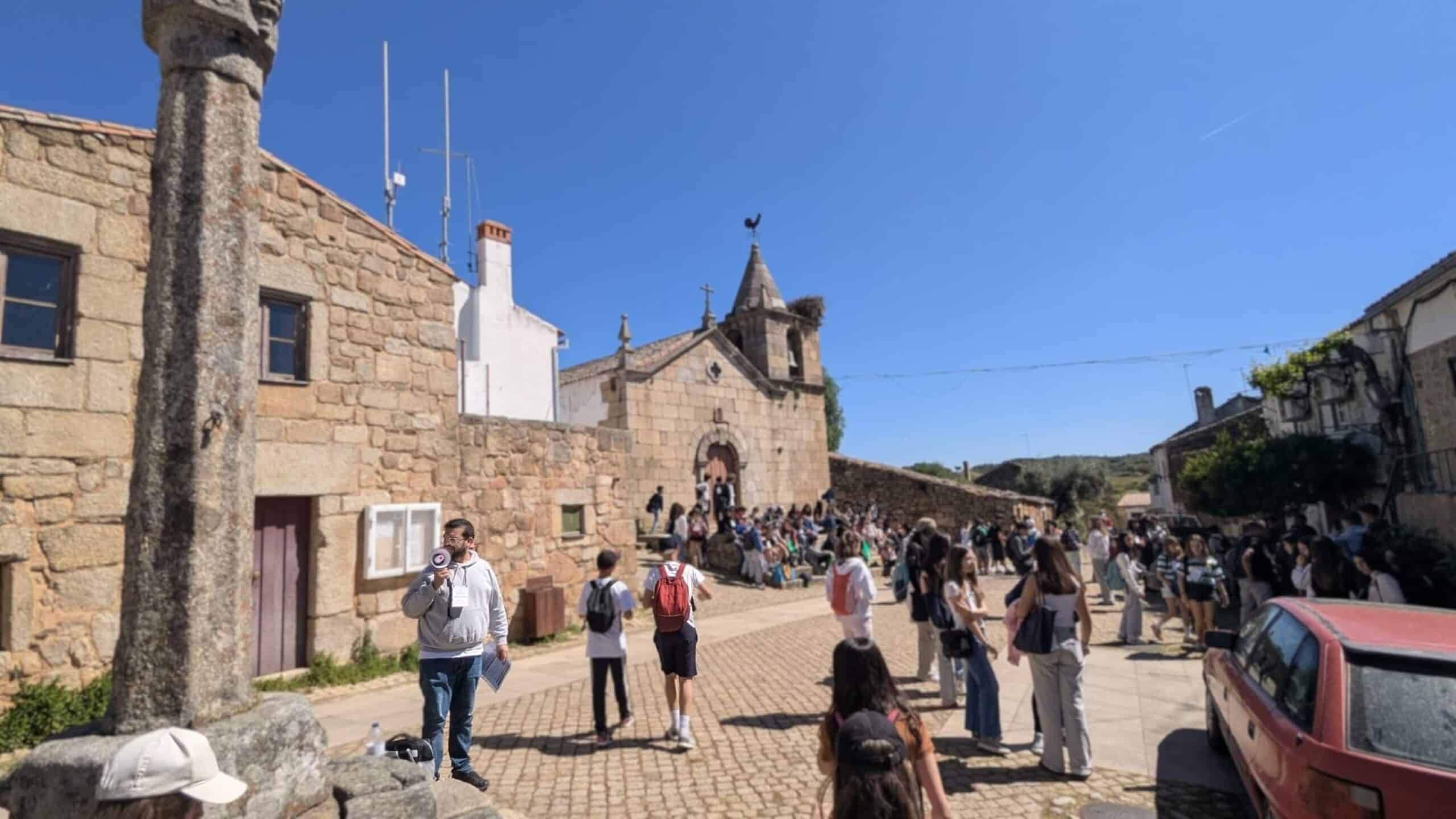
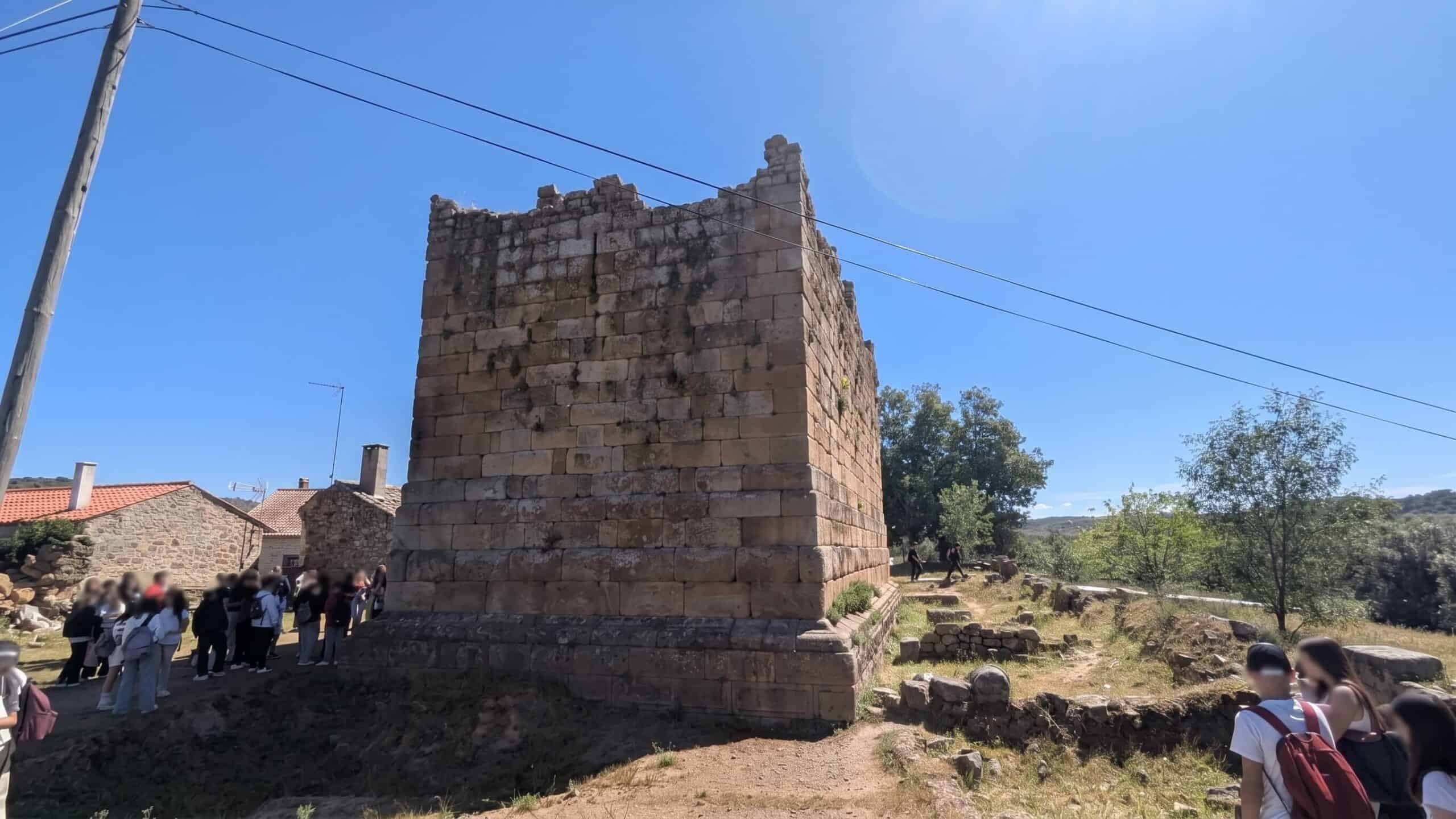
same grid, only three questions: Who produced this? What kind of language does it use? Does any other source say something different? Then they write a script of five to eight minutes and record it in the school library, with our librarian, who is my main partner in this. The first season is about the Arab and Jewish presence in the Iberian Peninsula, and that choice is deliberate, because that history is right outside the school. Belmonte, about an hour away, has a Jewish community that survived in secret for almost five hundred years. Idanha-a-Velha has Roman, Visigothic and Islamic heritage. Most of my students had no idea. So the podcast does two things at once. It teaches source criticism, and it tells my students that Portugal was plural long before it was Portugal. The episodes are shared with the school community and with families, and the year ends with a local Showcase.
Have you been able to test the idea with your students? What did you learn from their reactions?
Yes. I tested the prototype with one class, my seventh graders, twenty-two students, twelve years old, working with our school librarian. Four things came out of it, and all four changed the design. First, the local connection was by far the strongest motivator. When they realised this history happened in villages they drive past, the room changed. Second, twelve-year-olds could not jump from a medieval source to a present-day news story on their own. They needed one or two worked examples first. That is now built into the sequence. Third, my grid originally had five criteria. It was too heavy. They used three well and ignored the other two, so I cut it to three: authorship, language, cross-checking. Less really is more. And fourth, the least glamorous one: it does not fit into one lesson. It needs two, one to prepare, one to record. I had been optimistic. Several of them asked why nobody had told them this before. That question is the whole project, really.
Has this process changed how you see your own power as a teacher? If so, how?
Yes, though not in the way I expected. I did not gain power. I noticed that I already had it and was not using it. Two changes. The first is about authority. I used to see myself as the person who validates the correct answer. Now I see myself as someone who designs the conditions for students to reach an answer and defend it. In a podcast, the student speaks and I am not in the recording. That is uncomfortable, and that is exactly the point. The second is about the institution. I used to think innovation needed permission: a green light, a budget, a formal project. What this course showed me is that the space I actually control, my own classroom, my own planning, is already enough to start. The permission I was waiting for was mostly my own.
I used to launch a full activity and hope. Now I test a small version with one group first, expecting it to fail somewhere, and I fix that before scaling.
How do you use this way of thinking now, in other parts of your teaching?
In three ways. First, the three-question grid has escaped the podcast. I now use it with textbook pages, with statistics, with a photograph, with anything. My students have started using the word ‘authorship’ without being prompted, which for a History teacher is a small victory. Second, I no longer design a unit alone. Before planning, I ask two or three students what they think the difficulty will be. It takes ten minutes and it is more useful than an hour of my own guessing. Third, prototyping. I used to launch a full activity and hope. Now I test a small version with one group first, expecting it to fail somewhere, and I fix that before scaling. That alone has saved me a lot of wasted lessons.
What would you say to a teacher who feels they cannot change anything in their school?
I would say: you are probably right about the system, and wrong about the size of the change. I did not reform my school. I changed one thing in one class: three questions, applied to one source. That is small enough that nobody had to approve it, and specific enough that I could tell whether it worked. The second thing I would say is: do not start with a solution. Start by asking three people, one student, one colleague, one parent, what they think the problem is. Those conversations cost nothing, they need no institutional permission, and in my experience they change the project more than any funding would. And the third: find one ally. For me it was the school librarian. One colleague who says yes turns a private idea into a school project.
Anything else you would like to add?
Just one thought. I work in the interior of Portugal, in a region that is usually described by what it lacks, fewer people, fewer resources, less access. But my students are sitting in the middle of a multicultural history that most of the country has forgotten: Roman, Visigothic, Islamic, Jewish. The heritage was always there. What was missing was permission to treat it as theirs. So the podcast is not really about audio. It is about ownership, of the sources, of the story, and of the question: is this actually true?
Thank you so much, Luciano
Watch Luciano’s contribution to the fourth part of the Schools2030 Virtual Forum series