
In classrooms across the globe, curriculum is often delivered with the assumption that students learn in roughly the same way and at roughly the same pace. Lessons are designed for the “average” learner, and students who fall behind often struggle quietly while others move ahead. Whilst this “one size fits all” model is often a symptom of teachers who are time-constrained, this approach neither benefits those falling behind, nor those who are looking for additional academic challenges.
Teachers across the Schools2030 network are exploring ways to provide a more responsive teaching and learning experience that recognises student variability while also acknowledging the ever-present time and resource pressures.
Across the Schools2030 network, teachers have been experimenting with approaches that place peer learning at the centre of the classroom.
Strength within the Classroom
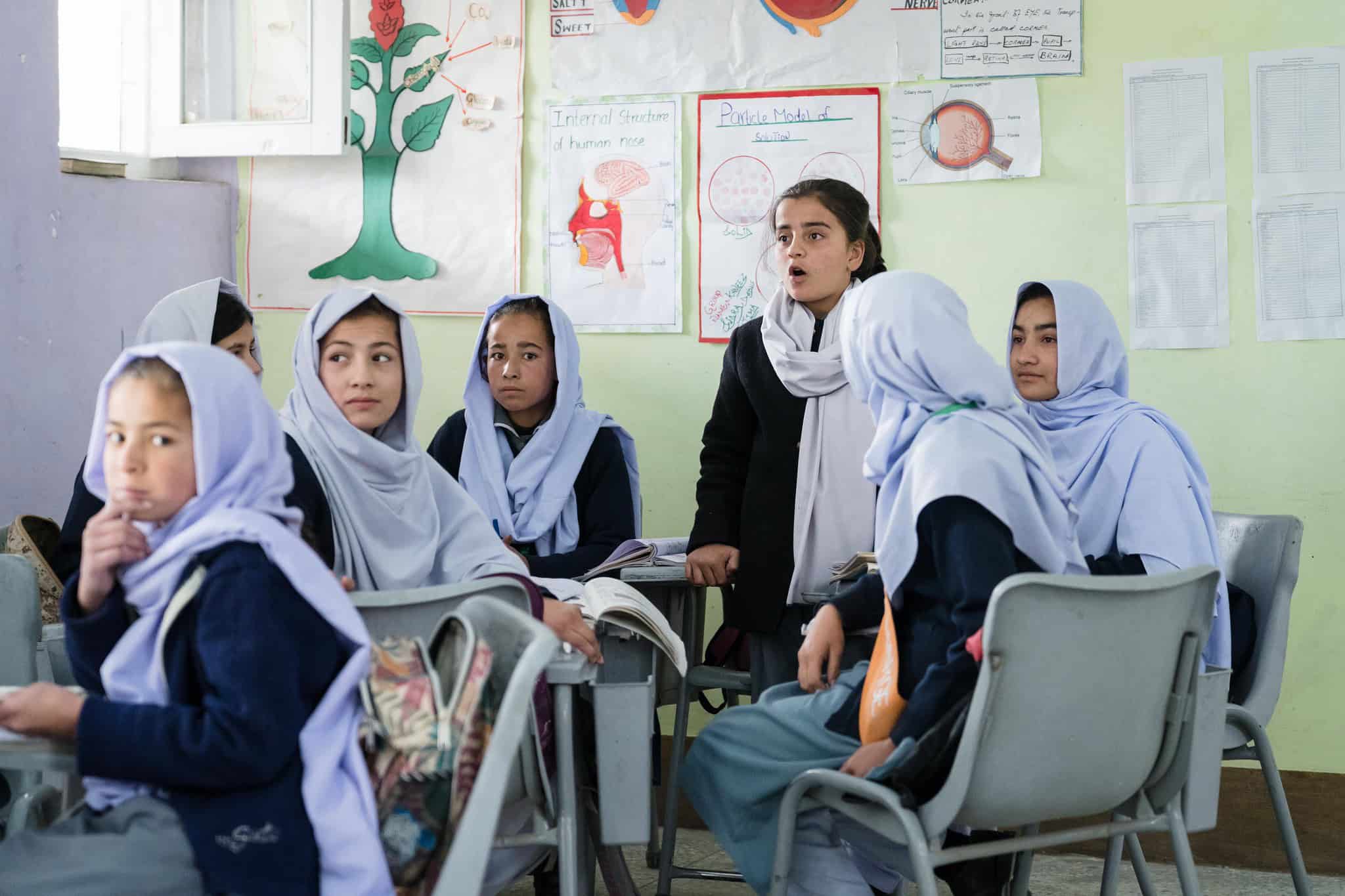
At Government Girls Middle School Barkolti in Yasin, Pakistan, teachers were concerned about their students’ literacy levels. Data from the assessments showed that many students were struggling with basic reading and writing skills. Nearly half of the school’s 124 learners scored below 40%, while only 23% achieved higher scores.
Looking more closely at his classroom, teacher Fazal Karim noticed something important: students brought different strengths, experiences and learning speeds to their lessons. Yet teaching methods often treated them as a single group. Rather than seeing these differences as a challenge, he began to see them as an opportunity.
Fazal and his design team reorganised their classrooms into what they called heterogeneous learning groups, intentionally mixing students with different abilities and backgrounds. The goal was not competition, but collaboration. Stronger readers could support peers who were still developing foundational skills. This both gave weaker students more targeted support, and stronger learners a new challenge to keep their interest and engagement. All students had opportunities to contribute and participate.
To support this approach, teachers also introduced additional reading and writing practice, library materials beyond standard textbooks, and classroom activities that encouraged discussion and shared problem-solving.
When students learn with and from one another, classrooms become more engaging and inclusive environments.
Learning with and from Each Other
As these changes took hold, teachers observed a shift in classroom dynamics. Students became more willing to participate in discussions and group activities. Learners who had previously struggled began to build confidence through the support of their peers.
At the same time, students who were performing well academically developed new skills in leadership, patience and empathy as they helped others understand difficult concepts.
These changes also contributed to measurable improvements in learning. Overall academic performance at the school rose from 77% in the first term to 88% by the final term, with clear progress in reading and writing skills.
But the impact extended beyond academic results. Teachers noted improvements in classroom relationships, cooperation and students’ willingness to help one another succeed. For many learners, the classroom began to feel less intimidating and more supportive—a space where mistakes were part of learning rather than something to fear.
A Pattern across Schools2030 Schools
The experience at Barkolti reflects a wider pattern emerging across the network.
In Kenya, teachers have introduced collaborative numeracy activities that encourage students to explain their thinking while solving mathematical problems together. These exercises strengthen conceptual understanding while building communication and teamwork skills.
In India, project-based learning activities invite students to work in groups to explore real-life challenges drawn from their communities, connecting academic subjects to everyday experiences.
In Afghanistan, teachers have used activity-based and collaborative learning approaches to help students reconnect with school after periods of disruption. By incorporating group work, storytelling and hands-on activities, classrooms have become spaces where students rebuild both learning routines and confidence.
In Portugal, teachers have experimented with cross-age learning models that bring students from different year groups together to discuss ideas and share perspectives. By creating structured opportunities for dialogue between younger and older learners, these classrooms strengthen collaboration, empathy and relationship-building while helping students learn from one another’s experiences.
Across these diverse contexts, teachers are discovering a similar insight: when students learn with and from one another, classrooms become more engaging and inclusive environments.

Collaboration and Wellbeing
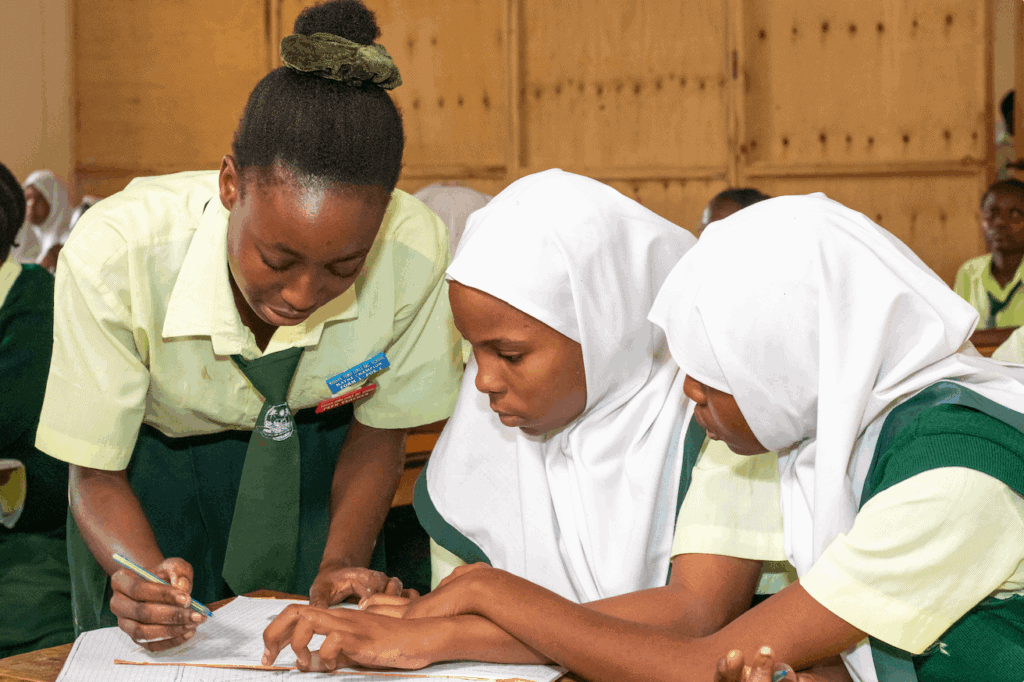
Peer learning also plays an important role in supporting student wellbeing. In collaborative classrooms, students are less likely to feel isolated when they struggle with a concept. Instead, they can rely on peers for encouragement and explanation. Group activities create opportunities for students to build friendships, develop empathy and gain confidence in their abilities.
For teachers, these approaches can also help reduce the pressure of needing to reach every student individually in large or diverse classrooms. By encouraging collaboration, teachers create learning environments where support comes from the whole group. The result is a classroom culture where learning and wellbeing reinforce one another.
Lasting Impact
The growing use of peer learning across the Schools2030 network highlights that meaningful change in education does not always require complex resources or new technologies. Often, it begins with simple changes in how classrooms are organised and how students interact with one another.
By recognising the diverse strengths that students bring to the classroom and creating opportunities for them to learn together, teachers are designing learning environments that are more responsive, more collaborative and more supportive of the whole learner.