10 Years
Teacher Innovator(s): Bibi Sakina
Learning Area
Building Confidence | Numeracy | Problem-Solving | Self Awareness
How might we strengthen students' conceptual understanding of place value to improve their ability to solve borrowing and carrying questions?
THE CONTEXT
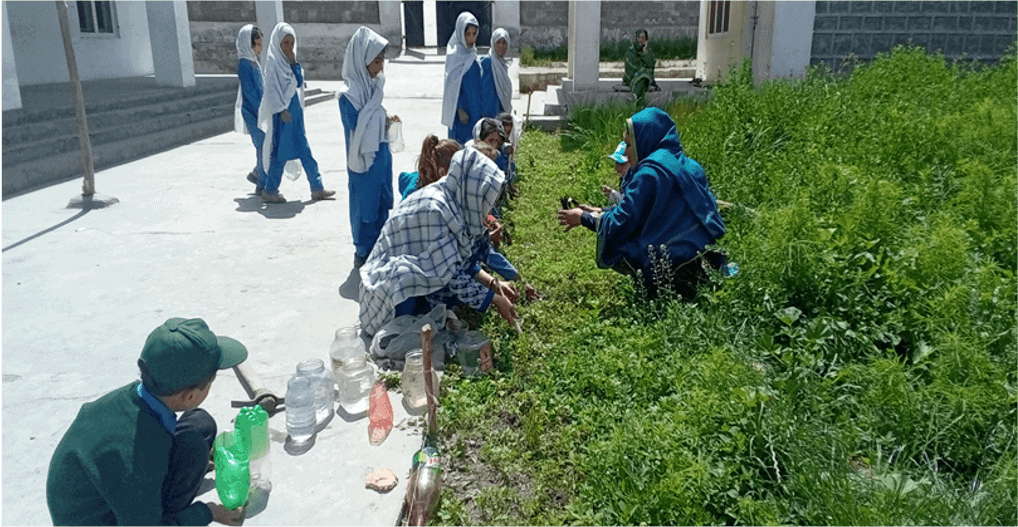
Govt Girls Primary School Phashk, Chitral
Govt Girls Primary School Phashk is situated in a remote and underdeveloped area of Phashk Yarkhoon, Upper Chitral, where access to basic facilities — proper roads, bridges, and even a single medical store — remains a challenge. The community faces significant socio-economic difficulties, with poverty and unemployment affecting daily life. Many children bear household responsibilities, looking after younger siblings or helping with kitchen work, which impacts their ability to focus on studies. Despite these challenges, a growing number of parents have started recognising the value of education, offering a glimmer of hope for the future.
THE CHALLENGE
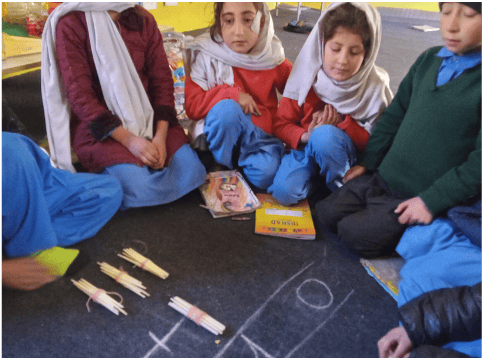
How might we strengthen students' conceptual understanding of place value to improve their ability to solve borrowing and carrying questions?
During classroom observations and through student assessments and interviews, it became evident that many students have struggled with the foundational concepts of borrowing and carrying in addition and subtraction. The lack of conceptual understanding has been hindering their overall progress in numeracy.
THE INNOVATION
Building With Blocks
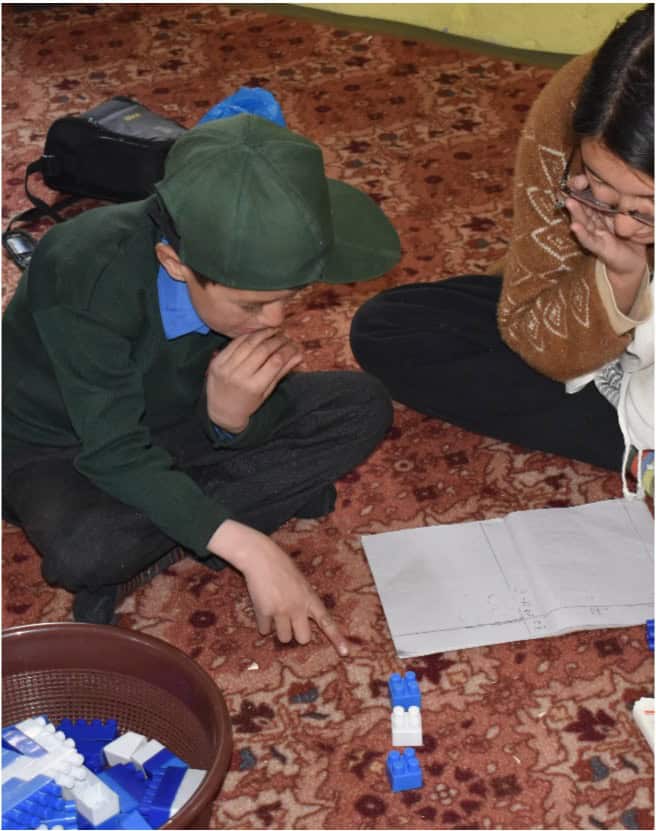
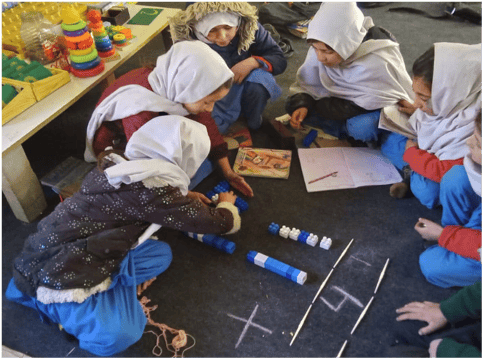
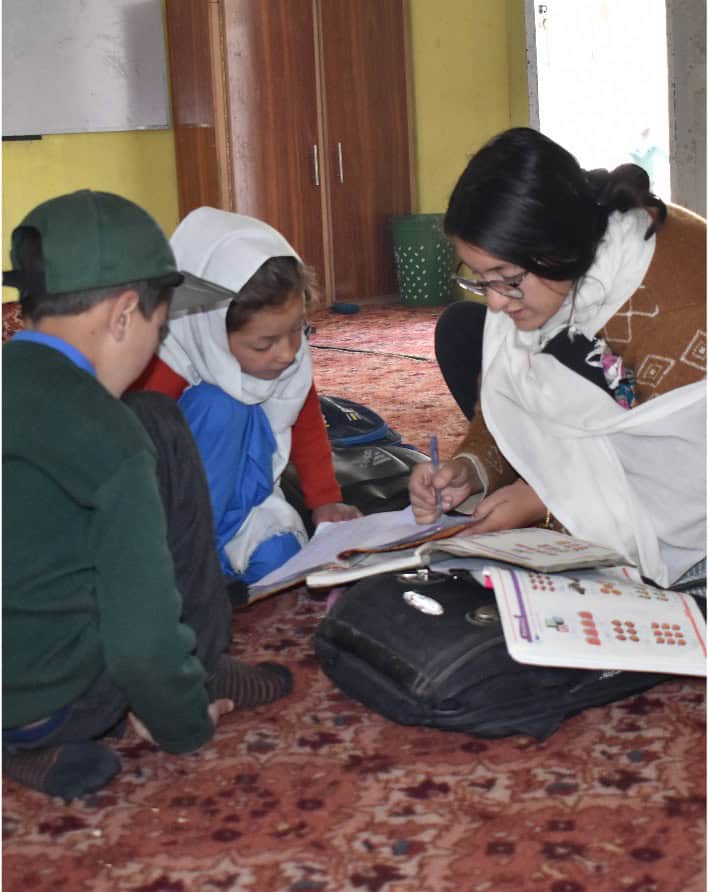
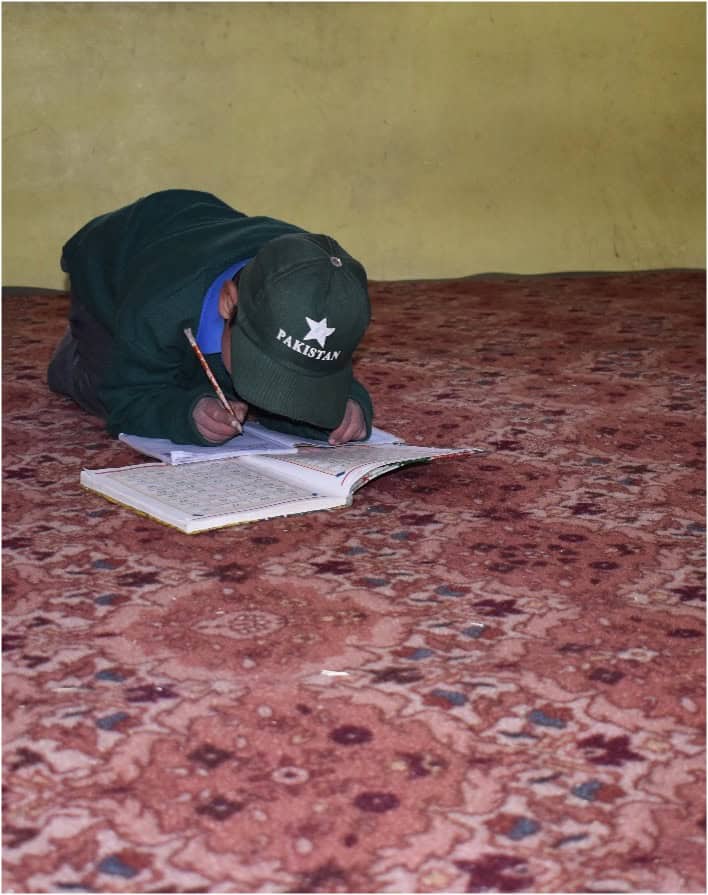
Bibi Sakina introduced a hands-on, play-based learning strategy using manipulatives (blocks) to teach place value, making abstract mathematical concepts tangible for young learners. The process included introducing the concept of ones and tens using blocks, practising simple addition and subtraction problems with their help, and progressing from concrete to abstract — allowing students to internalise the idea of borrowing and carrying through repeated, playful practice. Carpet writing was used alongside the blocks for visual and tactile engagement, and students were given free playtime with the blocks during breaks to reinforce familiarity and interest.
One student who had previously struggled showed exceptional enthusiasm and improvement, and their curiosity and engagement became a motivating example for others.
THE IMPACT
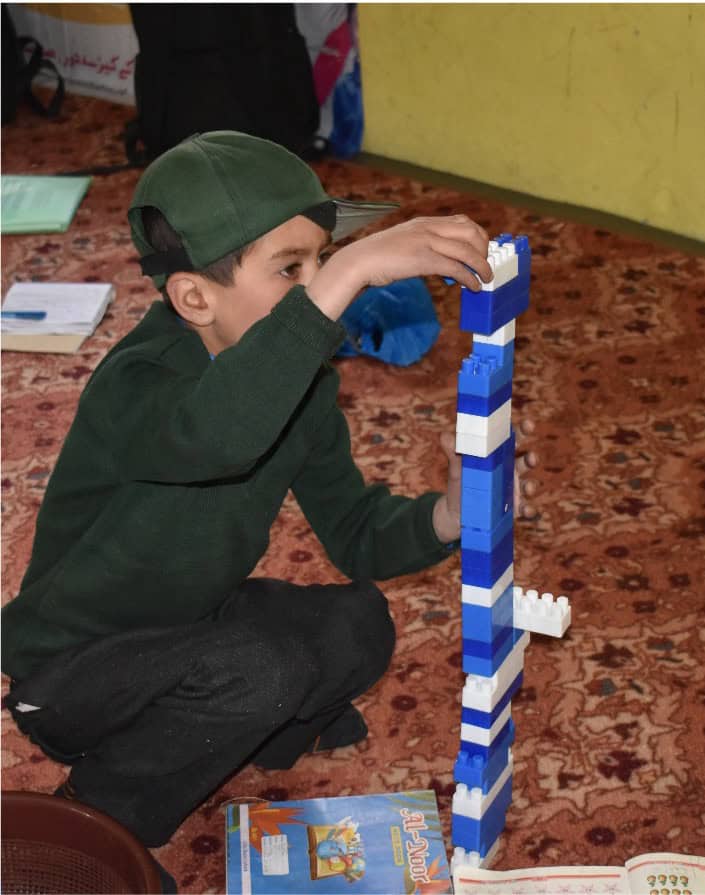
Improved numeracy performance and inclusive teaching practice in a highly remote setting.
The innovation not only improved students’ performance in addition and subtraction but also sparked joy and curiosity in learning mathematics. The structured use of blocks made learning more inclusive and effective, especially in a setting where resources and opportunities are limited.
The initiative also prompted a deeper shift in Bibi Sakina’s approach to inclusion. One student in her class has special needs, and through HCD training, she became more conscious and empathetic to his individual challenges. She began by building trust, showing love, and creating a safe, supportive space where he felt valued. Using his interest in playing with blocks, she guided learning through his natural play — connecting mathematical concepts to the towers, vehicles, roads, and houses he built — without interrupting his flow. Over time, he became more confident and emotionally connected to his learning environment. The experience transformed Sakina’s mindset from treating all students the same to understanding that real inclusion means meeting each child where they are.
RESOURCES
Download this innovation as a PDF.
"This journey has transformed my approach to teaching."
Bibi Sakina, Teacher
Explore more innovations from Pakistan