Tajikistan
10 Years
Windowsill Garden
How might we create a learning environment that helps students apply knowledge and build practical skills for climate-related challenges?




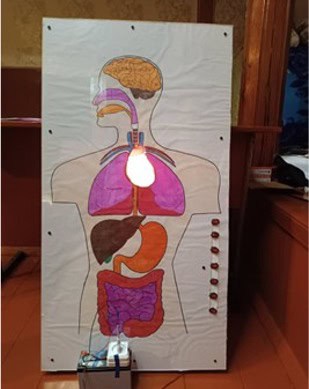
Secondary School No. 2 is located in Danghara, a lively town which is also the home of the country’s President. The school serves students with diverse academic interests and future aspirations, including careers in healthcare. Science subjects such as chemistry and biology are part of the national curriculum, but limited access to laboratory equipment means that science learning has traditionally relied on textbooks and rote memorisation rather than hands-on inquiry.
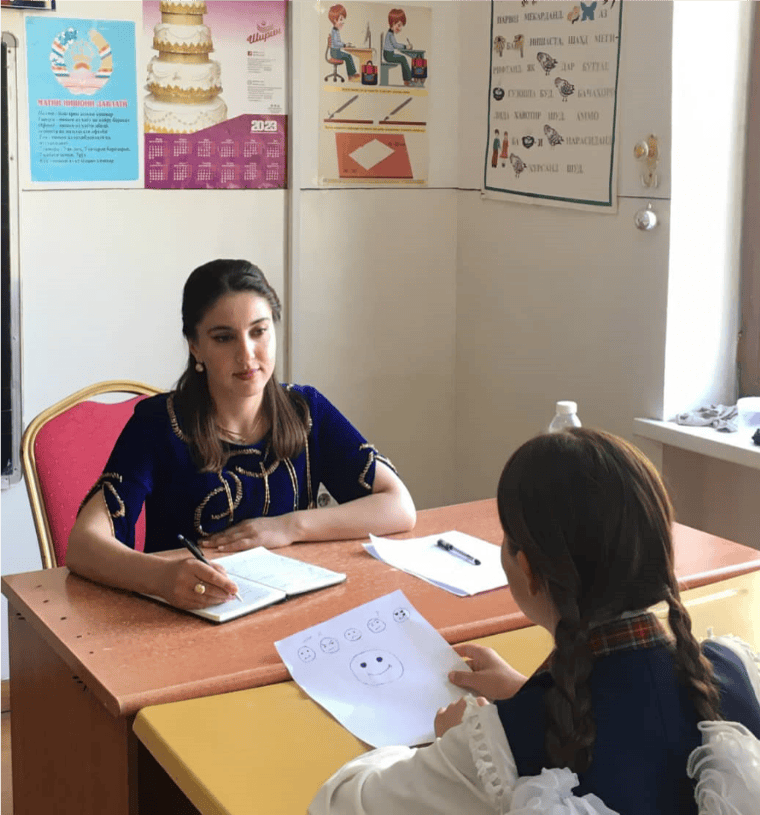
Students found chemistry and biology difficult to understand because lessons were largely theoretical and disconnected from real-life application. The lack of laboratory materials made it challenging to demonstrate experiments or allow students to practise scientific investigation, resulting in low motivation and limited participation. Many learners struggled to retain information and felt overwhelmed by memorisation demands, despite expressing ambitions to pursue science-related careers. This disconnect between students’ aspirations and their classroom experience highlighted the need for a practical, accessible approach to science learning that could work without formal laboratory infrastructure.

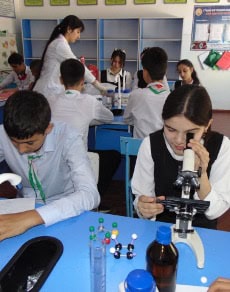
To address these challenges, teacher Nazokat established a Chemistry and Biology Club for Grade 9 students. The club provided a dedicated space for inquiry-based learning, allowing students to conduct experiments and research using locally available, low-cost materials, including herbs and everyday substances.
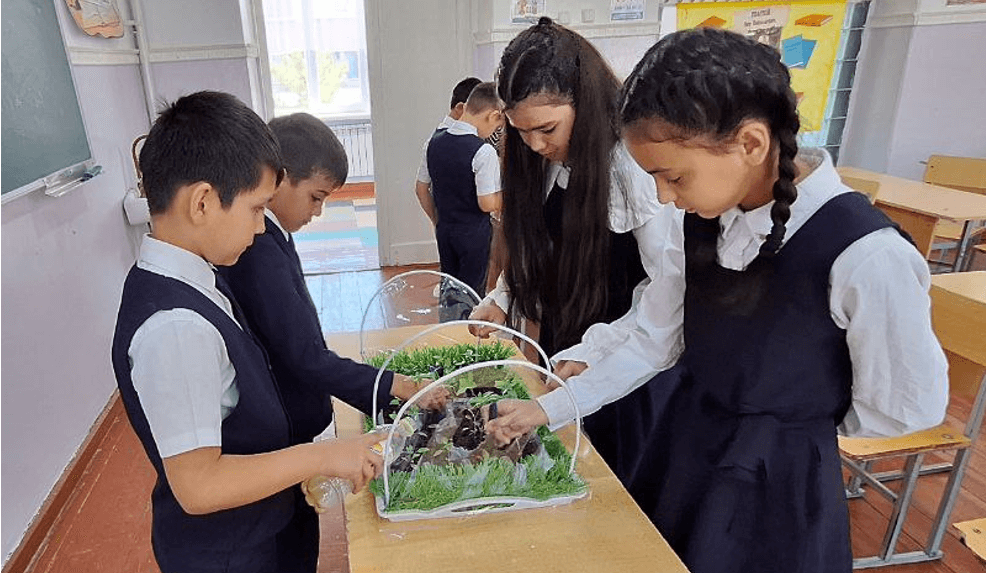
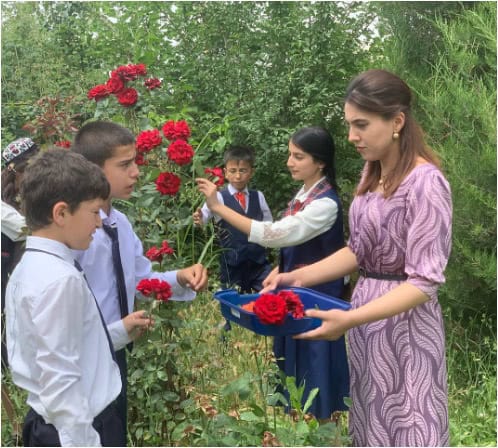
Students worked individually and in groups to investigate scientific properties, document observations, and prepare presentations for peers. The innovation also incorporated community-based learning, with students interviewing local herbal specialists and pharmacists to understand how scientific knowledge is applied in real contexts. Through regular club sessions, learners practised experimentation, discussion, presentation, and collaborative problem-solving, shifting science learning from memorisation to exploration.
The science club led to increased student engagement, curiosity, and confidence in chemistry and biology. All Grade 9 students began attending sessions regularly and participating actively in experiments and discussions. Learners demonstrated improved understanding of scientific concepts by linking theory to practical investigation, and teachers observed stronger collaboration, communication, and independent thinking. Students became more motivated to share their findings through presentations and discussions with classmates and the wider school community. Overall, the innovation helped reposition science as relevant, achievable, and connected to students’ daily lives and future goals.
Download the story of this innovation in PDF form below.