15 Years
Teacher Innovator(s): Huseyn Yuldoshev
Learning Area
Biology | Chemistry | Collaboration | Communication | Creativity
How might we Improve students’ competencies in science with limited resources?

THE CONTEXT

School #9, Bokhtar City
School #9 in Bokhtar City is located in Bokhtar, Tajikistan, the regional capital and largest city in the Khatlon region. The school is situated amidst residential buildings, a local theatre, markets, and mini shops. It serves 1,830 students.
One of the biggest challenges for the school, and a key priority, is addressing the lack of practical resources needed to conduct science and chemistry experiments in the school’s laboratory.
THE CHALLENGE
How might we Improve students’ competencies in science with limited resources?
Assessment: Through classroom assessment, the teacher identified that most of the students show a lack of interest in the subject, they struggled to understand tasks and reactions related to biology and chemistry subjects.
Interviews/consultation: Through conversations with students and other teachers in the school, it became clear that most of the students in the school lacked hands-on, practical learning tools that would enhance their understanding of scientific concepts.
THE INNOVATION
Enriching Science Labs with Low-Cost Resources
The idea to tackle this challenge was to develop biology and chemistry practical resources from low-cost materials and use them in lessons.
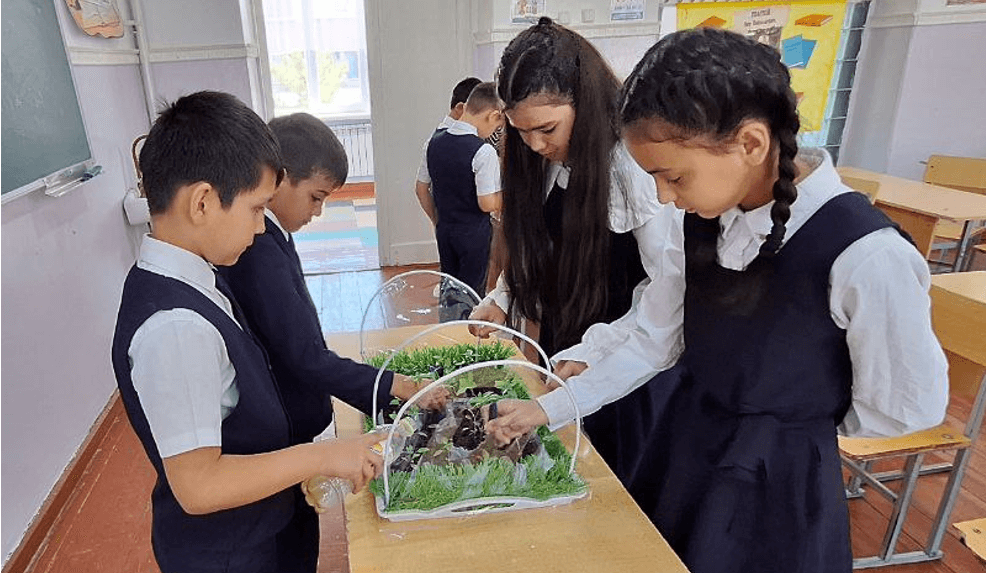
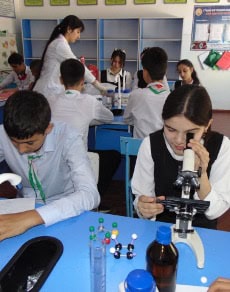
Students and teachers have jointly created various models and tools that allow them to understand the topics not only theoretically but practically as well.
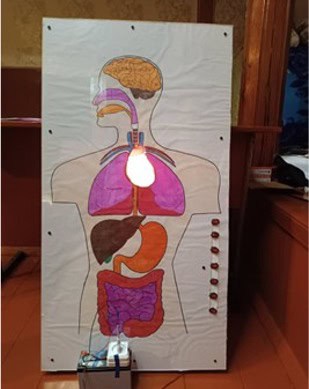
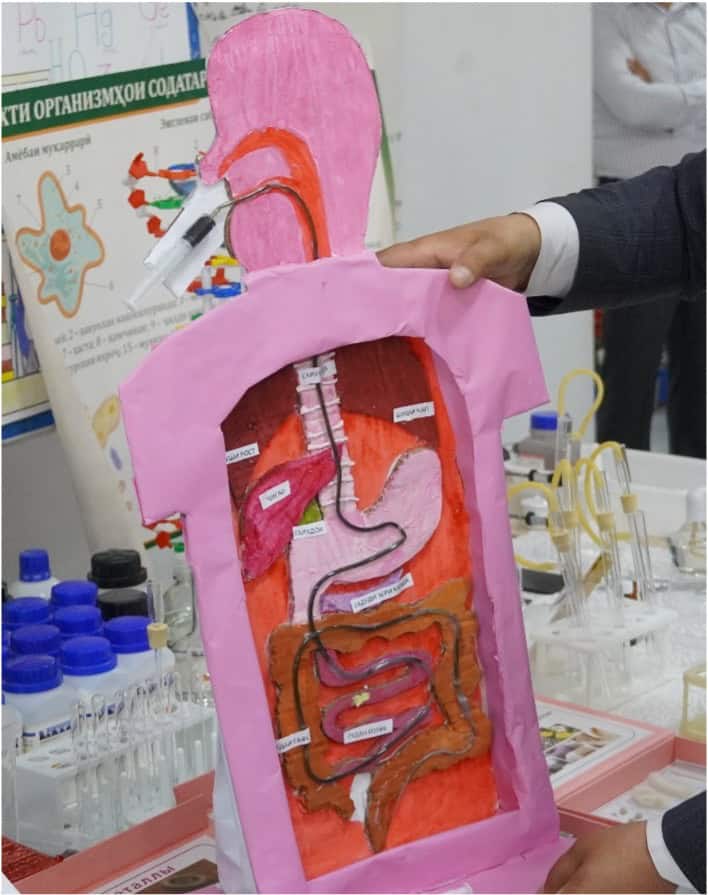
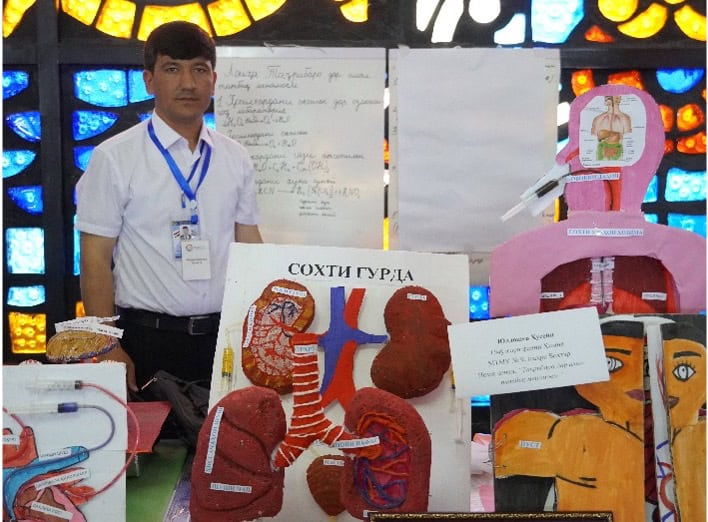
One example is the ‘Human torso’ made by students and the teacher from low-cost materials (bottles, medical drip and syringe, cardboard etc). It shows the movement of organs and real processes producing artificial blood and oxygen using a chemical reaction.
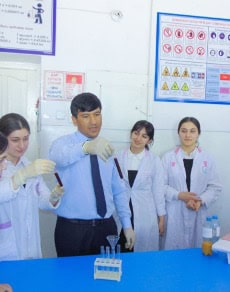
Similarly, students produced chemical reactions using fruit and vegetable ingredients and explored how different types of fruits and vegetables influence bodily health and wellbeing.
THE IMPACT
Improved creativity, enriched lessons, better collaboration
The solution has been implemented for the duration of 1 year in the school in 4 classrooms with more than 120 students.
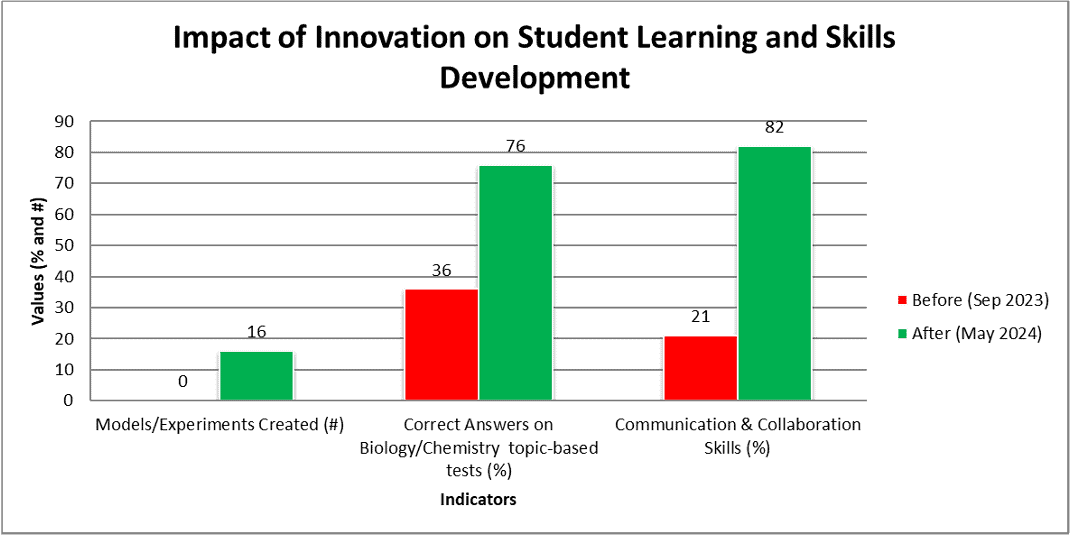
As a result of these practical lessons and model-making, students can understand, discuss and present each topic of biology and chemistry in detail.
Conducting regular practical experiments increases students’ interest and applying their theoretical knowledge practically helps with comprehension of difficult concepts.
Students also developed interest and confidence in experimental and research activities and progressed through team-work and collaboration competencies.
RESOURCES
Download the story of this innovation in PDF form below.
I used to struggle and not enjoy science classes, but using the 'Human Torso’ and other models we made with our teacher helped make concepts clearer and connect to real life.
Madina Samadova, Grade 9 student
Explore more innovations from Tajikistan