10 Years
Teacher Innovator(s): Zahra Akbari
Learning Area
Building Confidence | Creativity | Literacy | Numeracy | Relationship Building | Science
How might we strengthen teaching and learning through practical, student-centred methods?


THE CONTEXT

Panjab Centre Girls High School
Panjab Centre Girls High School is located in Panjab District, Bamyan Province, Afghanistan. The school serves 450 girls, including 55 students in grade four supported by the Schools2030 project. The community relies largely on agriculture and livestock, and many families face financial hardship. More than half of the teachers lack professional qualifications, and some teach subjects outside their areas of expertise. Students often travel long distances to reach school, and many parents—due to illiteracy—are unable to support learning at home.
These challenges have contributed to weak academic performance in core subjects such as literacy, numeracy, and science. Limited resources, traditional teaching practices, and low parental engagement have further constrained students’ opportunities to learn effectively.
THE CHALLENGE
How might we strengthen teaching and learning through practical, student-centred methods?
Baseline assessments revealed that students in grade four scored below 20% across all academic domains—literacy (15%), mathematics (13.75%), science (12%), and non-academic skills (11.75%). Interviews with students, parents, and teachers highlighted systemic barriers: inconsistent attendance due to household work, limited teacher training in modern pedagogy, and a lack of connection between classroom content and practical life.
Teachers often relied on rote learning and repetition, with few opportunities for students to apply concepts independently. As a result, students became passive recipients rather than active participants in their education, lacking confidence and motivation to explore, question, or collaborate.
THE INNOVATION
From Initiative to Action
The From Initiative to Action programme aimed to transform learning from a teacher-led process into a student-driven experience. The idea was to place learners at the heart of the process while supporting teachers to act as facilitators and mentors.
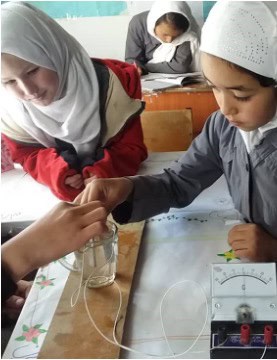
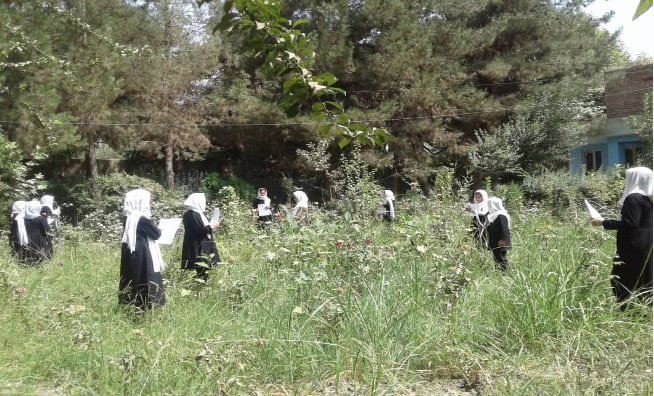
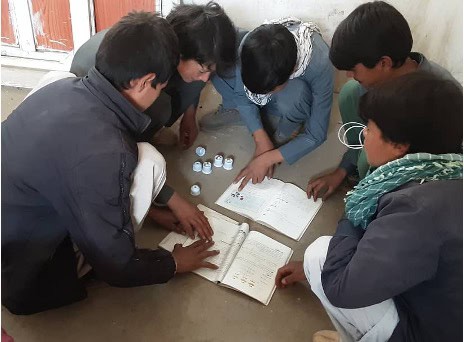
Teachers and students co-created low-cost, hands-on learning modules. In mathematics, students designed geometric models and measurement tools, linking abstract concepts to real-world examples. In literacy, they wrote short stories, read aloud, and practiced peer feedback to improve comprehension and expression. In science, students conducted simple experiments in the school garden, connecting theory with observation and evidence.
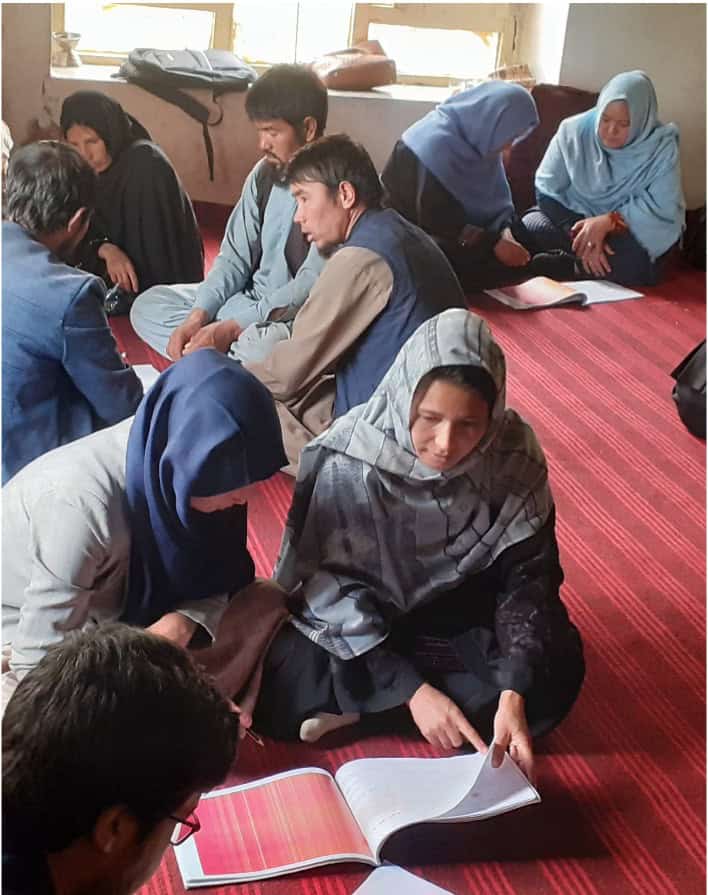
Teachers were trained to guide inquiry-based lessons and encourage collaboration among students. This shift from lecture-based instruction to active participation fostered curiosity and problem-solving. Regular observation and reflection sessions helped teachers adapt methods to maintain consistency despite a short academic calendar.
Together, these changes created a more dynamic, participatory learning environment where students developed skills through exploration, creativity, and teamwork.
THE IMPACT
Active learning that builds teacher and student confidence
Implemented in 2024 across two grade four classes, From Initiative to Action led to marked improvements in both academic and social outcomes. Students demonstrated higher reading fluency, improved writing and storytelling abilities, and greater mathematical understanding through the use of their own models and tools. Science learning also became more engaging and memorable through practical experiments.
Teachers reported that students were more confident, inquisitive, and willing to ask and answer questions. Classroom interactions became collaborative, with students supporting one another and providing constructive feedback. Parents observed noticeable changes at home: children read aloud, practiced counting, and related lessons to their surroundings.
The innovation has also built teacher capacity, improving confidence in modern pedagogical methods and shifting perceptions of what learning could look like. Following its success, the approach is now being shared with other classes and schools across Bamyan Province as a model for participatory, skills-based learning.
RESOURCES
Download the story of this innovation in PDF form below.
Our children’s can read more texts and understand the concepts of short stories. They are also counting many things at home and asking us to name the shapes of the sides of the house.
Mohammad Reza, Parent
Explore more innovations from Afghanistan