5 Years
Teacher Innovator(s): Susan Lanyero
Learning Area
Collaboration | Communication | Numeracy | Problem-Solving | Relationship Building
How might we use locally available materials to strengthen early numeracy skills in young learners?

THE CONTEXT
St. James Nursery School Bbiina, Kampala
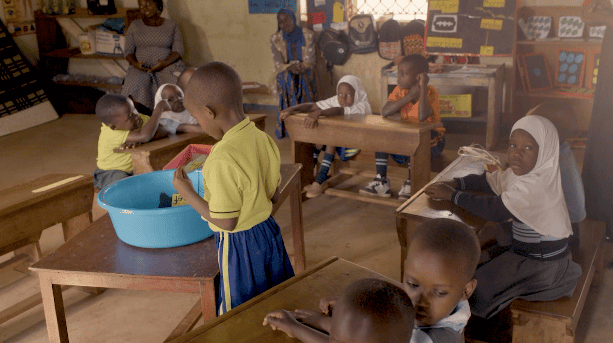
St. James Nursery School Bbiina is located in Mutungo–Bbiina in Kampala District and serves 267 learners, with 101 pupils in Ms. Susan Lanyero’s class. The surrounding community is supportive and actively participates in school activities such as visitation days and graduations. Community members also contribute to child protection efforts.
Despite this support, the school faces significant challenges. Many families struggle to pay school fees, learners often lack scholastic materials, and some travel long distances to attend school. Hunger, psychological stress, and limited access to clean water further affect concentration and learning. The school also requires additional classrooms, a water tank, and transport support to better meet learners’ needs.
THE CHALLENGE
How might we use locally available materials to strengthen early numeracy skills in young learners?
Many learners aged were struggling to identify, recognise, and count numbers from 1–20. Classroom assessments and teacher observations showed that children had difficulty understanding number sequences and representing quantities accurately. Without appropriate learning materials, lessons were largely verbal, limiting hands-on engagement and reinforcement. Strengthening foundational numeracy at an early age was identified as a priority to support long-term academic progress.
THE INNOVATION
Improvised Abacus for Early Numeracy Development
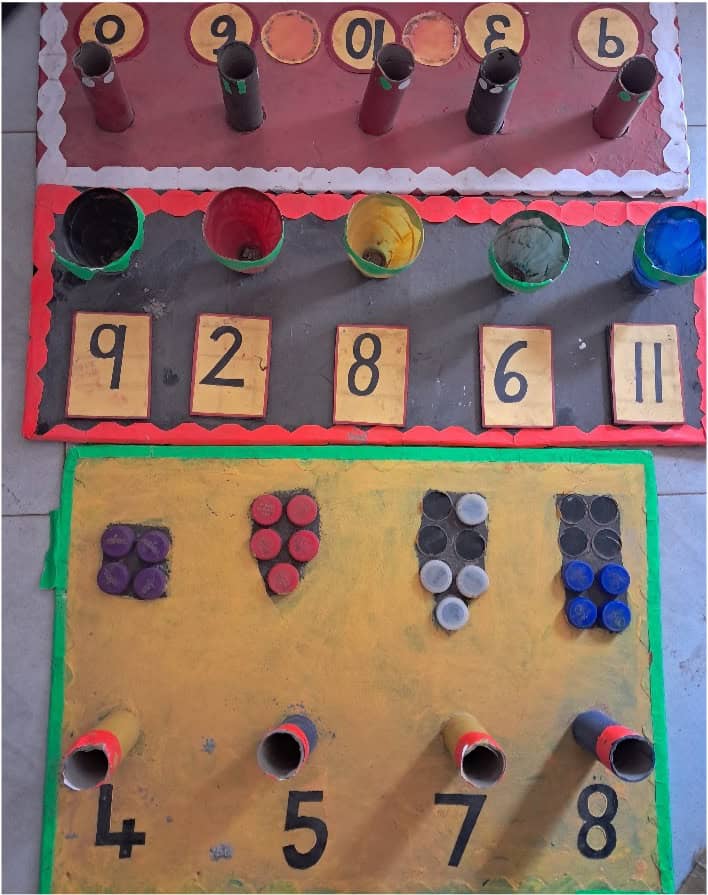
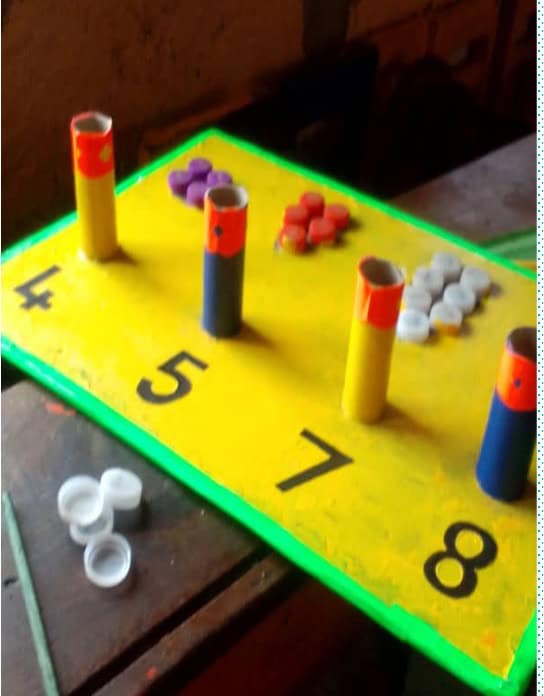
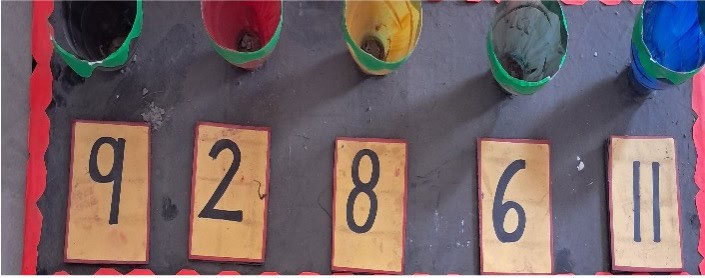
To address this challenge, Ms. Lanyero designed a low-cost, hands-on abacus tool using locally sourced and recycled materials. Straws were collected from waste areas, small sticks were cut from nearby bushes and coloured, and simple boards were adapted to create counting frames.
How it works:
The lesson begins with a number rhyme to introduce counting concepts.
Number cut-outs are displayed and learners repeat them aloud.
The improvised abacus is introduced, including beads, straws, and coloured counters.
The teacher demonstrates how to place items on the board to represent numbers.
Learners practise independently, fixing straws or beads to represent numbers from 1–20.
The method encourages repetition, tactile engagement, and visual reinforcement. It also supports communication, patience, and turn-taking during group activities.
The innovation has been implemented for three years and tested across three classrooms (Baby, Middle, and Top classes).
THE IMPACT
Boosted number recognition in early childhood learners
After sustained implementation, most learners are now able to confidently count, recognise, and identify numbers from 1–20. Assessments show improved accuracy in number sequencing and quantity representation. Learners demonstrate stronger engagement during numeracy sessions and show greater independence when working with counting materials.
The approach has also indirectly strengthened communication skills, patience, and peer interaction. Despite challenges such as limited funding, time constraints, and difficulties sourcing materials, the teacher sustained the initiative through creativity, persistence, and community resourcefulness. The innovation demonstrates that meaningful numeracy gains can be achieved using simple, locally available materials.
RESOURCES
Download the story of this innovation.
Explore more innovations from Uganda