10 Years
Teacher Innovator(s): Amina Mohamed, Aisha, Miswaleh
Learning Area
Collaboration | Communication | Numeracy | Problem-Solving | Relationship Building
How might we make mathematics feel relevant and enjoyable to learners?
THE CONTEXT
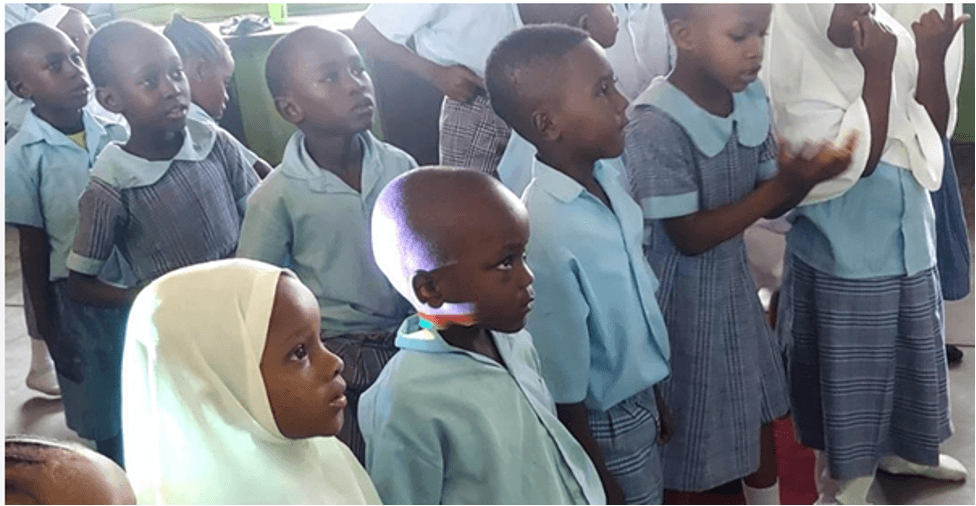
Ronald Gideon Ngala School (Ziwani, Mombasa) & Vyemani Comprehensive School (Shikaadabu, Mombasa)
Ronald Gideon Ngala School and Vyemani Comprehensive School both serve communities in and around Mombasa’s informal settlements, areas marked by unemployment, single-parent households, and the daily pressures of poverty. Between them, the two schools serve nearly 2,000 students. While Ronald Gideon Ngala benefits from adequate classrooms and a shared community playground, learning resources are scarce at both schools. Many parents, stretched by economic hardship, struggle to see education as a priority, and their children arrive in classrooms carrying the weight of that instability.
THE CHALLENGE
How might we make mathematics feel relevant and enjoyable to learners?
Mathematics has long been the subject where learners at these schools have struggled most. Performance data has consistently shown maths scoring lower than any other subject, and the reasons have run deeper than academic difficulty alone. Many students have come from households under significant economic and social strain and have arrived in classrooms with low motivation and limited support at home. In that context, a subject that already feels difficult has become easy to give up on.
Teachers have observed learners going out of their way to avoid maths altogether: skipping classes, refusing to attempt classwork, and switching off the moment lessons become abstract. Interviews have surfaced a common and telling sentiment — “Maths is too hard, I can’t do this.” Without teaching aids or real-life anchors, mathematical concepts have felt remote and irrelevant, and that disconnection has fed a self-reinforcing cycle of low confidence and poor results.
THE INNOVATION
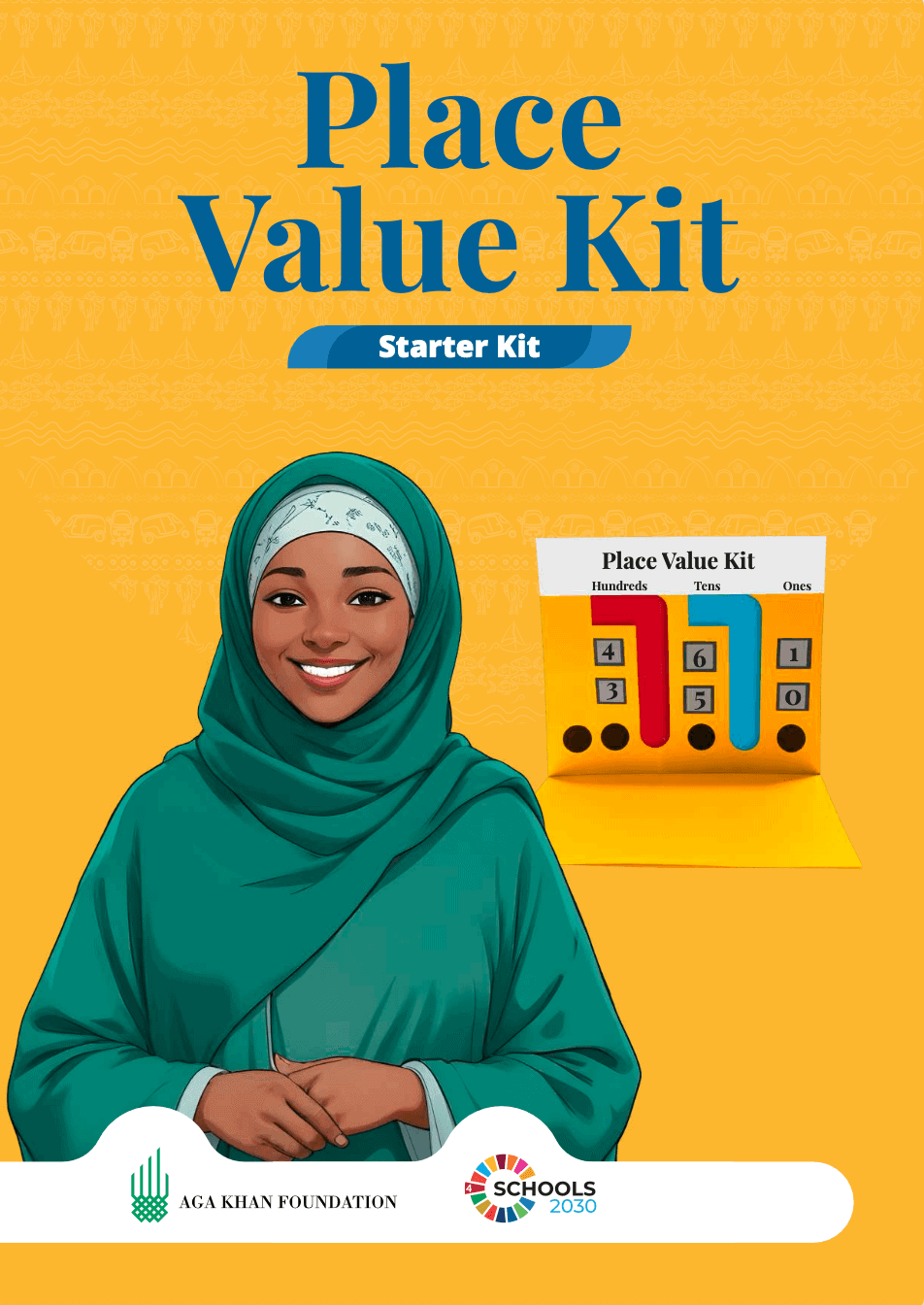
Place Value Kit
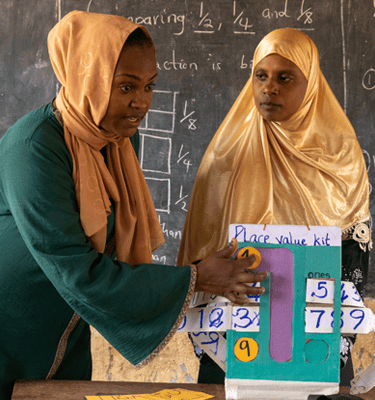
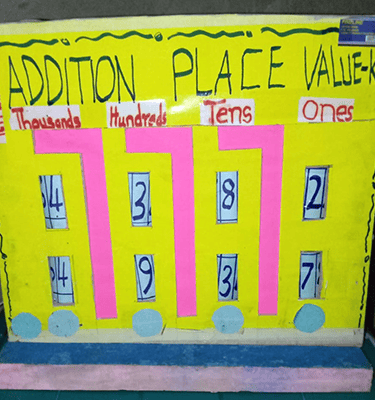
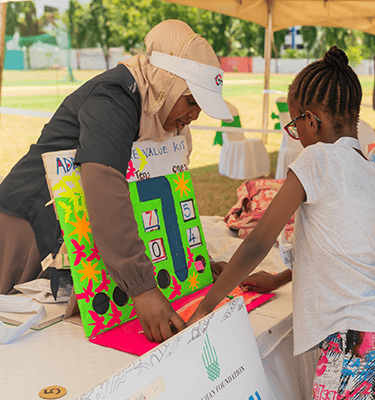
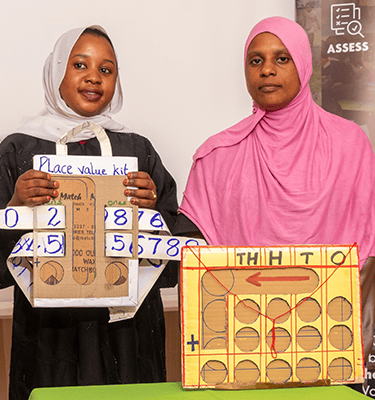
The Place Value Kit is a hands-on, manipulative-based teaching tool designed by Amina Mohamed, Aisha, and Miswaleh to shift learners’ relationship with mathematics. At its core, the kit uses physical, moveable cards and models to make abstract concepts (place value, borrowing, and the four basic operations) visible and tangible. Rather than working from a blackboard, students drag, arrange, and manipulate the materials themselves, embedding understanding through action.
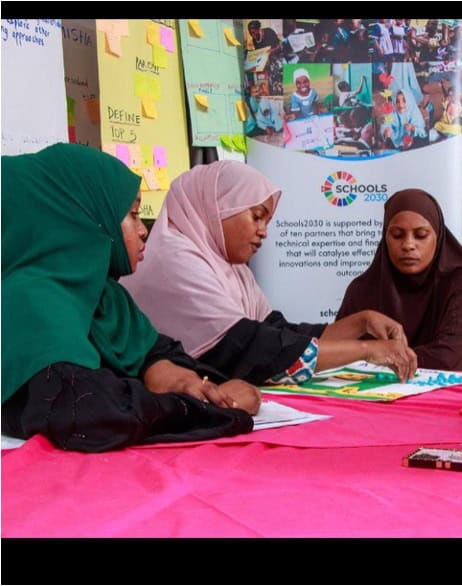
The kit is built into daily lessons through group problem-solving, student-led demonstrations, and interactive activities that connect mathematical concepts to everyday life. Crucially, it is also designed to improve the relationship between teacher and learner, creating a more collaborative, less intimidating classroom dynamic where maths becomes something done together rather than transmitted from the front of the room.
THE IMPACT
Improved maths performance, confidence, and teacher-learner relationships across multiple schools.
The Place Value Kit has been implemented across four classrooms and three primary schools. Assessment results show meaningful gains across the board: maths performance has risen from around 65% to 70%, learners’ sense of the relevance of maths to daily life has improved from 50% to around 68%, and the use of play-based activities in lessons has more than doubled, from 3 to 5 sessions per week. Teachers report a marked increase in learner confidence and a genuine shift in attitude towards the subject.
RESOURCES
Ready to bring this innovation to life?
Try using the Starter Kit to create this practice in your own classroom or download the innovation as a pdf to share the story.
The tools make maths less scary. It's great to see children enjoying learning and improving.
Community Volunteer Tutor
Explore more innovations from Kenya