Tanzania
4-8 Years
T-Learning Model
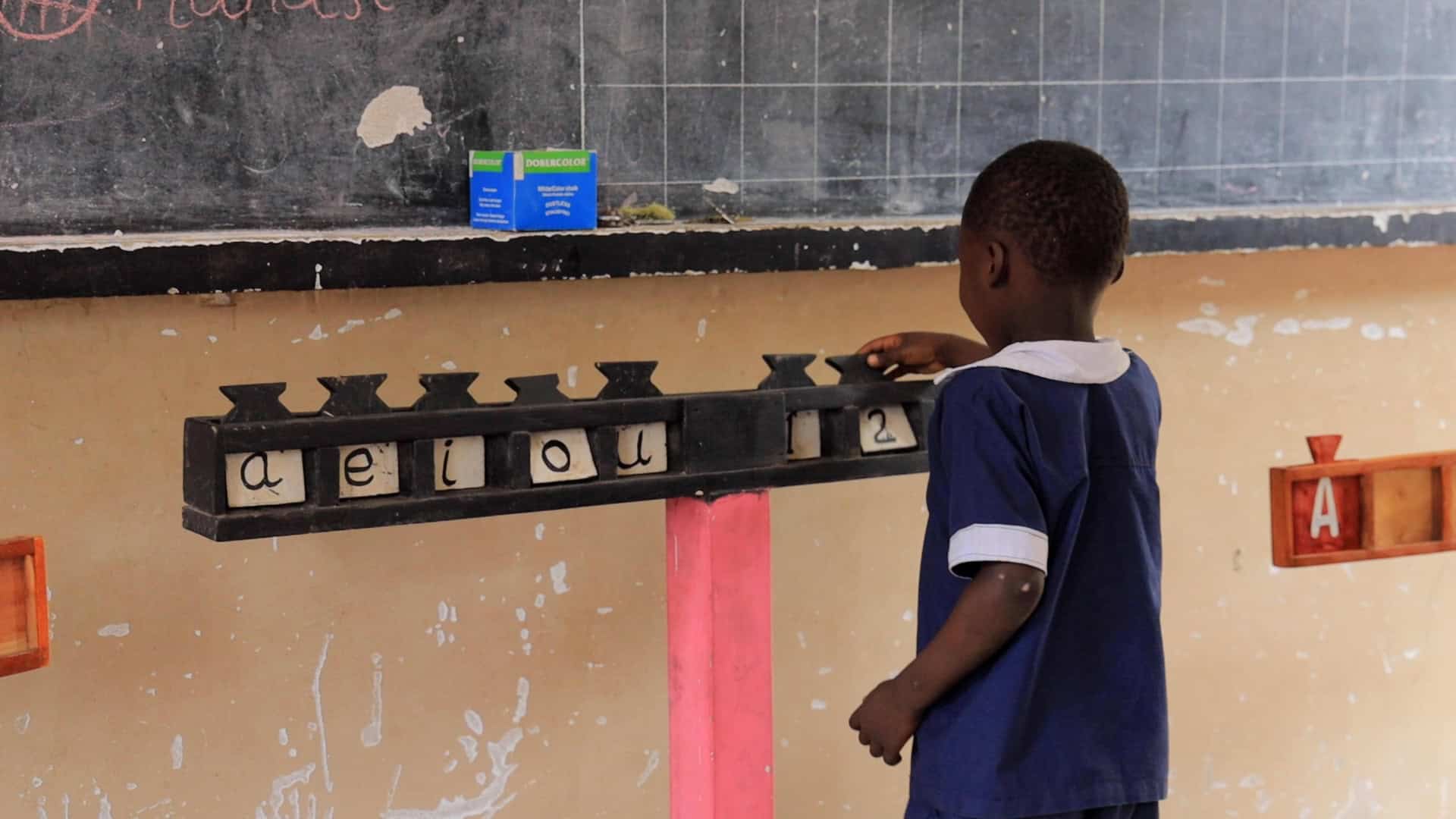
How might we improve preprimary children’s ability to read, write, and count by using low-cost, available resources?

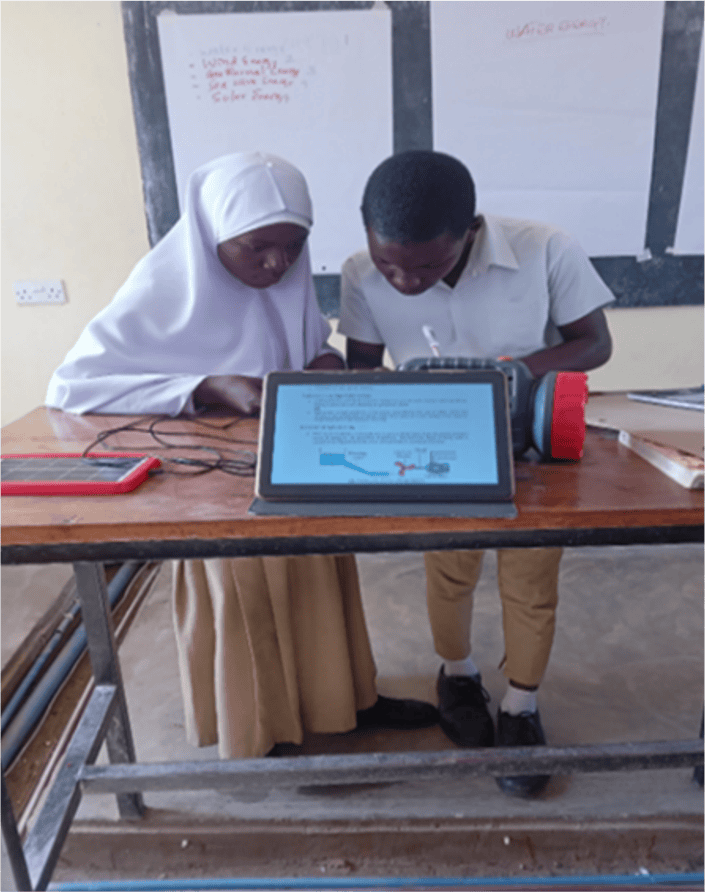


Mingoyo Secondary School, founded in 2005, is located in the coastal Lindi region of Tanzania. The school serves 792 students taught by 27 teachers and is part of a semi-rural community where agriculture and fishing are the main sources of livelihood. The local economy’s dependence on natural resources makes environmental awareness and practical science education increasingly relevant to students’ futures.
Within the Schools2030 programme, teacher Bartholomayo Mshuza focused on strengthening science and mathematics learning for secondary-level students. His approach sought to build not only academic understanding but also confidence, curiosity, and climate awareness through practical, real-world engagement.
In a class of 52 students (28 girls and 24 boys), Mr. Mshuza observed low engagement and weak performance in both science and mathematics. Students found it difficult to grasp abstract concepts—particularly in physics (electricity and energy transformation) and mathematics (geometry).
Lessons were largely theoretical, limiting opportunities for hands-on experimentation. Many students struggled to see how the material related to daily life and were hesitant to participate or ask questions. This lack of confidence reduced motivation and created a widening gap between conceptual knowledge and practical understanding.
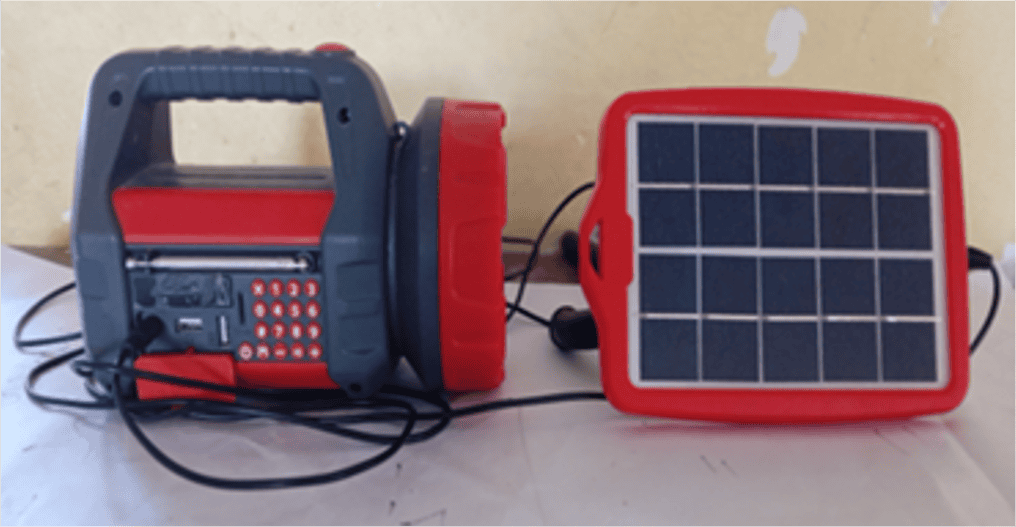
The Solar Panel Project introduced solar panels as a hands-on teaching tool to make science and mathematics more practical and engaging. By integrating renewable energy into lessons, students explored how electricity is generated, measured, and transformed, linking theoretical content to real-world applications. Geometry and measurement were taught through the design and placement of panels, helping students visualize angles, surface areas, and efficiency in context. This approach turned abstract concepts into observable phenomena, deepening understanding and interest.
Working in small groups, students collaborated to assemble and test solar panels, record data, and present findings to their peers. This active, inquiry-based model encouraged teamwork, confidence, and communication skills while strengthening scientific and mathematical reasoning. The idea fostered a learning environment where curiosity and participation flourished, demonstrating how applied, sustainability-focused teaching can enhance both comprehension and motivation.
The Solar Panel Project transformed classroom engagement in science and mathematics. Students demonstrated stronger conceptual understanding and improved ability to explain how energy and geometry function in real-world contexts. Teachers observed increased enthusiasm, curiosity, and participation, with more students contributing ideas and asking questions during lessons.
Beyond academic outcomes, the project inspired broader awareness of renewable energy and climate responsibility. Students began linking scientific knowledge with environmental solutions, recognizing their role in creating a more sustainable future. The model has since been shared with other teachers, promoting applied, experiential learning across the school.
Download the story of this innovation in PDF form below.

