Uganda
5 Years
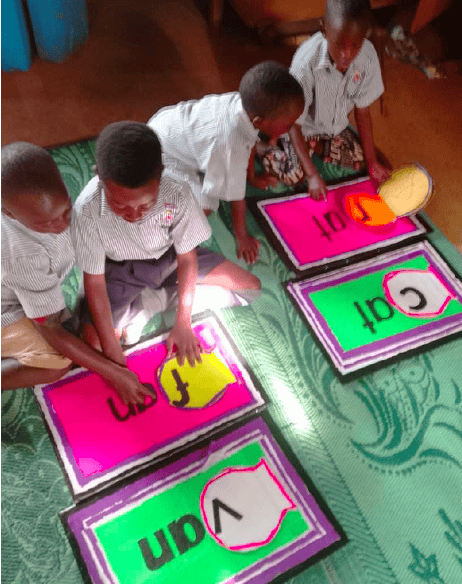
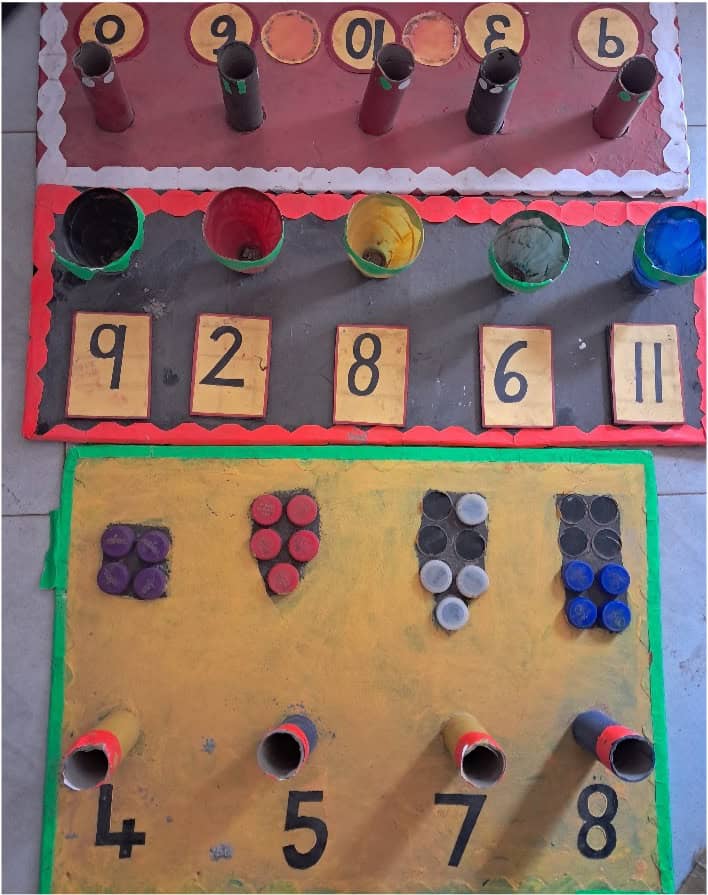
Improvised Abacus
How might we use locally available materials to strengthen early numeracy skills in young learners?


Mvara Secondary School is located in Arua City, Uganda, with approximately 75 students per class and a total school population of 1400. The surrounding community faces challenges such as low incomes, reduced food availability, and diminishing agricultural productivity. The school itself experiences increased heatwaves and high temperatures, along with a reduced water table from nearby water sources.
Many students demonstrated a basic understanding of plotting points but struggled to translate object points into image points on a Cartesian graph. Despite attending lessons, several were unable to clearly explain vectors and translations to their peers, revealing gaps in comprehension. Classroom exercises and observations showed that learners often avoided using graph paper, even though it was required, and many lacked confidence when plotting and translating points.
Overall, learners found vectors and translations challenging and intimidating. The perceived complexity of the topic led to hesitation, fear of making mistakes, and low participation in class discussions. As a result, students rarely articulated their reasoning or engaged collaboratively. The key challenge, therefore, was to demystify vectors and translations—transforming them from abstract concepts into engaging, accessible ideas that students could confidently explore and apply.
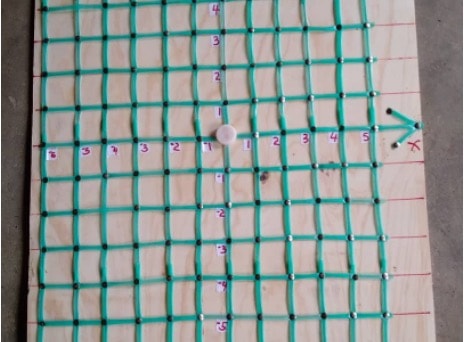
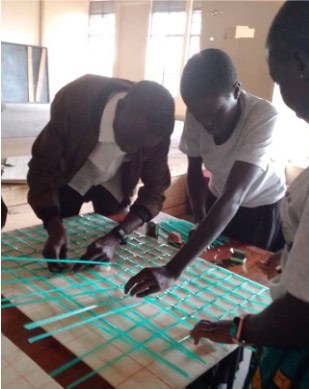
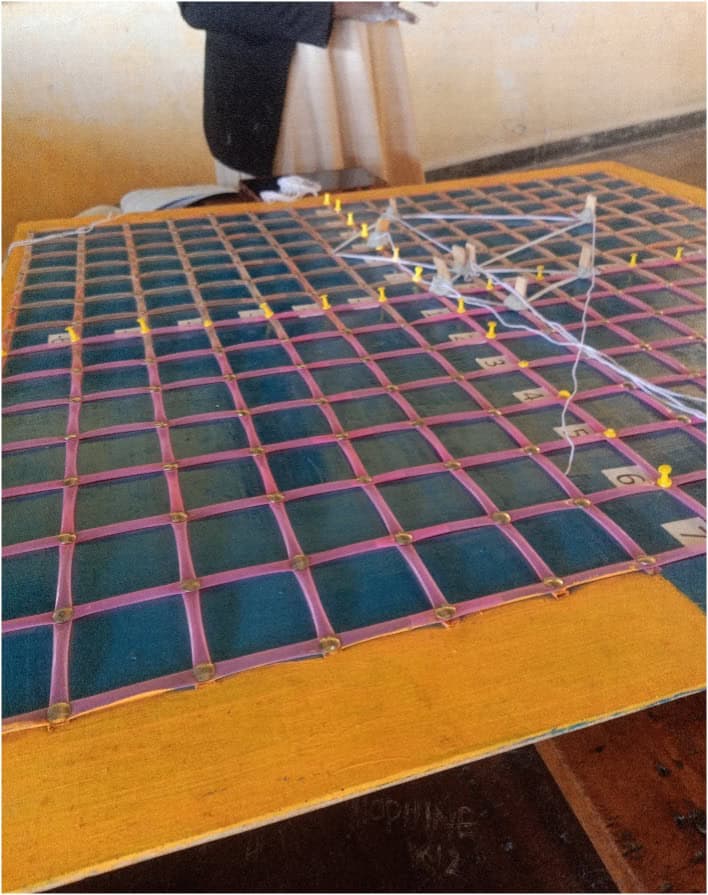
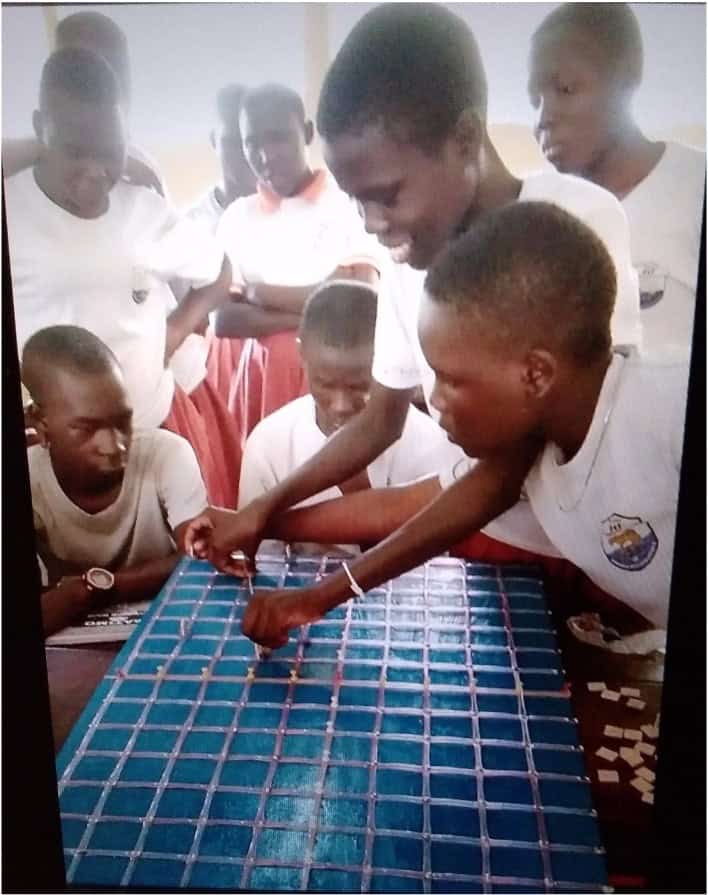
Spinning Possibilities is a creative learning tool that uses a Cartesian board and spinning wheel to teach mathematics concepts in an interactive way. The innovation makes abstract concepts like vectors and translations more concrete and engaging, while creating an inclusive, active learning environment. It is designed for learners aged 9 – 18 years.
Materials Used:
Initially, the school had only one Cartesian board for many students. Later, the administration provided financial support for the students to produce more boards, increasing access and participation.
Over the past 18 months, the innovation has been implemented in six schools and eight classrooms, benefiting both regular learners and those with visual impairments. Students now show greater confidence and participation in mathematics lessons, and the tool has encouraged collaboration, creativity, and problem-solving. Assessment evidence indicates improved learning outcomes and stronger peer-to-peer support, while classrooms have become more inclusive and interactive environments.
Students have demonstrated clear changes in how they approach mathematics. They are more confident in applying new knowledge, show greater willingness to work together, and are developing stronger critical thinking skills. Many now find graph work easier to understand and complete, and there is a noticeable increase in curiosity and engagement when new materials are introduced.
These improvements have also influenced the classroom atmosphere. Lessons are more learner-centred, with higher levels of attention and consistent participation from all students, including those with visual impairments. Overall, the innovation has contributed to a more inclusive and collaborative approach to mathematics learning.
Download the story of this innovation in PDF form below.