10 Years
Teacher Innovator(s): Najiba Quraishi, Suraya Anishmand
Learning Area
Building Confidence | Creativity | Empathy | Respect for the Environment | Science
How might we connect what students learn in the classroom to their everyday lives, so that learning becomes more meaningful and lasting?


THE CONTEXT
Zarina Girls High School, Baghlan
Zarina Girls High School, located in Baghlan Jadid District, Baghlan Province, Afghanistan, is one of the largest girls’ schools in the region. In 2023, it served over 2,000 students and employed 45 teachers working in three shifts. Most families in the surrounding community depend on agriculture and livestock, while others work in local government roles.
Afghanistan’s education sector has faced severe challenges in recent years, including COVID-19 school closures, restrictions on girls’ education, and social and economic instability. These disruptions have led to declining attendance, learning loss, and reduced motivation among students—particularly girls. Zarina Girls High School has not been immune to these effects, facing widespread academic and emotional setbacks among its learners.
THE CHALLENGE
How might we connect what students learn in the classroom to their everyday lives, so that learning becomes more meaningful and lasting?
Assessments and consultations with students revealed weaknesses in key academic areas, including literacy, mathematics, and science, alongside underdeveloped social and environmental awareness. Many students were disengaged from classroom activities, lacked confidence in their abilities, and had limited collaboration with peers. Teachers observed that learning felt disconnected from students’ daily lives, leading to low motivation and limited curiosity.
Yet, students expressed enthusiasm for group activities and hands-on learning. The challenge, therefore, was to design an approach that reconnected academic subjects to real-life experiences—fostering engagement, cooperation, and a stronger sense of purpose in learning.
THE INNOVATION
The Road of Learning
The Road of Learning was designed to bridge the gap between education and daily life. It introduced four structured weekly activities combining academic learning with social responsibility, creativity, and environmental awareness. The goal was to make education practical, engaging, and memorable, while building both academic and non-academic skills.
- My Beautiful Nature
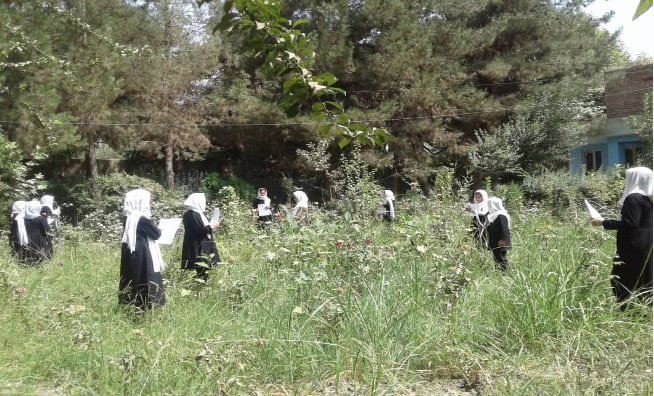
Students took part in caring for their school and home environments by tending to gardens, collecting waste, planting in pots, and designing environmental awareness messages. This hands-on involvement fostered a sense of responsibility, environmental stewardship, and teamwork, linking science lessons with real-world action. - Help and Cooperation
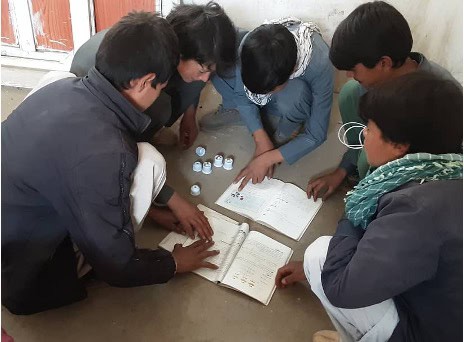
Students reflected on ways they contributed to their families and communities—helping siblings with lessons, supporting parents, or assisting classmates. Sharing these experiences in class helped strengthen empathy, cooperation, and social connection, reinforcing moral and civic values. - Science and Technology
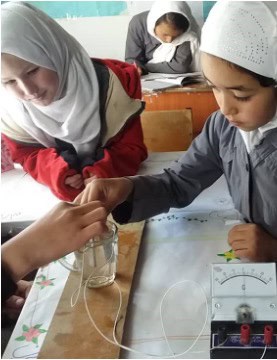
Students engaged in simple experiments, created geometric models, and watched educational videos related to their coursework. These activities developed curiosity, critical thinking, and analytical skills, turning abstract lessons into tangible, interactive experiences. - Art and Culture
Creative expression was encouraged through wall displays, school newspapers, and storytelling competitions. Students wrote essays, shared poems, and created art inspired by Afghan culture. Teachers used these activities to build communication skills, cultural understanding, and confidence in self-expression.
THE IMPACT

Learning confidence, cooperation, and curiosity
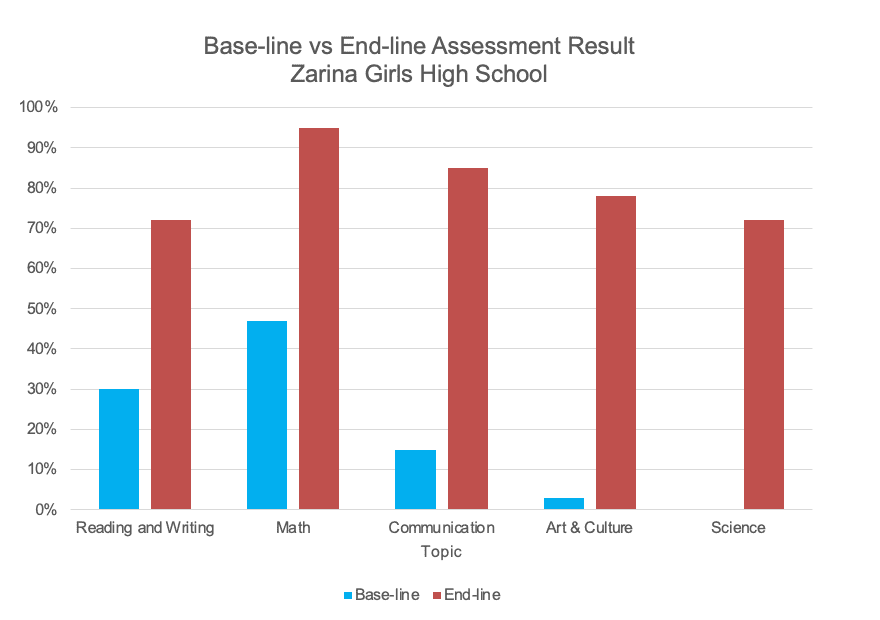
Since its implementation in December 2023, The Road of Learning has led to notable academic and social improvements. Students have shown stronger reading, writing, and mathematics proficiency, alongside enhanced critical thinking and communication skills. Teachers observed increased participation, enthusiasm, and cooperation within classes.
Behavioral changes extended beyond school. Students demonstrated greater respect, responsibility, and environmental awareness, applying what they learned to their homes and communities. Teachers themselves reported a shift in perspective—recognizing that effective education extends beyond classroom walls and can be grounded in students’ lived experiences.
Due to these positive results, the initiative is now being replicated in nine additional cohorts and introduced to neighboring schools through a demonstration program.
RESOURCES
Download the story of this innovation in PDF form below.
Explore more innovations from Afghanistan