Uganda
5 Years
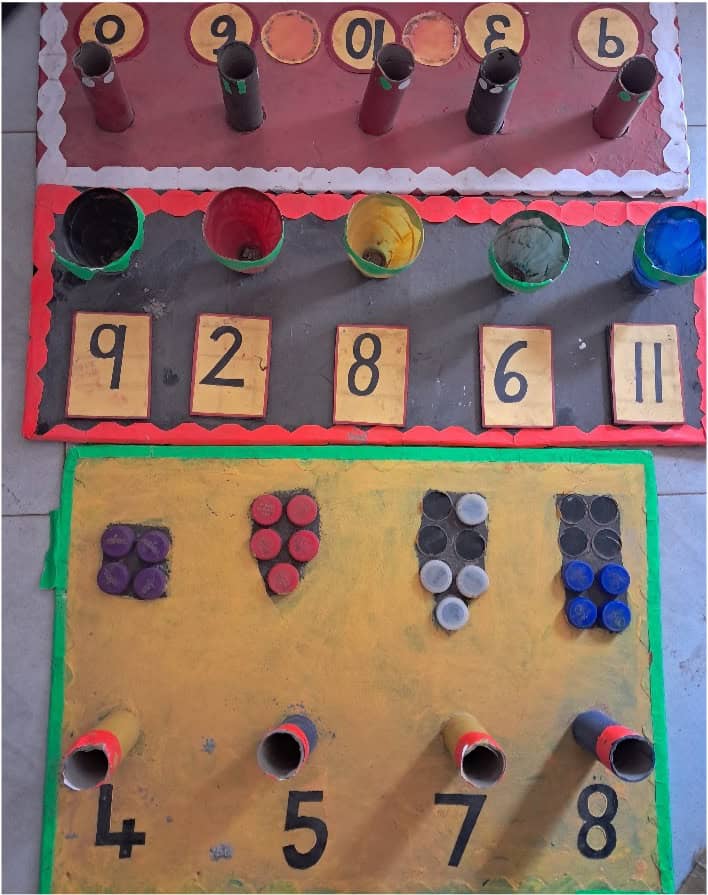
Improvised Abacus
How might we use locally available materials to strengthen early numeracy skills in young learners?



Makerere C.O.U ECD is an early childhood centre located along Sir Apollo Kagwa Road in Kawempe Division. The school serves 94 learners, with 35 children in Top Class. The community surrounding the school includes a nearby primary school and church and sits on a hilly, tree-surrounded area.
The centre faces several resource-related challenges, including limited furniture, a shortage of storybooks, and low digital literacy exposure. Despite this, the school prioritises improving learners’ academic performance and ensuring a safe, engaging learning environment.
Assessment, classroom observations, and discussions with learners revealed that many children could not sound out letters or blend sounds to form words. Learners struggled with:
The lack of interactive materials further hindered engagement and limited opportunities for hands-on literacy exploration.
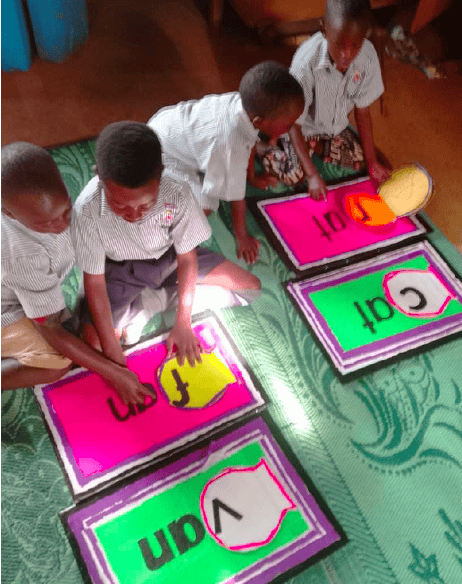
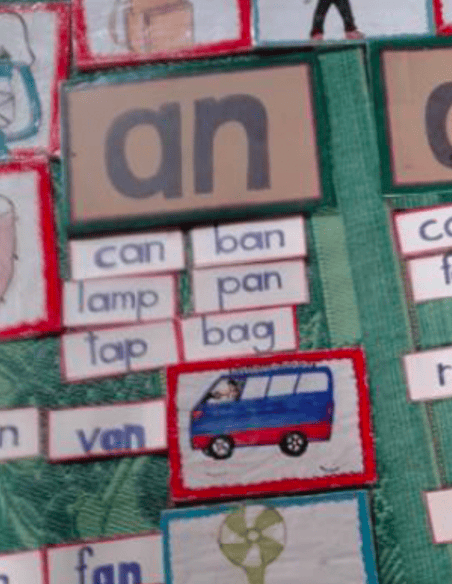
The Sound Lab Game is a playful, group-based literacy practice designed to help young learners sound letters, blend them, and recognise word families. It uses locally made materials such as letter cards, syllable cards, picture cards, and reading boards.
How it works:
Step 1: Learners sing a sound-based song and practise segmenting and blending using letter cards.
Step 2: The teacher demonstrates blending using handmade reading boards.
Step 3: Learners sort syllable and single-letter cards belonging to their assigned word family.
Step 4: They match picture cards to relevant word families.
Step 5: Learners match words with correct pictures as they continue singing.
Steps 6–8: They explore more word families (e.g., an, at, ad, it, us), recognise rhyming words, and eventually begin simple sentence formation.
The design emphasises group work, shared idea generation, and repeated playful practice, building both literacy and social-emotional skills.
After two years of implementation, the Sound Lab Game has resulted in:
Three additional schools have tested the innovation, showing similar gains, and learners now form words more easily, identify picture–word relationships, and blend sounds confidently.
Download the story of this innovation in PDF form below.