10-15 Years
Teacher Innovator(s): Siraj Ali Khan
Learning Area
Building Confidence | Collaboration | Communication | Creativity | Critical Thinking | Literacy
How might we close the Literacy gap for 10 and 15 year-old students?

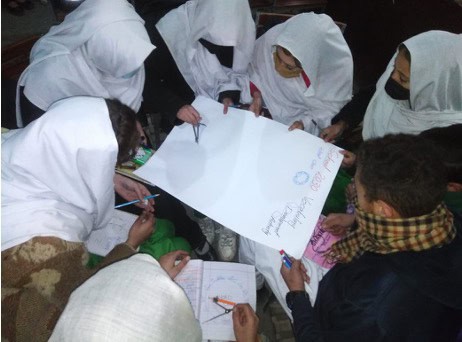
THE CONTEXT
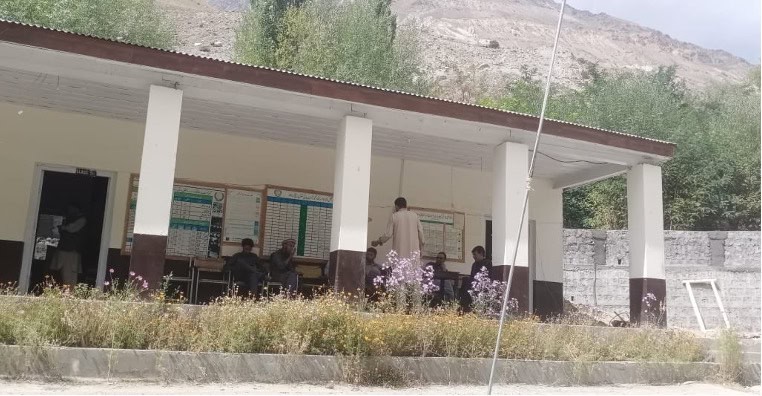
Government High School Rech
Government High School Rech is located in the village of Rech in Upper Chitral, Pakistan. It serves the small, mountainous community, with a total of 172 students. The challenging terrain, especially during harsh winters, often isolates the community and limits access to educational resources.
Most men in the community work abroad to support their families, while others rely on subsistence farming. With households focused on meeting basic needs, parental involvement in education is minimal. As a result of these socio-economic conditions, students’ literacy development has been significantly hindered, many learners reach secondary school without having acquired strong foundational reading skills.
THE CHALLENGE
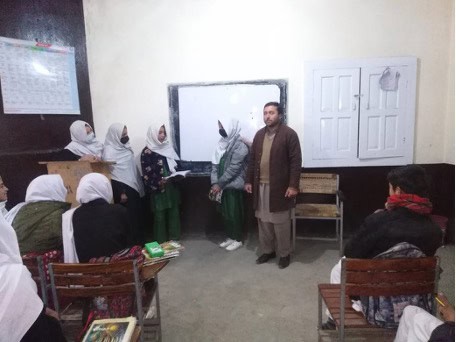
How might we close the Literacy gap for 10 and 15 year-old students?
Despite being in 10th grade, many students at the school were struggling with basic English reading skills. This issue reflected a deeper systemic challenge in the region, where literacy gaps persist far beyond the early grades.
Through the Schools2030 Human-Centred Design (HCD) process, Siraj Ali Khan conducted assessments, classroom observations, and interviews with students and parents. This helped him uncover the root causes of low literacy levels, including limited exposure to engaging learning activities, lack of foundational support, and minimal practice opportunities.
THE INNOVATION
Tracholendik – adapting a local game for literacy
Siraj’s innovation journey began at the primary level, where he adapted Tracholendik, a traditional local game, to support English vocabulary learning.
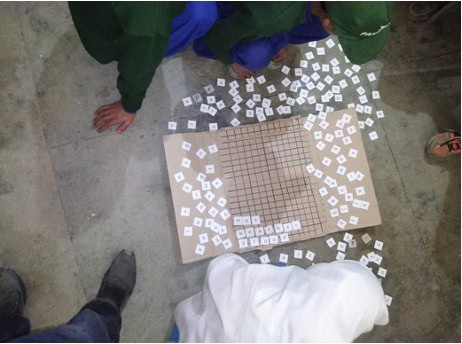
Tracholendik is a game that children in Rech already love: two players sit opposite each other on a board drawn on the ground, using sticks and stones to complete a line as quickly as possible.
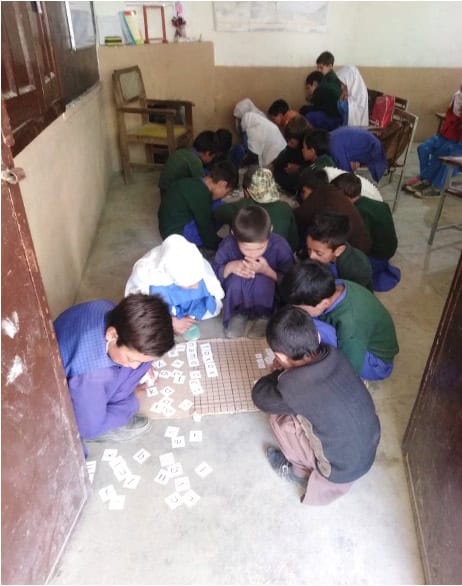
To transform this familiar game into a learning tool, Siraj introduced two game variations – alphabet cards and word chains. Word chains was specifically developed for the older students to ensure the game-play did not feel too juvenile.
Alphabet Cards (10 Year olds)
Step 1 – Preparation: A day before the activity, students read a selected text from their English textbook.
Step 2 – Game Setup: On the game day, students are divided into two teams. They sit face to face, with an announcer positioned in the middle. Each team has a set of alphabet cards placed in front of them.
Step 3 – Playing the Game: The announcer calls out words from the pre-read text. Both teams race to arrange the correct letters to spell the announced word.
Step 4 – Scoring: The team that forms the correct word first earns a point. The game continues for several rounds within a set time.
Step 5 – Reinforcement: After the game, students record the words in their notebooks, write their meanings, and use them in sentences during weekly writing activities.
This playful, culturally relevant activity not only builds vocabulary but also improves spelling, word recognition, and memory retention through repetition and competition.
Word Chains (15 year olds)
Step 1 – Base Word: Students begin with one simple word (e.g., “book”).
Step 2 – Word Chain: Each student must create a new word beginning with the last letter of the previous word (e.g., book → kite → egg → game).
Step 3 – Sentence Creation: After building a chain, students write sentences using the words they formed, encouraging comprehension and creative thinking.
Step 4 – Peer Review: Students share their sentences with peers, who provide feedback and correct spelling or grammar if needed.
Step 5 – Weekly Routine: Siraj schedules this activity once a week during a dedicated literacy support session, ensuring regular practice outside of core subject instruction.
This structured yet enjoyable routine allows students to practice spelling, expand vocabulary, and use English actively in a low-pressure environment. The word chains also encourage teamwork, healthy competition, and repeated exposure to new vocabulary, all of which strengthen reading fluency over time.
THE IMPACT
A Hopeful Future through Small Changes
This innovative approach has transformed English literacy learning in his classrooms. Primary students became excited and motivated through the game-based Tracholendik activity, showing noticeable gains in spelling accuracy and reading fluency. Meanwhile, older students, who previously struggled with even basic vocabulary, have become more confident, engaged, and fluent readers through the Word Chain Arrangement method.
Regular, low-stress exposure to English vocabulary has built their confidence, classroom participation, and independent learning skills. Importantly, the intervention has proven adaptable across different age groups and classroom contexts.
Through this journey, Siraj also demonstrated how a single teacher using the HCD approach can tackle deeply rooted literacy challenges in resource-constrained settings.
RESOURCES
Small, simple innovations can bring big changes. When students play, learn, and teach each other, literacy becomes alive.
Siraj Ali Khan
Explore more innovations from Pakistan