
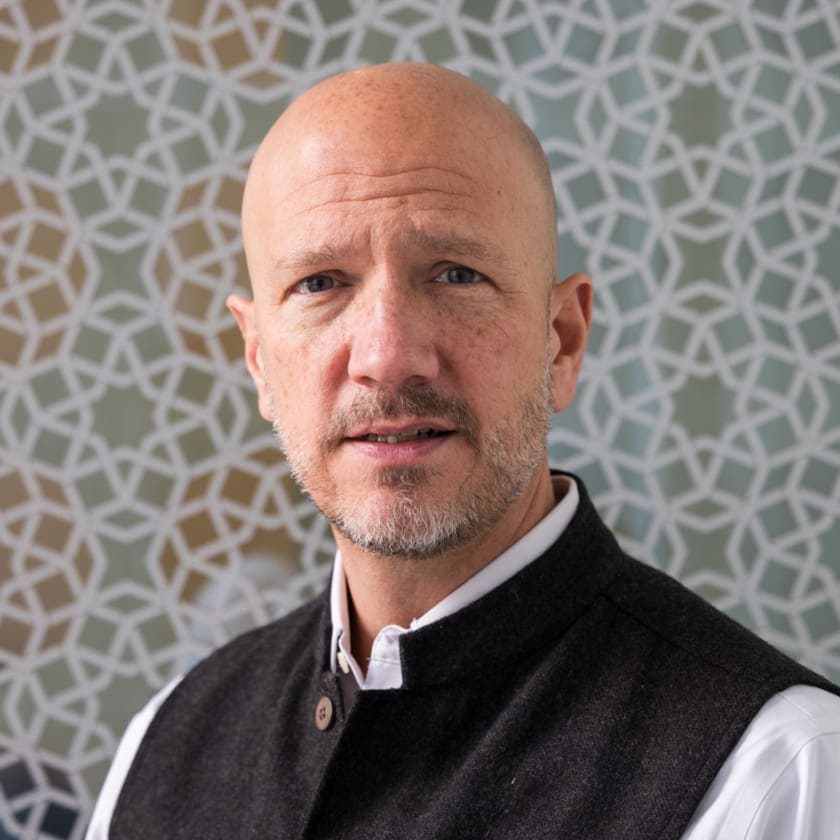
For Dr Matt Reed, Global Director of Institutional Partnerships at the Aga Khan Foundation and CEO of Aga Khan Foundation UK, education is never just a programme to be delivered. It is a shared act of hope, built from the ground up, with communities at the centre.
We spoke to him about why communities consistently prioritise education even in crisis, what participation really means for school systems, and how listening to those closest to the challenges is where the answers are found.
AKF has worked in education for more than a century. How does working closely with communities help build stronger and more resilient school systems?
Whether we’re talking about Afghanistan, Pakistan, Tajikistan, or Kenya, a key dimension of AKF’s work is a long-term, deep commitment to the communities where we’re present, and this is central to building resilient school systems. If you look at the commitment that the Foundation and the wider Development Network have had to girls’ education going all the way back to 1905, when the first Aga Khan schools were established in India, and Zanzibar, and then numerous schools were founded in Pakistan, Kenya, Tanzania, and elsewhere, what has always been absolutely vital is that connection to communities and their needs.
The way we work is by forming representative community organisations – people from all faiths and backgrounds, men and women, sometimes meeting separately and sometimes together, where culturally appropriate. They have conversations about what they need and what they would like to see improved in their lives. Then they rank those priorities. Invariably, education comes near the top of the list, because people understand intuitively that education is a motor for development.
You have noted that in many of the places we work, education is prioritised by communities. Why do communities see education as so important not only for opportunity, but also for stability and wellbeing?
Education is the way we improve ourselves and our prospects for the future. It is no accident that five or six Aga Khan Development Network (AKDN) agencies focus on education in one way or another. We have two universities. We have a network of schools. The Aga Khan Foundation works in education and school systems. The Aga Khan Trust for Culture trains people in crafts, skill-building, music, and the arts.
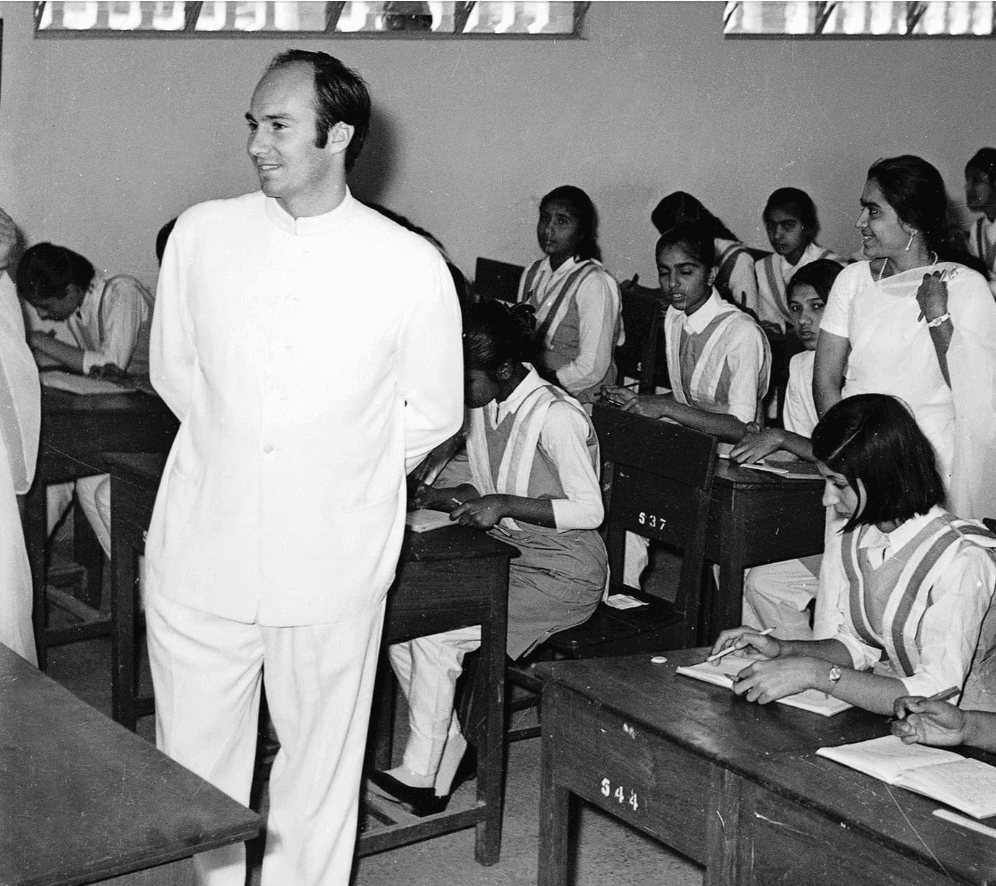
His Late Highness the Aga Khan saw education as the fundamental building block of development. That conviction was personal, but it was also something he learned from the communities we engage with.
That relationship with communities is central to our work. It keeps us anchored and relevant because we are constantly in dialogue – listening to what people need and adapting accordingly. If you look at Schools2030 and other programmes, they reflect the same lesson. Student-centred learning and teacher-led school reform both begin by going to those closest to the challenges and asking: What are you facing? What solutions are you finding? Where do you need help? In listening, you find answers.
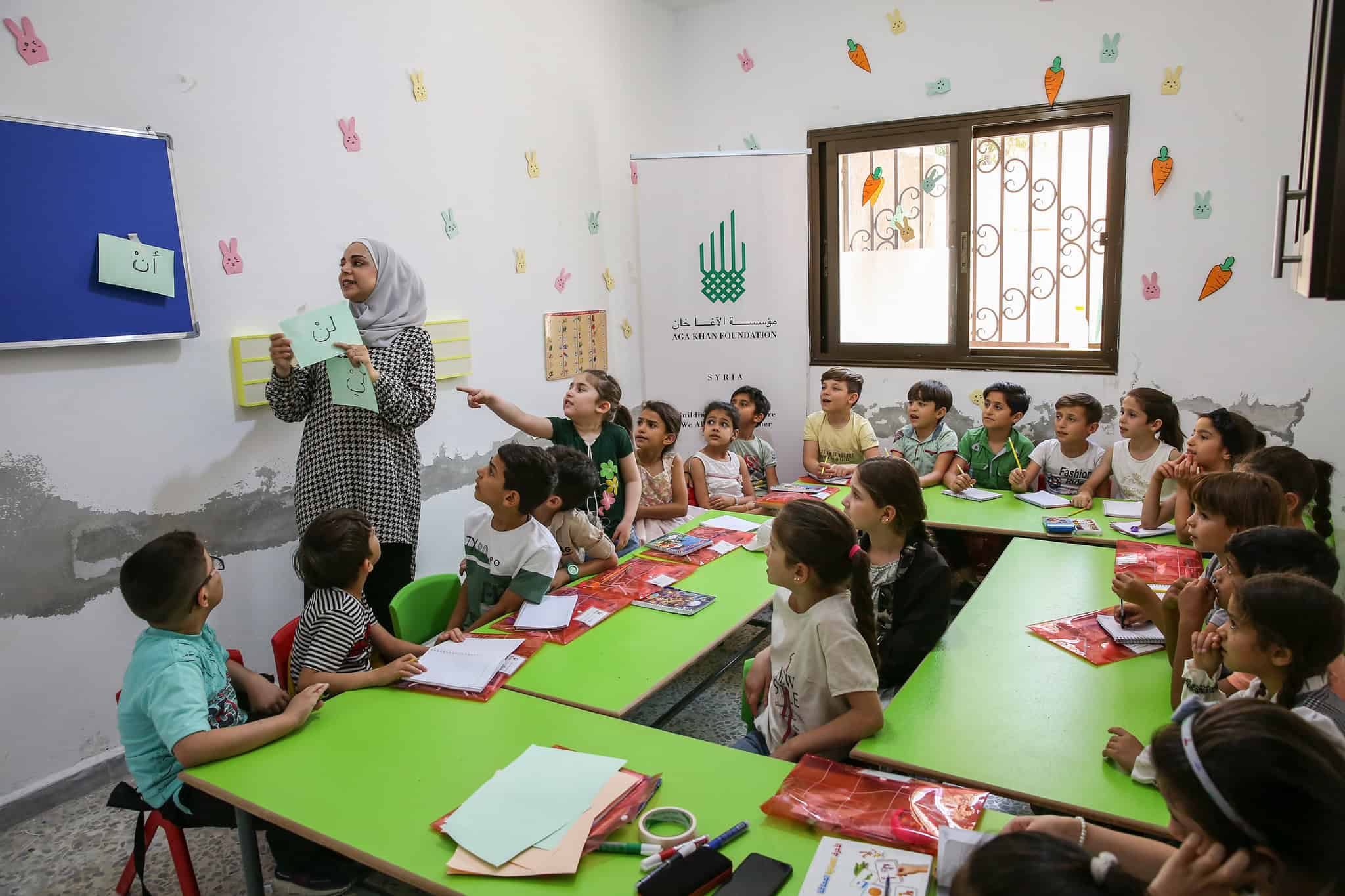
In unstable environments – Afghanistan, Syria, Tajikistan, northern Mozambique – when we conduct rapid community assessments and ask people what they need in times of crisis, education consistently rises near the top. People understand instinctively that education is fundamental to their future. Without it, there is no pathway forward.
We often underestimate the power of education as a driver of hope. If there is no education, how can there be hope?
In places facing crisis or instability, what role does education play in supporting resilience and hope within communities?
In humanitarian situations, we often underestimate the power of education as a driver of hope. If there is no education, how can there be hope? Humanitarian responses understandably prioritise food, healthcare, and immediate survival. Those are essential. But education has not always been given the place it deserves, despite what communities themselves say they want: food, livelihoods, and a pathway to education for their children.
Education does more than prepare individuals; it brings people together. It unites them around a forward-looking purpose. It broadens horizons, literally and figuratively. Because education is a shared aspiration, it has powerful positive effects on social cohesion, emotional wellbeing, and resilience. Without a sense of future, there is little hope and little cohesion. When communities come together around education – parents, elders, teachers – it strengthens bonds across differences.
Why is participation such a critical ingredient when trying to improve school systems at scale?
We’ve learned that participation in and of itself actually improves outcomes. When parents and communities are involved in schools, schools perform better. In Kyrgyzstan, shortly after the pandemic, I visited a Schools2030 school. Teachers, administrators, and parents had come together to identify challenges and develop solutions. Parents raised concerns about learning difficulties. Teachers responded collectively. The discussions were sometimes difficult but always well-intentioned.
The remarkable outcome was that even before measuring specific interventions, learning outcomes improved simply because people were engaged. They were holding themselves and their schools accountable. Engagement created momentum.
This is why our education work focuses on teachers, communities, and local systems. Evidence shows that when people engage in common problem-solving around education, learning outcomes improve. If you step back and examine what drives successful educational interventions, one common factor stands out: dedicated groups of people working together to improve their schools.
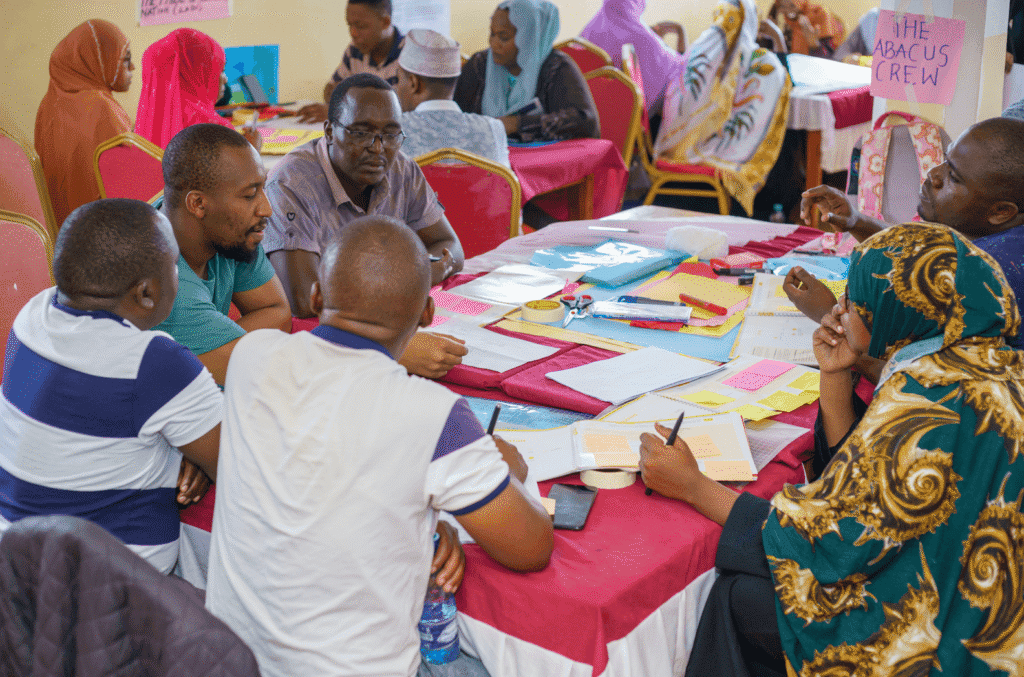
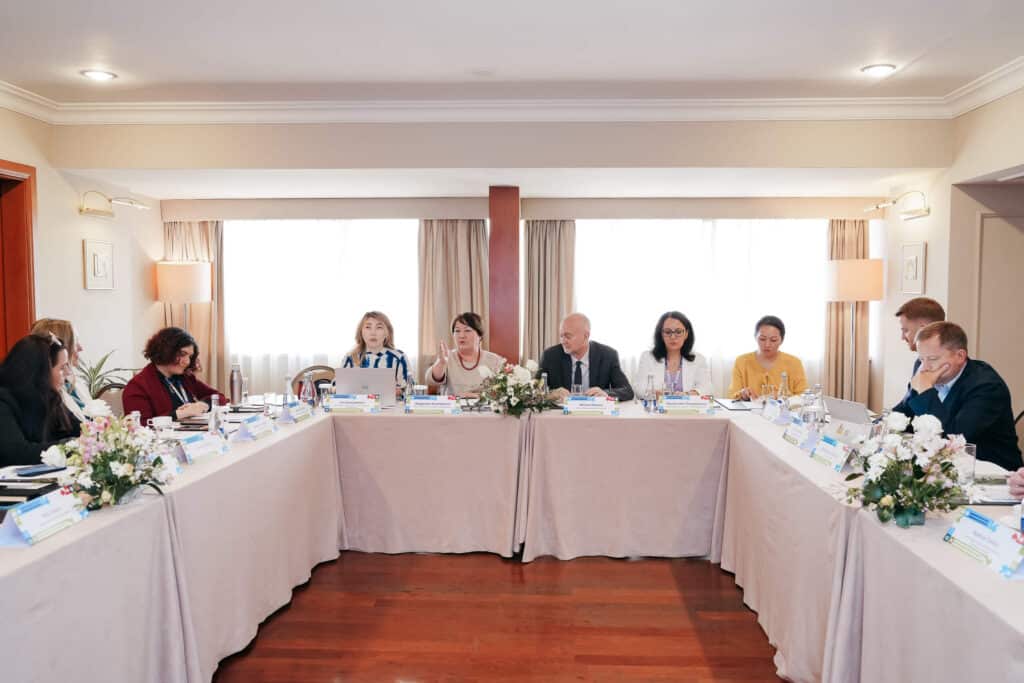
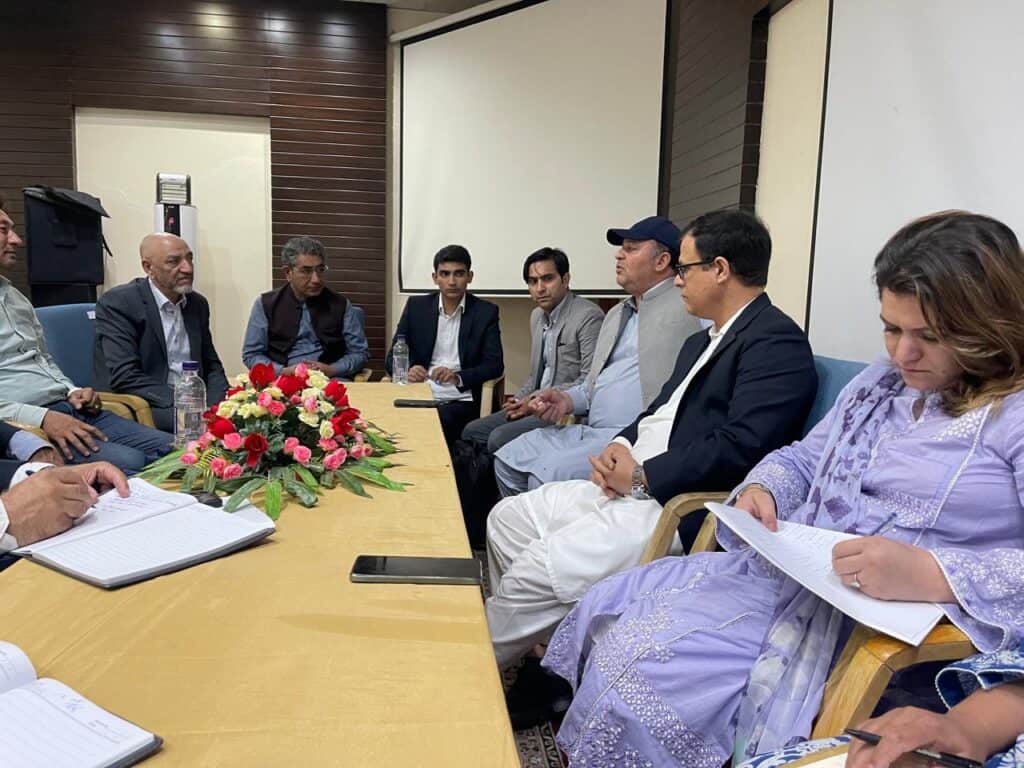
Participation is built into the Schools2030 programme: An HCD Workshop for teachers in Lamu, Kenya; a Ministerial Roundtable at the Schools2030 Global Forum in Kyrgyzstan; the Schools2030 team talks with stakeholders at a conference in Pakistan
Participation is the key ingredient. It is about involvement, respect, and dignity. Schools2030 embodies this through feedback loops and human-centred design. At its core, it is problem-led and solution-oriented. Communities identify challenges, design solutions, implement them, and measure results. And measurement matters—because if you want to move from change in a classroom to change across a system, you must demonstrate impact.
Changing school systems is difficult, even in the least challenging settings. It requires aligning multiple actors – teachers, students, parents, administrators – around a shared culture of inquiry and learning. Anyone who has worked in an organisation knows how hard alignment can be. Now imagine doing that across thousands of schools and vast geographies. It is challenging, but it can be done. Schools2030 is helping identify effective ways to build that mindset and culture.
Even in very difficult circumstances, you emphasise that change is possible. What have you seen in communities and schools that gives you hope for the future?
What gives me hope is the work itself. We continue to work because we believe progress is possible. Even in the deepest crises, we are able to work alongside people, in villages, communities and camps, to improve their lives. If they have not lost hope, how can we?
They endure extraordinary hardship and still ask us to walk with them. That is profoundly motivating. The work creates hope because through it we are building the world we want to see, even amid adversity. If you stop working, you lose hope. And if you lose hope, you stop working. The two go hand in hand.
So, we keep working. Because that is how the future is created.