Schools2030 BRAZIL
Supporting change-making education nationwide.
In Brazil, Schools2030 is implemented through a dynamic partnership between Ashoka and the University of São Paulo’s School of Education (FEUSP), with strategic support from Imaginable Futures.
Schools and educational organizations selected to participate in Schools2030 Brazil are chosen based on the innovations they promote in five dimensions, defined by the Ministry of Education (MEC) in 2015 through the Innovation and Creativity Map in Basic Education initiative: administration, curriculum, environment, methodology, and intersectoral collaboration. Participating institutions are typically public or community-based and serve populations in vulnerable contexts.
At its core, Schools2030 Brazil is grounded in a belief that change-making education fosters the holistic development of both individuals and communities. This vision embraces collaboration among diverse stakeholders and recognizes the importance of learning across multiple spaces and timeframes. It prepares learners not just to absorb knowledge, but to think critically, solve problems creatively, and work collectively for social impact.
Explore more about Schools2030 Brazil
on these dedicated Portuguese-language websites:
Our Team in BRAZIL

Helena Singer
General Coordinator (Ashoka)

Elie Ghanem
Action-Research Coordinator (FEUSP)

Thais Mesquita
Executive Coordinator (Ashoka)

Mariana Nakajuni
Communications (Ashoka)

Carolina Dantas
Support to Communications (Ashoka)

Fernando Tavares
Action-Research Articulator (FEUSP)

Bruna Chung
Support to Action-Research (FEUSP)
The Brazilian Education Context
Brazil is a large and incredibly diverse country, equally well-known for its Amazonian rainforest as for its sprawling megacities. With a population over 212 million, Brazil is also diverse in culture and more that 160 languages are spoken by the Indigenous communities in the country. The homeland of Paulo Freire, Brazil has a long history of popular and participatory education methodologies. Today, education in Brazil is highly decentralised with municipalities and states in charge of education policy and curricular priorities. Learning outcomes are highly unequal between wealthier and poorer members of society, reflective of the historically severe social inequality in the country.
Show More
Current priorities include working for better conditions for teachers, as well as initial and continuing training, incorporating practice and moments of reflections throughout the career as this has a direct impact on students’ learning. Another challenge is to improve learning conditions: schools must have a minimum physical structure and adequate pedagogical resources in terms of curricula, teaching materials and evaluation systems to ensure that everyone learns.
Now, more than ever, Brazil’s education system needs a holistic and equitable approach, engaging students in their learning process, especially to tackle high dropout rates in secondary school. Also, it is fundamental to guarantee appropriate public investments in education, historically low compared to other countries, and improve management: state and municipal departments must mobilise their resources, including budgetary and financial resources, in the service of quality education.
The Brazilian Education Context
Brazil is a large and incredibly diverse country, equally well-known for its Amazonian rainforest as for its sprawling megacities. With a population over 212 million, Brazil is also diverse in culture and more that 160 languages are spoken by the Indigenous communities in the country. The homeland of Paulo Freire, Brazil has a long history of popular and participatory education methodologies. Today, education in Brazil is highly decentralised with municipalities and states in charge of education policy and curricular priorities. Learning outcomes are highly unequal between wealthier and poorer members of society, reflective of the historically severe social inequality in the country.
Current priorities include working for better conditions for teachers, as well as initial and continuing training, incorporating practice and moments of reflections throughout the career as this has a direct impact on students’ learning. Another challenge is to improve learning conditions: schools must have a minimum physical structure and adequate pedagogical resources in terms of curricula, teaching materials and evaluation systems to ensure that everyone learns.
Now, more than ever, Brazil’s education system needs a holistic and equitable approach, engaging students in their learning process, especially to tackle high dropout rates in secondary school. Also, it is fundamental to guarantee appropriate public investments in education, historically low compared to other countries, and improve management: state and municipal departments must mobilise their resources, including budgetary and financial resources, in the service of quality education.
THE THREE-STEP MODEL IN BRAZIL
ASSESS
Since 2020, Schools2030 Brazil has played a leading role in redefining educational assessment by spotlighting innovative practices from across the country. Moving beyond traditional standardized testing, the program focuses on evaluating changemaking learning — assessing how education builds students’ capacity for empathy, collaboration, creativity, agency, and self-awareness.
By researching and systematizing new forms of assessment, the program has assembled a diverse repertoire of tools and methods that reflect the complexity of real learning. These assessments are designed to be contextualized and formative, valuing student autonomy and connection to the wider community.
Schools2030 Brazil advocates for assessment as a process that informs and improves practice, rather than simply measuring outcomes. Their approach emphasizes critical, ethical, and emotional development as key educational goals, aligning with a broader effort to create more just and sustainable societies.
Priority Learning Domains
BRAZIL
PRE-SCHOOL
- Empathy
- Collaboration
- Creativity
- Agency
- Self-awareness
PRIMARY SCHOOL
- Empathy
- Collaboration
- Creativity
- Agency
- Self-awareness
SECONDARY SCHOOL
- Empathy
- Collaboration
- Creativity
- Agency
- Self-awareness
Access examples of assessment tools
from across our programme countries.
All these tools are available free to download below and will continue to be refined and iterated to ensure robust psychometric validity.
We support educational organisations to research their own practices so that they can say what quality education is.
Helena Singer, General Coordinator, Ashoka
INNOVATE
In Brazil, Schools2030 supports the educational institutions it works with to conduct annual cycles of action-research projects – which is essentially a Human-Centred Design process. These cycles are designed to develop or enhance learning -practices, often using tools that assess the design and implementation of these innovations.
Each cycle includes:
- Designing or refining solutions for changemaking learning
- Evaluating their impact using tailored tools
- Sharing insights through national and international convenings, media coverage, reports, and social media content
This iterative process helps ensure that innovations are grounded in real-world school practice and informed by ongoing reflection and learning. The collaboration between schools, civil society organizations, universities, and local education departments creates a vibrant ecosystem where educational experimentation is encouraged, and practical knowledge is shared widely.
SHOWCASE
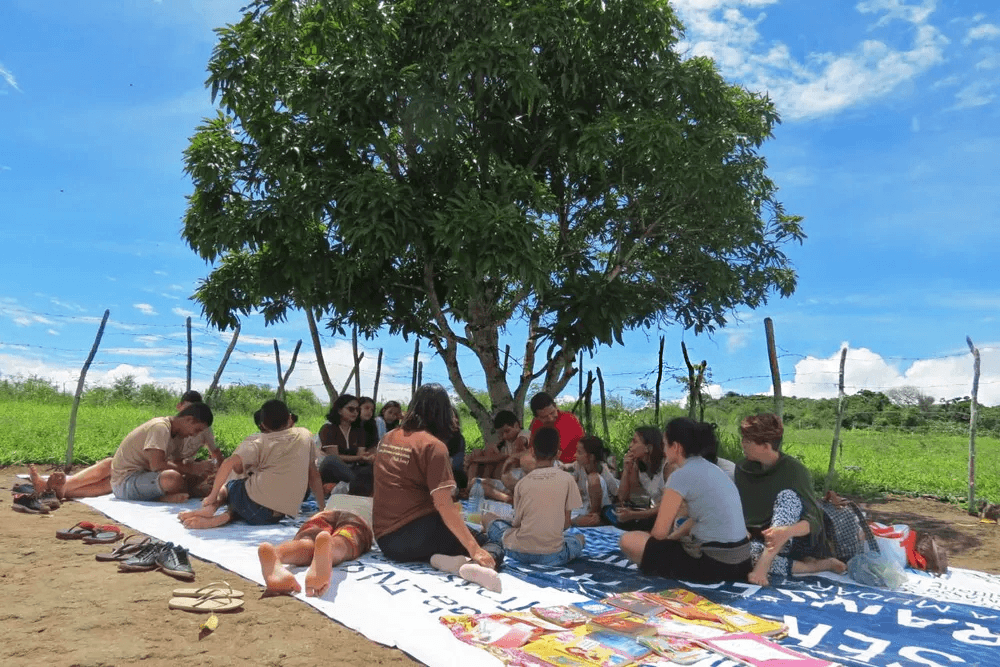
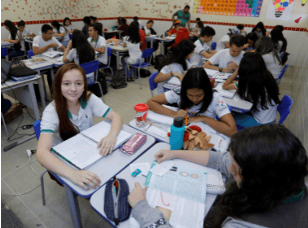
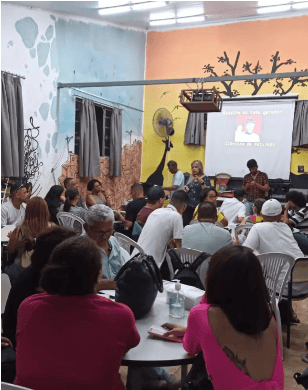
Showcasing is a vital part of Schools2030 Brazil, celebrating the creativity and commitment of teachers while helping to redefine what quality education can look like. Through showcasing, educators share the innovative practices developed in their classrooms—whether on institutional social media channels, in regional and national gatherings, or at global events. These moments not only give visibility to the extraordinary work of teachers but also inspire peers, policymakers, and communities to reimagine education together.
Each year, Schools2030 Brazil creates opportunities for educators to present their action research projects to a wide audience, including fellow teachers, civil society organizations, business leaders, and government representatives. Teachers most engaged in the action research process are often invited to highlight their work, with selection tailored to the theme and context of each event. Beyond the program’s own platforms, Schools2030 Brazil also connects with broader networks, such as national seminars on innovative education and regional events linked to the National Program for Integral Education in Full-Time Schools—ensuring that teachers’ voices and innovations resonate far beyond their classrooms.
News and stories from Brazil
IMPACT AND LEARNING
Brazil
We regularly produce learning and research reports that inform and strengthen our programme delivery. Read and share our latest learnings for Brazil or click below to browse all our reports.
Learning Differences - Brazil
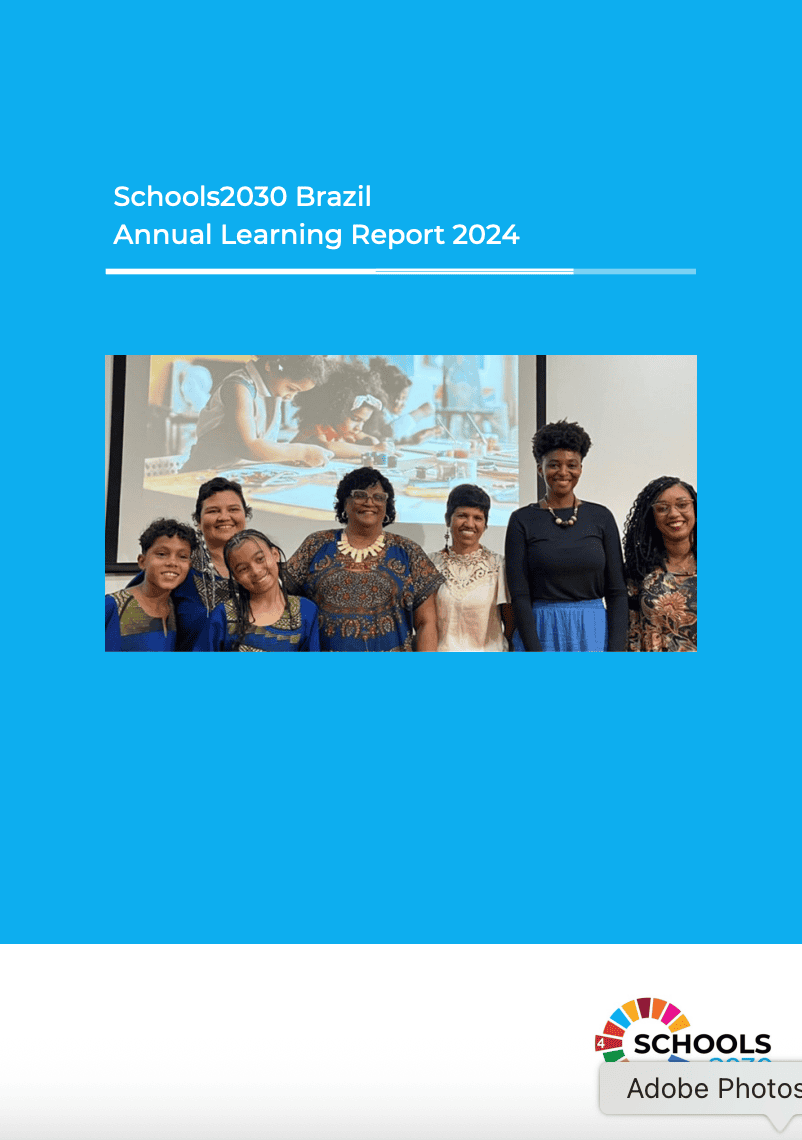
Brazil Learning Report 2024

Recommendations for Policy
Schools2030 Brazil Baseline Evaluation


Explore Schools2030 in our other countries.