10 Years
Teacher Innovator(s): Kerry Ndoro, Regina Maina, Cecilia Muli
Learning Area
Climate Awareness | Health and Wellbeing | Leadership | Numeracy | Respect for the Environment | Science
How might we turn the school itself into a solution to food insecurity?
THE CONTEXT
Ziwa la Ng'ombe, Makande, and Saint Mary's Comprehensive Schools, Mombasa
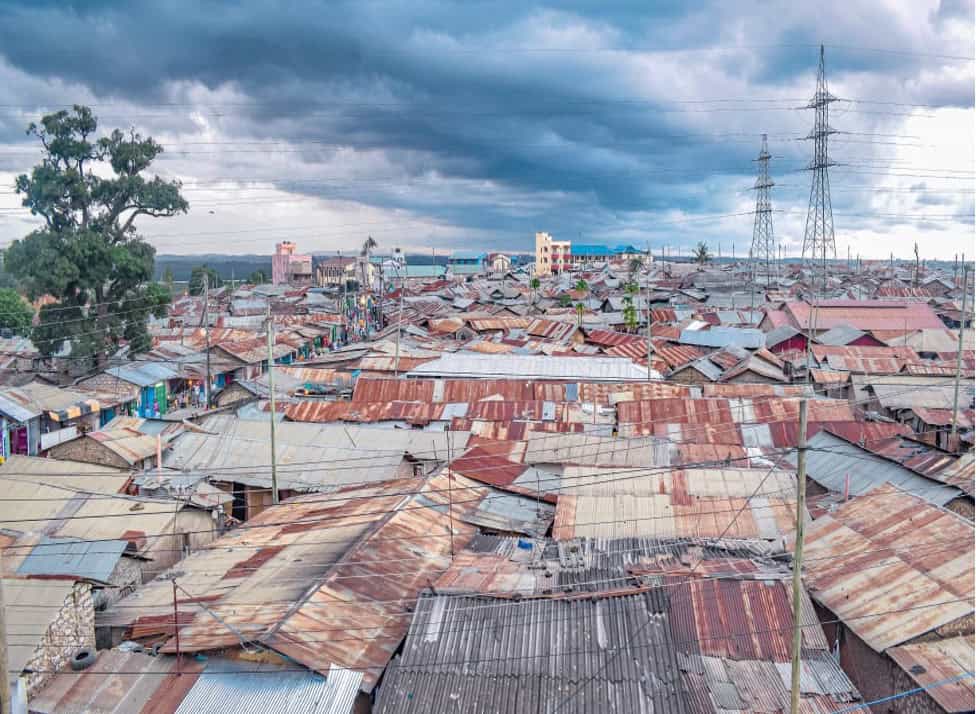
Three schools — Ziwa la Ng’ombe, Makande, and Saint Mary’s Comprehensive — sit within or adjacent to some of Mombasa’s most densely populated informal settlements, including Bangladesh, the second largest slum in East Africa. Together they serve over 3,000 students. Overcrowded classrooms, chronic food insecurity, and high absenteeism are everyday realities here, compounded by a limited understanding of climate change and how to respond to it. For many learners, the school environment offers little connection between what is taught and what is lived.
THE CHALLENGE
How might we turn the school itself into a solution to food insecurity?
For Grade 3 learners across these three schools, hunger and poor nutrition were directly affecting attendance and engagement. Without reliable access to food at home or school, many children simply couldn’t be present — or present enough to learn effectively. At the same time, students had little practical knowledge of where food comes from, how to grow it, or how climate change was threatening their communities’ food systems.
THE INNOVATION
Open Kitchen Gardens
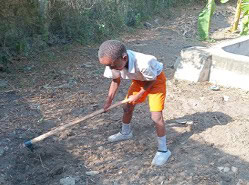
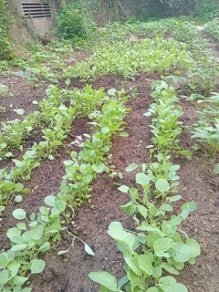
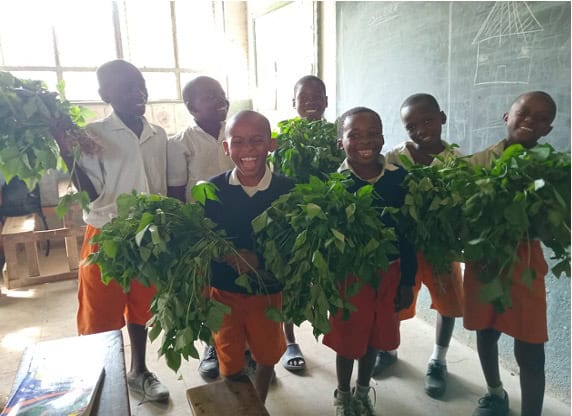
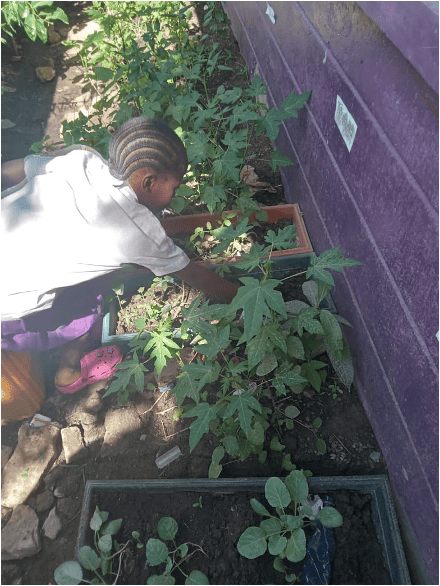
The Open Kitchen Garden transforms unused or underused school land into a living classroom. Grade 3 learners take part in every stage of the agricultural cycle — land preparation, seed planting, transplanting, crop management, and harvesting — integrating hands-on practice with routine classroom assessments to deepen and reinforce learning.
The model is deliberately community-facing. Parents and school leaders are involved from the outset, and students are encouraged to take their skills home and start gardens with their families. The approach hasn’t been without its challenges — pest outbreaks, security concerns in Ziwa la Ng’ombe, monkey disruptions in Makande, and issues like plant dwarfism have all required adaptation — but these obstacles have become part of the learning, building resilience and problem-solving alongside agricultural knowledge.
THE IMPACT
Improved nutrition, reduced absenteeism, and stronger community food resilience across three schools.
The kitchen gardens have delivered measurable results across all three schools. Makande and St. Mary’s both recorded a 20% improvement in academic performance, with Ziwa la Ng’ombe seeing a 10% gain. Beyond the scores, each school has seen its own distinct shifts: Ziwa la Ng’ombe has reported stronger learner communication, collaboration, and performance in health and nutrition; Makande has seen reduced absenteeism and truancy, better parental engagement, and a positive change in attitude towards school; and St. Mary’s has recorded notable growth in learner self-esteem, leadership, and confidence.
The ripple effects have extended well beyond the school gates. Families have begun replicating gardens at home, strengthening food security at household level, and the model has inspired neighbouring schools to adopt similar approaches. Sustainability has been built into the initiative from the start: school leaders, parents, and community members have been involved throughout, ensuring ongoing support and oversight rather than relying on any one teacher to carry it forward.
RESOURCES
Download this innovation as a PDF.
“Our kitchen garden has helped me how to plant, tend plants, and even take care of them together with my friends. The sukuma we harvested we can go home and cook – it gives us health and sweetness. My mother is very happy."
Ruth Esther, Grade 3, Saint Mary's
Explore more innovations from Kenya