The climate crisis demands urgent action. But the solutions most often debated — technology, policy, finance — miss something fundamental: the generations who will live with the consequences of today’s decisions, and whether they have the knowledge, values and agency to act differently. Most responses focus on what adults do now. COCREATE (Collaborative Opportunities for Climate Resilience Empowerment and Transformation through Education) is focused on something equally important — who young people become, and what they are equipped to do next.
One year into this commitment to strengthen climate education, plans and tools have brought real change in classrooms, visible in how teachers teach, and in how students learn and act.
Supported by FCDO and implemented through Schools2030, COCREATE places teachers, learners and communities at the centre of designing solutions that integrate climate awareness and action into everyday learning. Through teacher-led innovations and practical learning activities, classrooms are becoming spaces where students understand climate challenges and develop the skills to respond to them in their communities.
The impact can be seen in the confidence, creativity, and everyday actions inside and outside school. The following are key achievements under COCREATE within its year of implementation:
1. Climate Education Tools Developed and Applied
The project began by developing practical tools to support teachers, schools, and education stakeholders.
Key tools include:
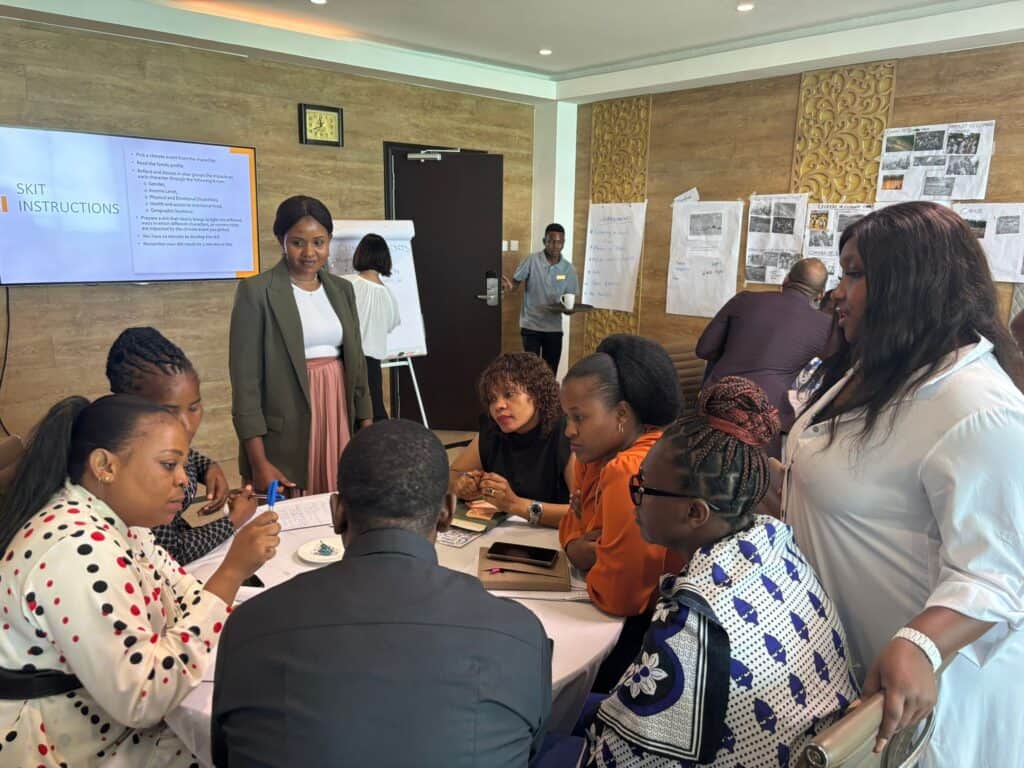
- Draft Green Teacher Professional Development package: Provides foundational knowledge on climate change, including climate justice, localised climate issues, and climate solutions. The package also introduces design challenges and pre-tests on mitigation and adaptation, as well as opportunities to explore climate and environmental action. Practical guidance is included to help teachers apply this learning in the classroom through the four dimensions of climate action: student learning outcomes, teaching practices outcomes, gender inclusion and awareness outcomes, as well as climate & environment awareness and action outcomes.
- 3 Climate Assessment Tools: These tools assess students’ climate awareness and climate-related behaviour change. The tools have been validated by Schools2030’s Global Assessment Partner, Oxford MeasurEd, which conducted a psychometric analysis of all climate assessment tools. The results showed that the assessment tools are reliable, with strong overall performance and excellent item discrimination.
- Education-System Extreme Weather Scorecard: A tool for identifying, ranking, and prioritising strategies to strengthen the resilience of schools in Tanzania to extremes weather events. A Journal Article submitted by the UNDRR (UN Office for Disaster Risk Reduction) to the International Journal of Educational Development found that the scoreboard is a valuable tool for identifying disparities and in resilience between urban and rural education systems.
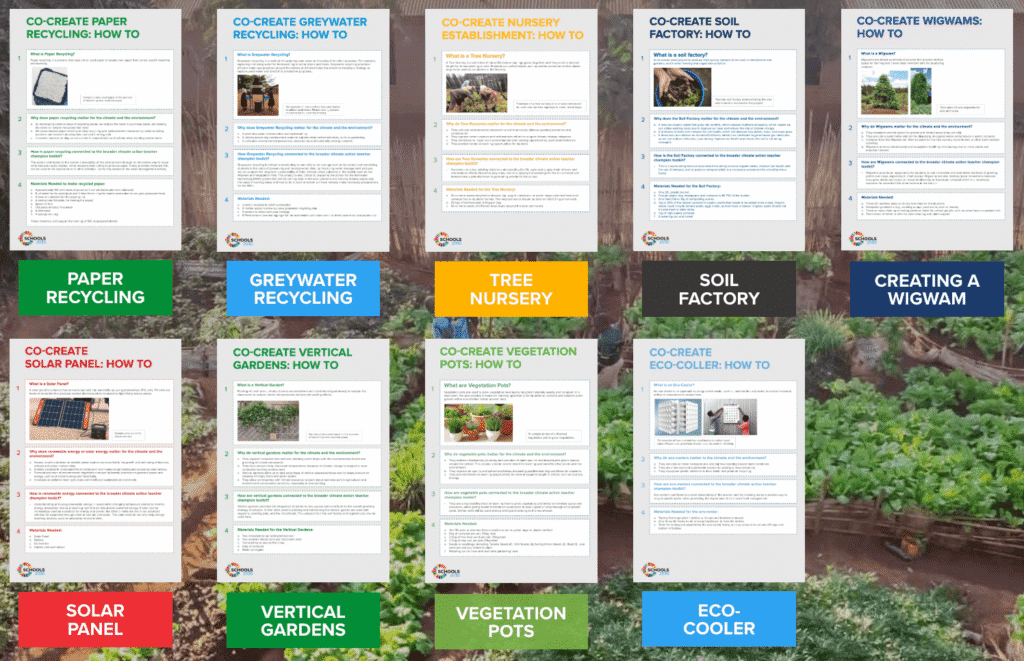
- 9 Climate Action How-To Guides: Developed to support teachers in implementing school-based climate actions as part of greening schools’ initiatives. The “how-to” guides outline the action description, its importance, required materials, and steps for implementation and maintenance. These tools also provide guidance on integrating climate education into everyday teaching and assessing both knowledge and soft skills.
- 2 Video Clips and 10 Case Studies Documenting School-Level Climate Action: Materials documenting climate action initiatives in schools, shared across local and international platforms, including the International Quality Education Conference by Tanzania Education Network (TEN/MET), Utafiti Elimu, and the Schools2030 National and Global Showcase events.
2. Teachers Changing Their Practices
A major achievement of the first year is the shift in how teachers understand and apply climate education.
- 100 green pedagogical solutions were observed and documented. Teachers designed solutions that demonstrate and raise awareness about climate change within the school community.
- Among the 90 teachers who reported actively applying green teaching practices, 30.3% integrate climate actions into their teaching twice per week, 34.4% do so once a week, and 35.3% once per month
Climate solutions were integrated across 14 subjects at three education levels; excluding science subjects, Mathematics accounted for 7% and Language for 6.7% of the reported integration. This shows that teachers are finding creative ways to include climate education in different lessons and not only limiting it to science lessons.
Assessment across four dimensions; Gender and Inclusion, Climate, Learning Outcomes, and Teaching Practice shows strong improvement:
- 85% of teachers created supportive and inclusive learning environments
- 86% clearly communicated expected learning outcomes
- 85% used learning models to guide students in understanding tasks and learning processes
Importantly, 67% of teachers helped co-create climate assessment tools. This gave them ownership and deeper understanding of how to measure students’ knowledge and skills.
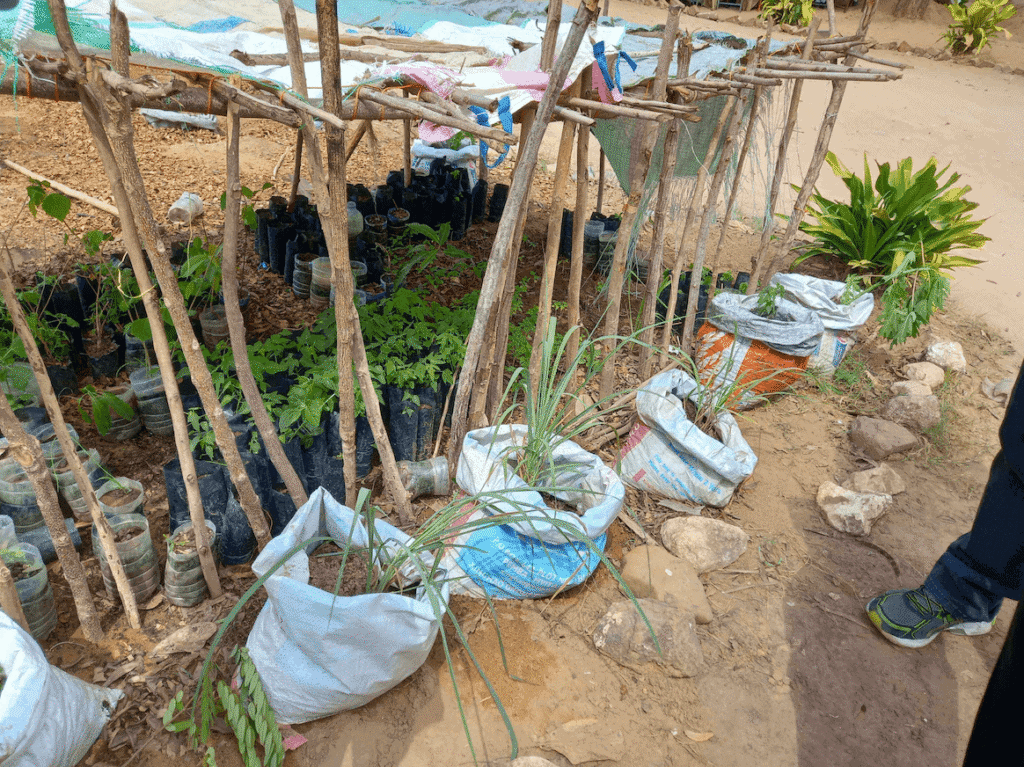
The change continued outside of the schools, with 25 teachers showing personal commitment to making a change by reporting their application of climate practices at home, such as planting vegetation pots.
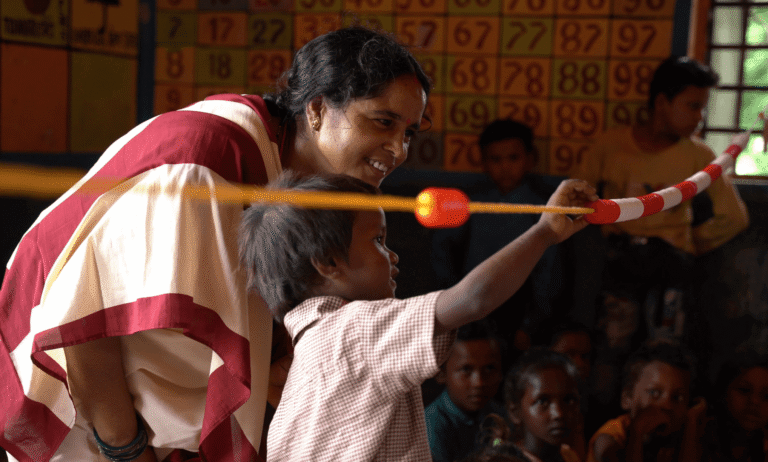
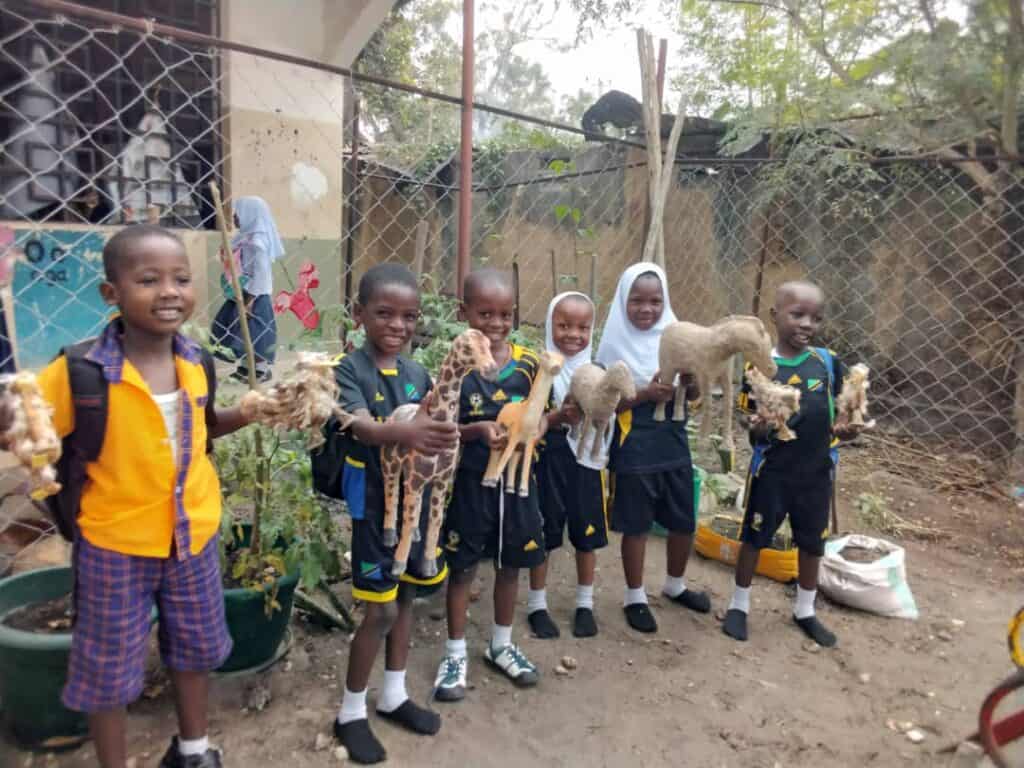
“My solution starts with pupils collecting paper wastes. They count while picking it up, and write down the number of paper wastes collected. We then make recycled papers or other training materials like paper fruits, animals and counters. Now 83% of the pupils can do basic numerals – and we have also managed to control paper waste at school.”
Mwajuma Mlezi, Teacher, Tanzania
3. Strong Student Engagement
Students have actively participated in climate learning and action.
- 90 Environmental Clubs were established, and 80% are active
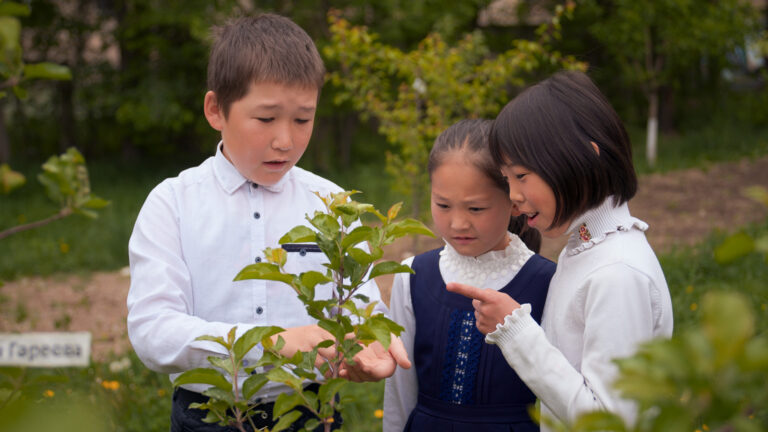
- 30 schools reported students applying climate adaptation practices at home and in school gardens
Through these clubs, students learn teamwork, leadership, and responsibility – data collected on awareness and attitudes toward climate and the environment shows that students are building both knowledge and practical skills.
4. Recognition in Climate Education
The project strengthened AKF’s role in climate education through:
- Established climate actions in schools
- Availability of school-level climate education data to inform learning
- Invitation from the Ministry of Education to review National Climate Change Guidelines for Schools
- Participation in the Ministry’s Technical Working Group for development of a Green Climate Fund proposal
Looking Back
In its first year, the COCREATE project has developed structured climate education tools and documented 100 green teaching practices, while supporting 90 teachers to actively integrate climate learning into their classrooms. Alongside this, 90 Environmental Clubs have been established and the use of climate education data in schools has been strengthened.
Looking ahead, the climate education portfolio presents strong opportunities to deepen and scale impact. This is currently being done through:
1. Scaling Climate Education through Schools2030
- Adopt and adapt promising climate actions and pedagogical solutions in new school and community settings
- Collaborate with the Tanzania Ministry of Education, Science and Technology (MOEST) to co-create a How-to Guide supplement to MOEST’s 8 National Climate Coping Actions
2. Other Opportunities Through Education Improvement Program (EIP)
- Climate Resilience Scorecard: Initiating a National Dialogue for Collective Buy-in
- Draft Green Course: Engage and collaborate with education actors, internally and externally, such as AKF Kenya, to review material for further testing and scale up
Behind each statistic is a classroom, a teacher trying something new, and students learning how to respond to climate challenges in practical ways. A shift is already present in these classrooms, showing that climate education can be structured, measurable, and meaningful to communities as a whole. And taken together, this work really points to something bigger: that educating young people for the climate is not a peripheral concern — it is one of the most important investments we can make in the long-term health of our planet.