10-15 Years
Teacher Innovator(s): Totukan Mamajanova, Mira Abdyrazakova, Zhyparkan Sooronbaeva, Mirgul Sherova
Learning Area
Building Confidence | Critical Thinking | Numeracy | Problem-Solving | Science
How might we help students distinguish between true and false mathematical statements, think critically, and build confidence through logical reasoning and conceptual understanding?
THE CONTEXT
Barpy Alykulov Secondary School #38, Osh
Osh, the second-largest city in Kyrgyzstan and one of the most ancient settlements in Central Asia, is often referred to as the country’s “second capital.”
As of 2025, Osh is home to approximately 375,400 residents, representing a broad spectrum of ethnic groups including Kyrgyz, Uzbeks, Russians, Ukrainians, Koreans, and others. This rich tapestry of cultures lends Osh a distinctive multicultural character.
Situated just five kilometres from the border with Uzbekistan, Osh holds strategic significance as a key centre for cross-border cooperation, trade, and cultural exchange. Its geographical location has long contributed to its role as a vital hub in regional connectivity and commerce.
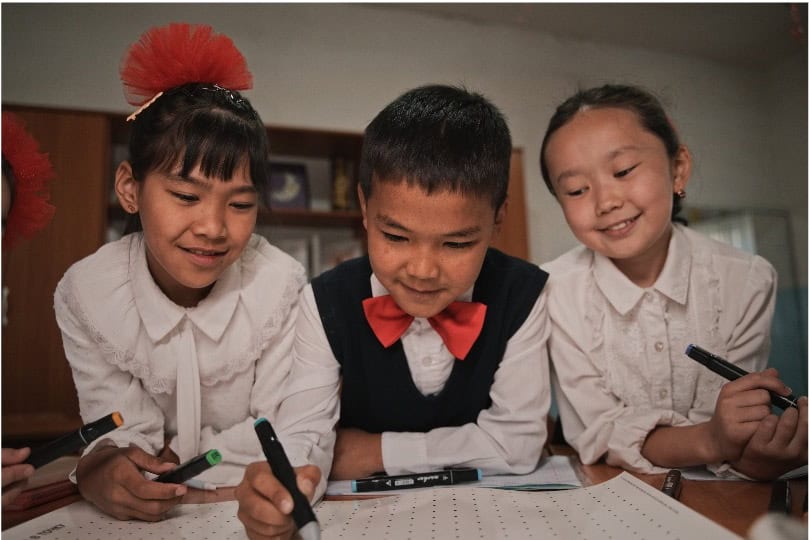
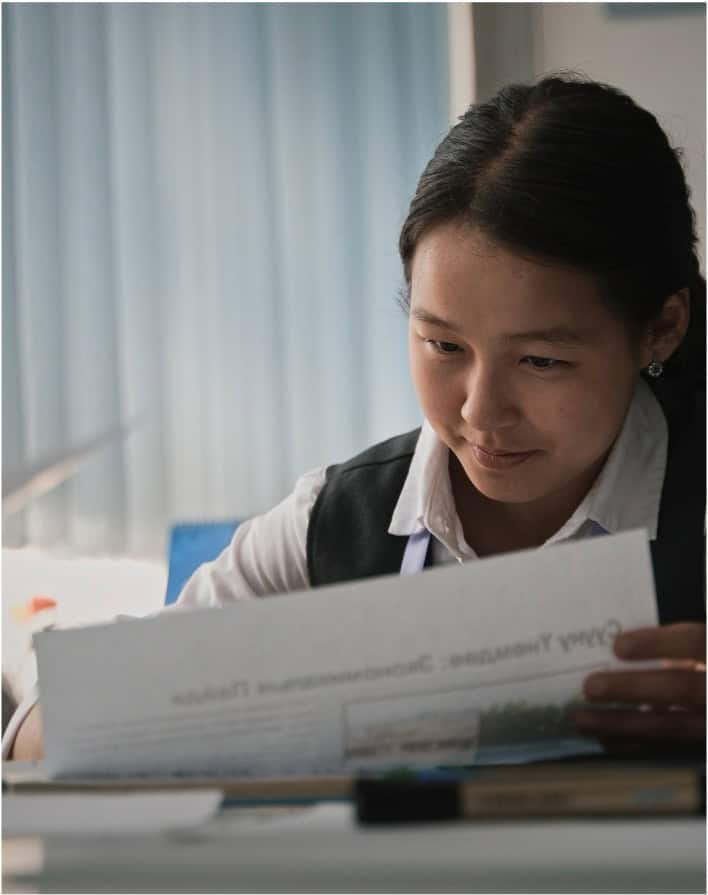
Among the city’s educational institutions is Secondary School No. 38 named after Barpy Alykulov, located in the Manas Ata microdistrict (formerly known as KhBK) of Osh. The school serves more than 1,350 pupils and is committed to providing a safe, inclusive, and supportive learning environment.
THE CHALLENGE
How might we help students distinguish between true and false mathematical statements, think critically, and build confidence through logical reasoning and conceptual understanding?
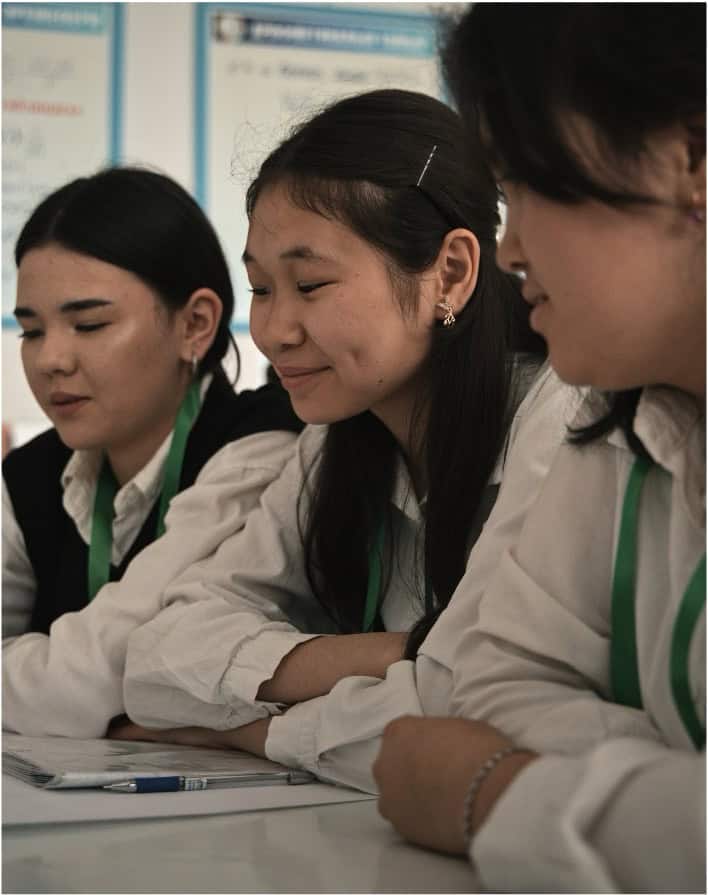
Observations and interviews conducted by the design team revealed that many students face significant challenges in solving mathematical problems. Specifically, they struggle to identify unknowns, analyse given information, and apply critical thinking skills. Instead of understanding problems conceptually, students tend to use formulas mechanically, without grasping the underlying logic or reasoning.
At the same time, the research showed that students lack awareness and understanding of the issue of clean water—an urgent and relevant problem, particularly in Osh city. Many students were unable to explore this topic meaningfully due to weak logical reasoning, limited computational skills, and underdeveloped critical thinking. Interviews with students and families revealed that they often do not fully understand or share information about the consequences of water pollution.
This disconnection between mathematics and real-life issues has negatively affected students’ learning experiences. Many students feel discouraged and lack self-confidence in their mathematical abilities. Their declining interest in mathematics is further fuelled by an inability to see its relevance to everyday life and urgent societal challenges. This situation hinders not only their academic growth but also their development as active, informed, and responsible citizens capable of using mathematical thinking to address real-world problems.
THE INNOVATION
AQUAMATICS – Math for water matters
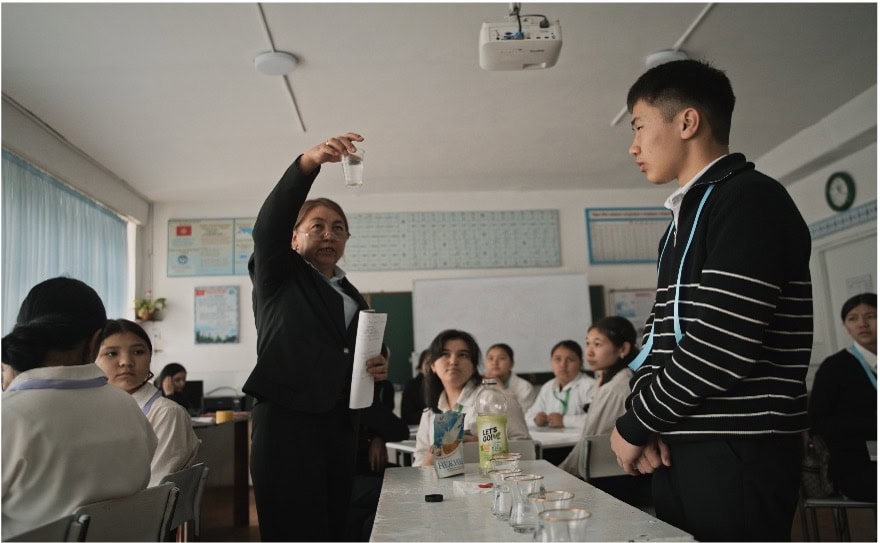
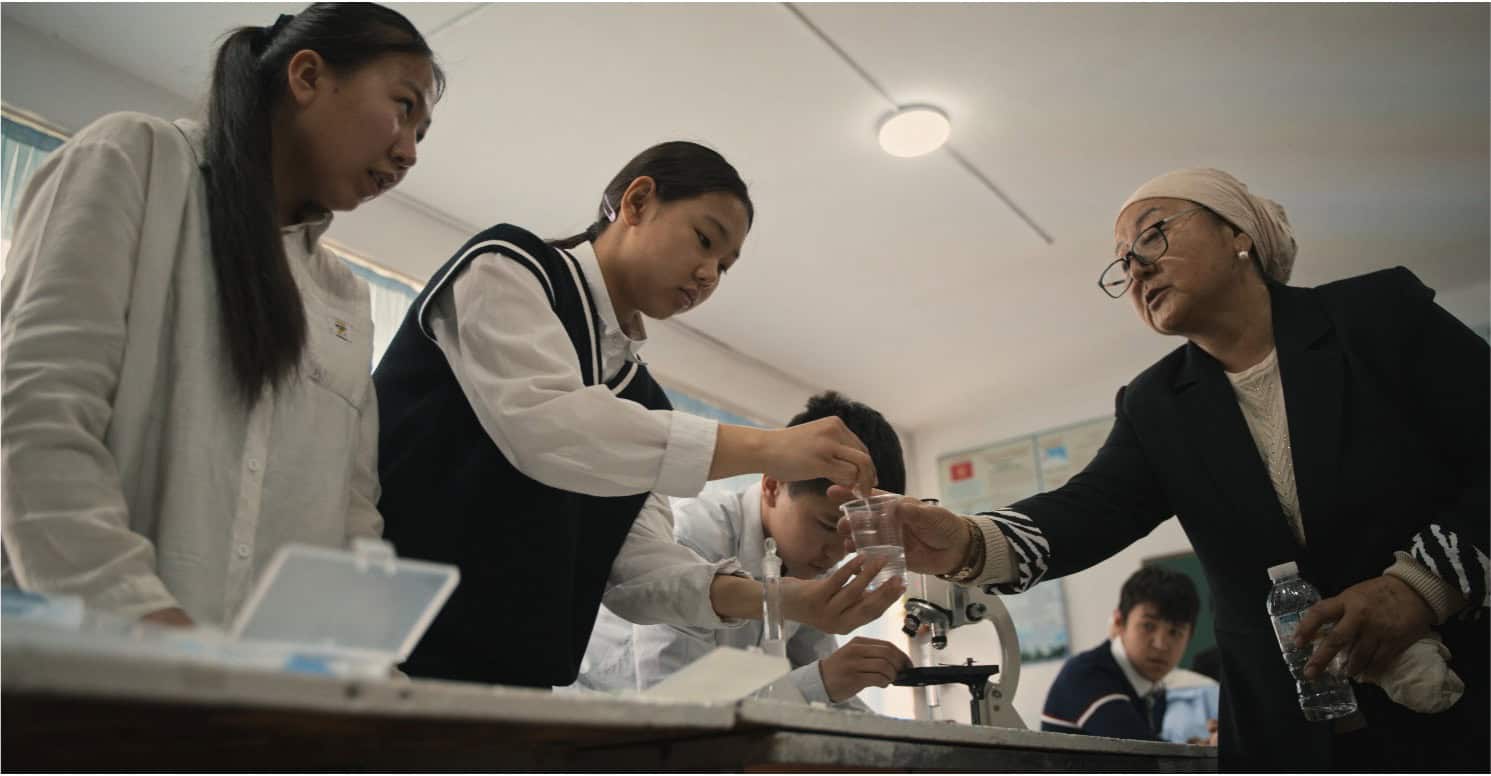
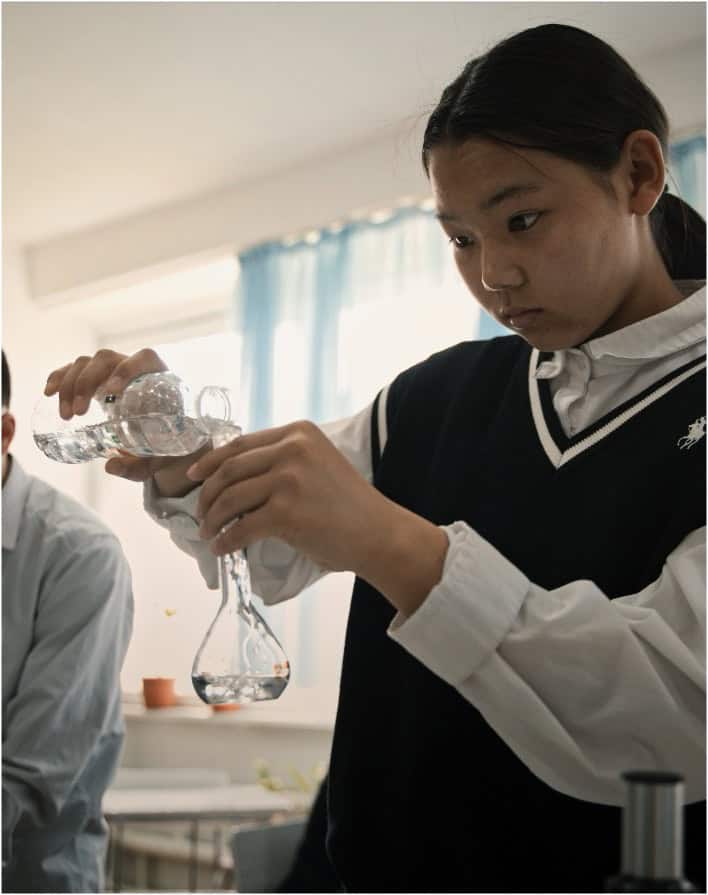
AquaMatics is an interdisciplinary, research-based learning initiative that empowers students to tackle the real-world issue of water pollution through the lens of mathematics and science. By combining theoretical knowledge with practical experimentation, students explore the causes and consequences of water contamination and depletion, while learning to analyse and interpret their findings using mathematical tools.
Through fieldwork and laboratory experiments, learners observe pollution in local water sources, apply filtration techniques, and measure both the quality and quantity of water under varying conditions. Using data modelling, statistical calculations, and visual representations, they not only understand the problem in depth but also propose evidence-based solutions rooted in mathematical reasoning.
At the heart of AquaMatics lies the belief that mathematics is not just a subject, but a powerful tool for environmental change.
Key Components of the Solution:
✅ Investigating the dynamics of water pollution and scarcity using mathematical modelling and data analysis;
✅ Analysing filtration efficiency and water quality through scientific and visual methods;
✅ Enhancing students’ skills in observation, experimentation, and scientific thinking;
✅ Presenting mathematical findings through graphs, charts, and tables;
✅ Developing the capacity for critical environmental analysis and solution design;
✅ Engaging with the community to raise awareness, using clear, accessible communication and public presentations.
Outcomes and Impact:
📌 Students developed a robust understanding of water-related issues through scientific inquiry and mathematical interpretation;
📌 They conducted independent research, identified root causes, and communicated their conclusions using digital tools and visual formats;
📌 The solution fostered critical thinking, environmental literacy, and teamwork;
📌 Learners gained confidence in applying mathematical concepts to address real-life challenges in their local environment;
📌 The wider community, inspired by student-led outreach, began to show greater awareness and responsibility in relation to sustainable water use and environmental protection.
THE IMPACT
Enhanced mathematical literacy, better critical thinking, and improved environmental awareness.
As a result of the implementation of this solution, students engaged deeply with the crucial issue of clean water, applying scientific research methods and mathematical calculations that enhanced their logical reasoning skills.
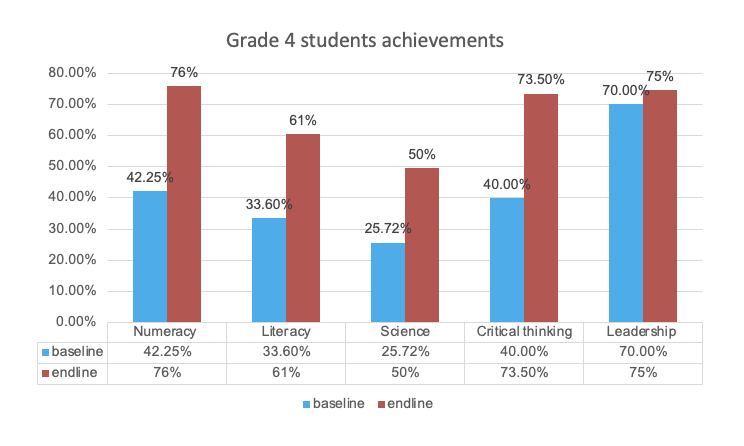
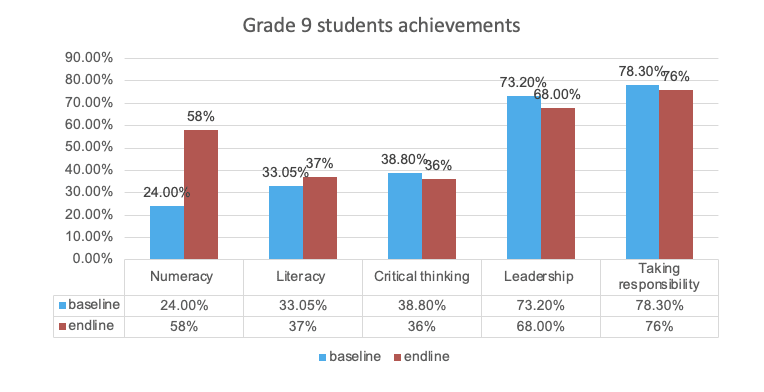
Notably, students’ mathematical literacy improved significantly. Fourth-grade students increased their mathematics knowledge from 42.2% to 76%, marking a rise of 33.8%. Similarly, ninth-grade students demonstrated an improvement from 24% to 58%, an increase of 34%. Alongside this, their research skills were honed, and their capacity for independent analysis was strengthened.
Furthermore, the solution contributed to a marked improvement in students’ reading and comprehension abilities. This advancement can be attributed to the interdisciplinary nature of the project, where students worked with mathematical data alongside diverse sources of information related to climate change and adaptation.
Through this process, students developed critical reading skills, including text analysis, extraction of key information, comparison, identification of cause-and-effect relationships, and drawing reasoned conclusions.
This holistic approach enabled them to appreciate the interconnections between subjects, bridge theoretical knowledge with practical application, and cultivate comprehensive, integrative thinking.
RESOURCES
Download the story of this innovation in PDF form below.
Explore more innovations from Kyrgyzstan