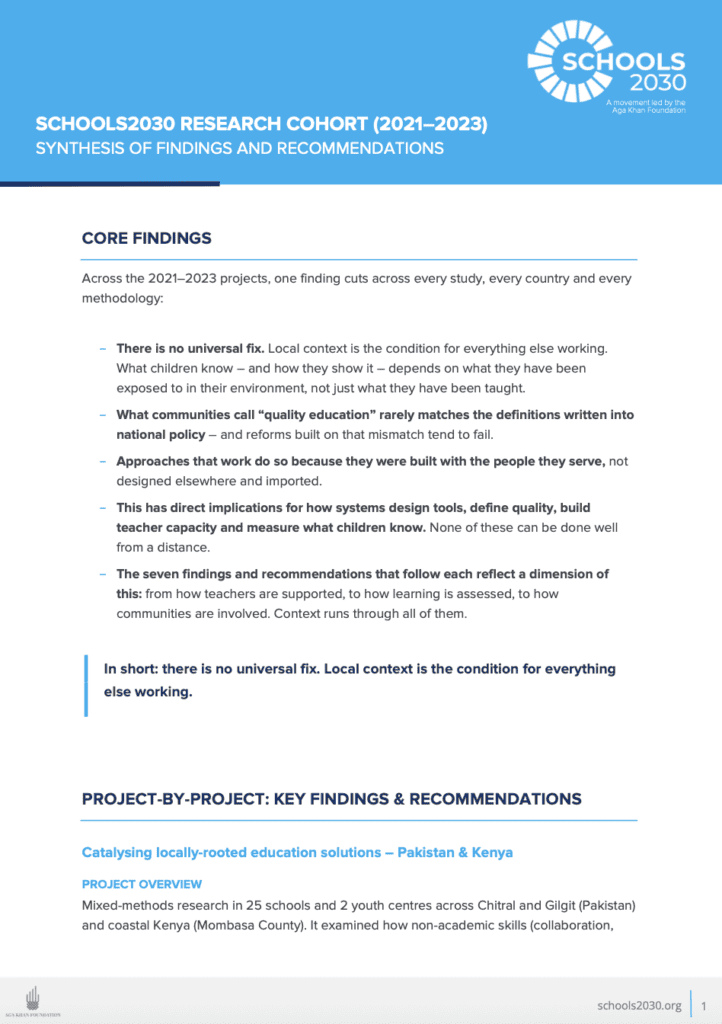
A new synthesis report from the Schools2030 Research Cohort (2021–2023) draws together findings from five studies across five countries to ask what genuinely supports whole-child learning at scale. The answer, consistent across every study and every methodology, is that local context is not a variable to be managed — it is the condition for everything else working.
The cohort brought together research teams from the University of California Berkeley, UNICEF Innocenti, Right To Play, Nazarbayev University and others, working across Tanzania, Kenya, Pakistan, Kyrgyzstan and Tajikistan. Their studies examined how social-emotional and academic learning intersect in real classrooms, what communities actually mean when they talk about quality education, and whether the tools systems rely on to measure learning are fit for purpose.
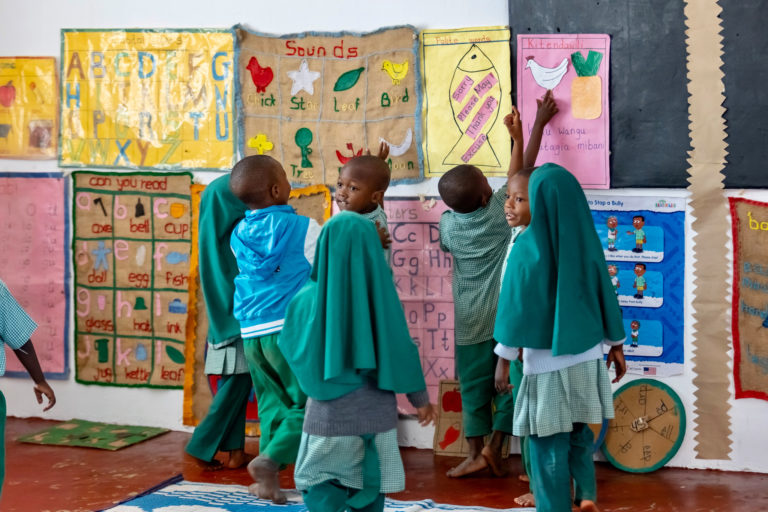
The evidence they gathered is striking in its consistency. In Kenya, children scored lower on picture-based vocabulary tests not because they knew less, but because picture comprehension itself is culturally learned — a finding with direct implications for how assessments are designed and deployed. In Kyrgyzstan and Tajikistan, communities consistently described quality education as a blend of academic and ethical upbringing, a definition largely absent from the national reforms meant to serve them. And in Tanzania, play-based and design-thinking approaches only delivered sustained results where tools and measures were co-created with local educators and communities rather than imported from elsewhere.
Across the cohort, two other themes stand out. Teachers matter most — and are the most under-supported. Teacher beliefs, agency and capacity are decisive for whole-child learning, yet training, retention and wellbeing remain insufficient across all research contexts. And what gets measured gets prioritised: the absence of credible, contextualised tools for social-emotional learning keeps it peripheral in classrooms and invisible in policy.
The full synthesis report sets out eight findings and seven recommendations, covering everything from how SEL assessment needs to change, to why community partnerships are more powerful than they are currently used.