We are five years into a partnership to improve assessment for holistic learning worldwide — what does this partnership mean to you at Oxford MeasurEd, and how has it changed?
When Bronwen (Schools2030’s Global Programme Manager) first outlined the Schools2030 approach, the questions she raised were ones I had been grappling with for years. Is it possible to design assessment that is meaningfully unifying across countries, yet still deeply contextually relevant? How do you build teacher ownership so that assessments are genuinely useful in classrooms? At the time, I had ideas about how this could be done differently — but no proof of concept. And, in truth, neither did anyone else.
Together with ECD Measure, Dr Sughra Choudhry Khan, country teams, and National Assessment Partners, we have tested a fundamentally different approach: placing teachers at the centre, prioritising contextual relevance, and combining this with the rigour of international assessment practice. We have developed academic and social-emotional assessments for nine countries and used the resulting data to improve learning outcomes for large numbers of learners. We have also learned that innovation is not about getting everything right the first time — it is about navigating complexity, learning quickly, and creating pathways others can follow
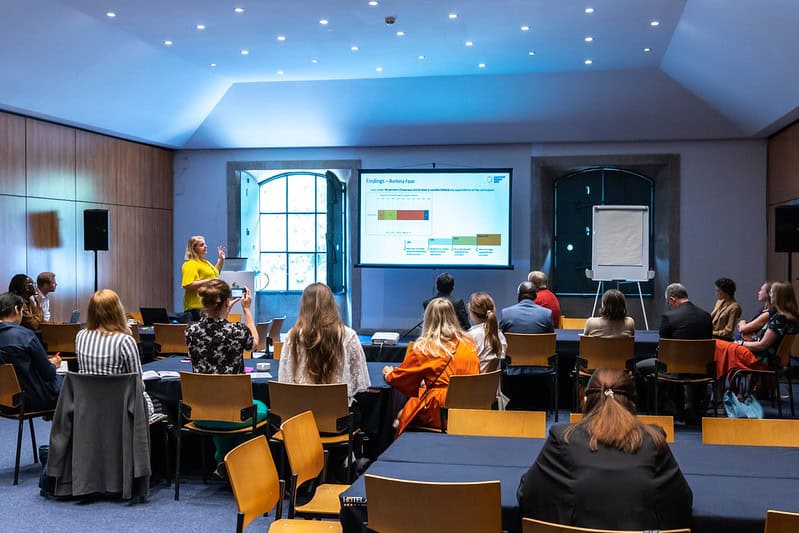

Looking back, what’s the achievement you’re most proud of? And what was harder than expected?
What I am most proud of is that the partnership has made it legitimate to take holistic learning seriously — and to measure it — without reducing it to something simplistic or harmful. That includes creating tools that did not previously exist without imposing them externally, shifting assessment from judgement to insight, and holding a strong ethical line: The assessments in Schools2030 are to support teachers – not to create league tables and not to compare teachers or schools.
The hardest challenge has been building credibility for an approach that depends on human judgement and teacher involvement. That runs counter to many dominant assessment paradigms, and it takes time to demonstrate that this approach can be both rigorous and contextually relevant.
The key is that both rigour and contextual relevance do not come from uniformity — it comes from process, through partnership.
The launch of the Schools2030 Item Bank was a major milestone. What is it, why does it matter, and what did it take to build?
A core part of the Schools2030 assessment work has been the development of global public goods—platforms, tools, and guidance that enable others to assess holistic learning outcomes in cost-effective ways.
The item bank emerged from this work. Initially, it was used internally by National Assessment Partners and hosted on the Schools2030 Assessment Hub, which Oxford MeasurEd established to support collaboration, tool development, and shared learning across countries.
The item bank allows users to search and access assessment items developed across countries, filtered by language, subject, grade level, and other characteristics. It also provides data on item difficulty and performance.
Its importance lies in flexibility and relevance. Off-the-shelf assessments may appear cost-effective, but they often fail to align with local curricula or learner levels. The item bank allows users to construct or adapt assessments that are both contextually appropriate and technically sound.
The item bank spans contexts from Afghanistan to Portugal to Uganda. How do you design for that diversity without losing rigour?
The key is that both rigour and contextual relevance do not come from either complete uniformity or complete differentiation — it comes from a unified process, through partnership. National partners develop frameworks and tools grounded in their context; global experts provide technical feedback; tools are piloted and analysed psychometrically; then refined and implemented by teachers. This ensures diversity is preserved while rigour is strengthened through evidence and iteration — using a partnership approach, where each partner’s skills and expertise are leveraged.
Which of Schools2030’s three principles — useful for teachers, contextually driven, free and open source — has been hardest to deliver?
The most challenging principle to deliver consistently has been ensuring tools are genuinely useful for teachers.
Designing contextually relevant tools is complex but achievable through co-creation. Making them open-source is largely a structural decision. But ensuring tools are truly usable in real classroom conditions – amid time constraints, workload pressures, and varying levels of assessment literacy – is much harder.
“Useful” means that teachers can easily interpret results and translate them into action. That requires not just good tool design, but also training, support, and alignment with everyday teaching practice. To support this, we have also developed additional guidance materials to improve teachers’ assessment literacy, so they understand how to construct items for use in their classroom, interpret results, and use the insights meaningfully in their classrooms.
What does it take to introduce SEL assessment responsibly — and what can go wrong?
Introducing Social and Emotional Learning (SEL) assessment is not just a technical exercise – it is a cultural and ethical shift.
To do it responsibly, tools must be culturally grounded rather than imported wholesale, and co-designed locally. There must be clarity of purpose — supporting learning, not ranking or labelling. Items must be developmentally appropriate, and ethics, privacy, and safeguarding must be prioritised throughout.
For example, even a concept like “respect” can manifest very differently across contexts. In Australia, where I am from, in some cultural contexts, making eye contact with elders signals respect; in others, it signals disrespect.
If done poorly, the risks are real: cultural misinterpretation of behaviour, labelling learners in ways that limit growth, and teacher overload leading to superficial implementation.
This is why careful design, piloting, and ongoing reflection are essential.
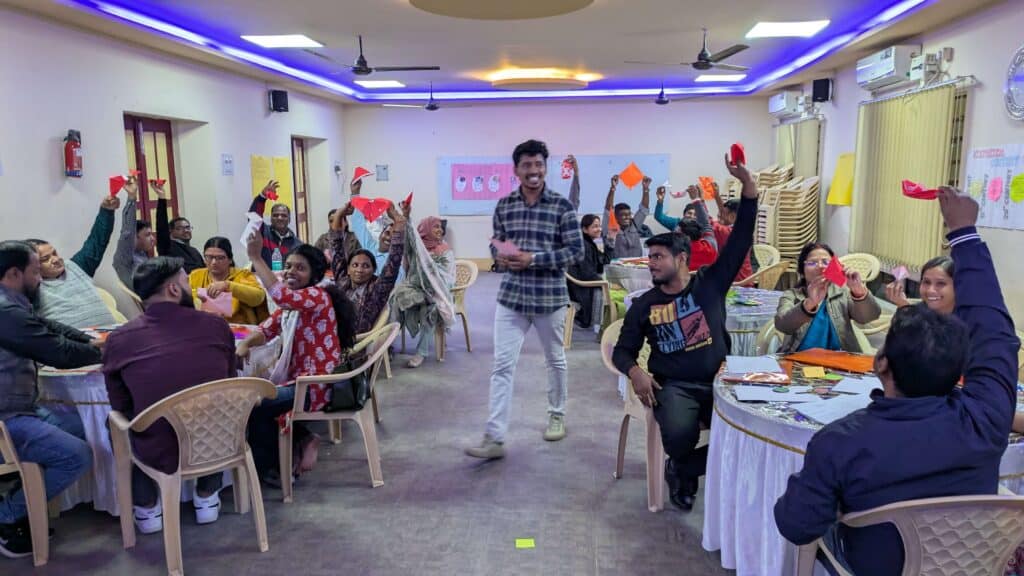
A teacher in Uganda said: “Previously I was just scoring my students — now I am assessing their learning.” How much does that shift matter?
That shift is absolutely central. In earlier work in Uganda, we observed a culture of over-testing but underuse of data — scores sent home repeatedly, without meaningful insight into how learners could improve. That one sentence says more about the impact of this programme than almost any data point I could offer.
After so many exciting years, what does the next chapter look like?
Education systems across the world are increasingly prioritising holistic learning through competency-based curricula and skills like creativity, self-management, and collaboration. The challenge now is not just defining these outcomes, but measuring and improving them effectively. The next chapter is about scaling what we have shown to be possible — supporting entire systems to adopt and embed these approaches, reaching into teacher development, school leadership, labour markets, and the incentives that shape behaviour across the whole system. What excites me most is the opportunity to share what we have learned with others who are ready to tackle these challenges together. We have a proof of concept now. We did not have that five years ago.
Thank you, Rachel.