Schools2030 TAJIKISTAN
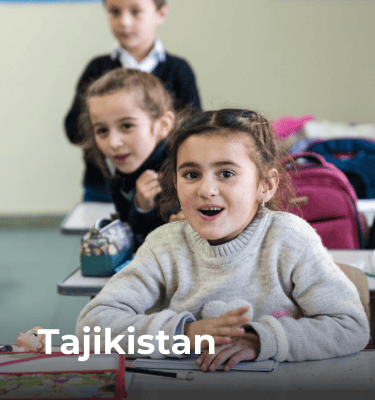
Delivering transformative learning across all four provinces (GBAO, Sughd, Khatlon, DRS) and in the capital, Dushanbe.
In Tajikistan schools are selected to join the programme based on a cooperative process between the Ministry of Education and Science (MoES) and the Schools2030 Tajikistan team at AKF. In 2020, AKF worked to develop a set of criteria for selecting schools that included the schools’ openness to experimentation and geographical location. The MoES proposed schools based on this criteria, who were then invited to take part in the programme. Each school selects three teachers who make up a design team for that school.
After initially operating in GBAO only, the Schools2030 model was rolled out across each province by the MoES, who deliver the programme with support from the Schools2030 Tajikistan team. The MoES, along with their sub-institutions, support on delivering Human-Centred Design (HCD) trainings to teachers, conduct mentoring and coaching, and monitor the implementation of the teachers’ innovations in schools. They are also part of the National Advisory Committee and provide guidance on how to ensure the work of the programme aligns to curricular priorities. The Schools2030 Tajikistan team at AKF continually provide support through mentoring and coaching activities throughout the HCD journey.
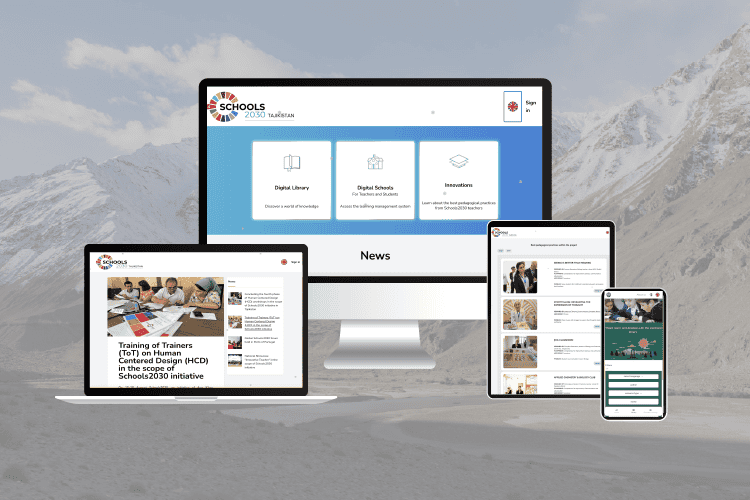
The Digital Learning Platform
Initially designed as a response to school closures during the pandemic, Schools2030 Tajikistan have developed Tajikistan’s first educational database, the Digital Learning Platform. Comprising resources for schools, teachers and students in Tajik and Russian, including lesson plans, assessment tools, study guides, a digital library and more, the Digital Learning Platform also houses many of the holistic learning innovations created by teachers in the programme.
Our Team in TAJIKISTAN

Sherali Saidoshurov
Schools2030 National Coordinator

Firuza Nazarkhudoeva
Regional Officer

Safo Gulomaseinov
Project Officer

Najiba Temurshoeva
Communication Officer

Sadbarg Mirova
Senior Programme Officer
The Tajik Education Context
Tajikistan is a mountainous and landlocked country in Central Asia, famous for its snowy peaks, glacial lakes and nature reserves. Previously a member of the Soviet Union, Tajikistan became independent in 1991. Unfortunately, a civil war lasting until 1997 has hampered progress in certain areas, compounded by a highly mountainous and often inaccessible topography.
Show More
Despite these challenges, Tajikistan has some very positive indicators for education, with the enrolment rate in primary education at 99% for both girls and boys. Transition to secondary school is also a high, at 99%. The pupil-to-teacher ratio in primary education is also a relatively low figure, at 22.3, meaning that on average there is one teacher for every 22.3 primary school students.Some challenges remain, particularly with regard to ECD, where fewer opportunities for children, parents and caregivers to access services and support remain, especially in remote areas. For some institutions, a lack of a family, or child-centre approach remains an issue.
The National Strategy for Education Development (NSED) 2021-2030 aims to create an educational system of high quality, accessible to all throughout life, and provide the country’s economy with competent workers, appropriate infrastructure, based on modern and innovative technologies.
The Tajik Education Context
Tajikistan is a mountainous and landlocked country in Central Asia, famous for its snowy peaks, glacial lakes and nature reserves. Previously a member of the Soviet Union, Tajikistan became independent in 1991. Unfortunately, a civil war lasting until 1997 has hampered progress in certain areas, compounded by a highly mountainous and often inaccessible topography.
Despite these challenges, Tajikistan has some very positive indicators for education, with the enrolment rate in primary education at 99% for both girls and boys. Transition to secondary school is also a high, at 99%. The pupil-to-teacher ratio in primary education is also a relatively low figure, at 22.3, meaning that on average there is one teacher for every 22.3 primary school students.Some challenges remain, particularly with regard to ECD, where fewer opportunities for children, parents and caregivers to access services and support remain, especially in remote areas. For some institutions, a lack of a family, or child-centre approach remains an issue.
The National Strategy for Education Development (NSED) 2021-2030 aims to create an educational system of high quality, accessible to all throughout life, and provide the country’s economy with competent workers, appropriate infrastructure, based on modern and innovative technologies.
THE THREE-STEP MODEL IN TAJIKISTAN
ASSESS
At the outset of the programme, the Schools2030 Tajikistan team identified five holistic learning domains for each age group in discussion with education stakeholders and MoES partners. As with other Schools2030 countries, these align with national policy and curricular priorities.
In a fantastic step forward for system-engagement, in 2022 the Tajik team signed a Memorandum of Understanding with the National Testing Center under the Office of the President to develop a suite of holistic assessment tools that measure the selected learning domains. This process was supported by the Schools2030 Global Assessment Coordinator, Oxford MeasurEd and AKF Tajikistan’s assessment lead.
Teachers have now been inducted in the use of these tools during a series of workshops and use them to conduct baseline assessments that inform their HCD journeys. The Schools2030 team are also working with the BEQI tool to assess teaching and learning in ECD centres and have conducted training in the IDELA tools.
Priority Learning Domains
TAJIKISTAN
PRE-SCHOOL
- Literacy
- Numeracy
- Health & Nutrition
- Creativity
- Relationship Building
PRIMARY SCHOOL
- Literacy
- Numeracy
- Self-Awareness
- Arts & Culture
- Problem Solving
SECONDARY SCHOOL
- Literacy
- Numeracy
- Science
- Digital Literacy
- Communication
Access examples of assessment tools
from across our programme countries.
All these tools are available free to download below and will continue to be refined and iterated to ensure robust psychometric validity.
I was thrilled to present my innovation at the Schools2030 Global Forum which gave me opportunity to share my experience with diverse teachers from all over the globe.
Nazokat Mahmadieva, General Secondary School No. 2, Tajikistan
INNOVATE
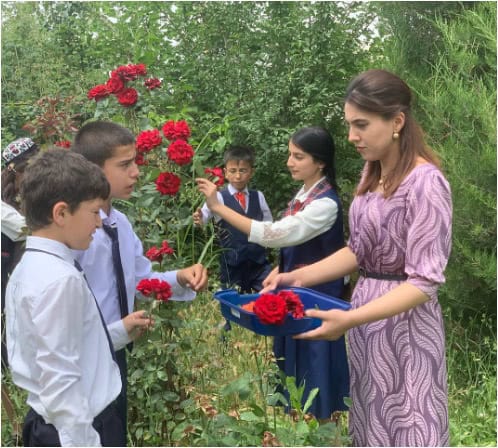
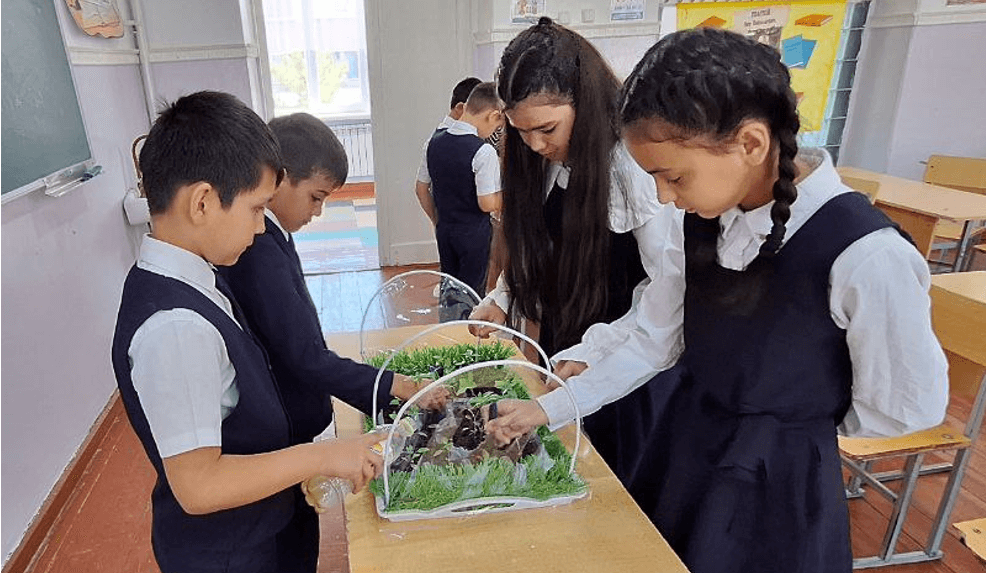
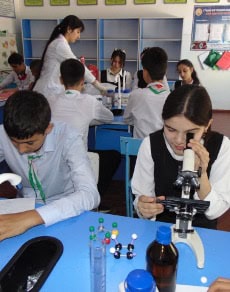
Each year, the Schools2030 Tajikistan supports government partners to conduct a comprehensive programme of HCD trainings in 100 schools across the country. HCD workshops are conducted in a cycle of four stages, each of which lasts for two days with additional time allowed to complete the tasks provided during the HCD trainings. Over 450 participants have engaged in the workshops – below are some of the most promising innovations that have been developed over the last few years.
Download our HCD Tools in Tajik to start creating education innovations in your school.
Schools2030 Human-Centred Design Toolkit
Full version
Schools2030 Human-Centred Design Toolkit
Sprint version
Schools2030 Human-Centred Design Facilitator Guide
Schools2030 Human-Centred Design School Leader Guide
SHOWCASE
Local showcasing opportunities are held throughout the year at school-level and Schools2030 Tajikistan’s Learning Partners in the Tajik government will, each cycle, select the most promising 100 to go on to regional level events. At, these regional events, an assessment committee consisting of representatives from the Learning Partner, the Schools2030 Tajikistan team and Ministry personnel select innovations that will go on to the national and global events, including the annual Schools2030 Global Forum.
At national level, Schools2030 Tajikistan hosts the yearly ‘Innovative Teacher’ awards. Each year, teachers from across the programme and the country come to showcase their pedagogical solutions for improved teaching and learning. Government representatives and other system partners are invited to explore the solutions and select the most promising for further incubation and scaling into other classrooms and parts of the country.
Schools2030 also showcases all the teacher-led innovations in Tajik and Russian, accessible to all the country’s schools, on the Digital Learning Platform.
News and stories from Tajikistan
IMPACT AND LEARNING
Tajikistan
We regularly produce learning and research reports that inform and strengthen our programme delivery. Read and share our latest learnings for Tajikistan or click below to browse all our reports.
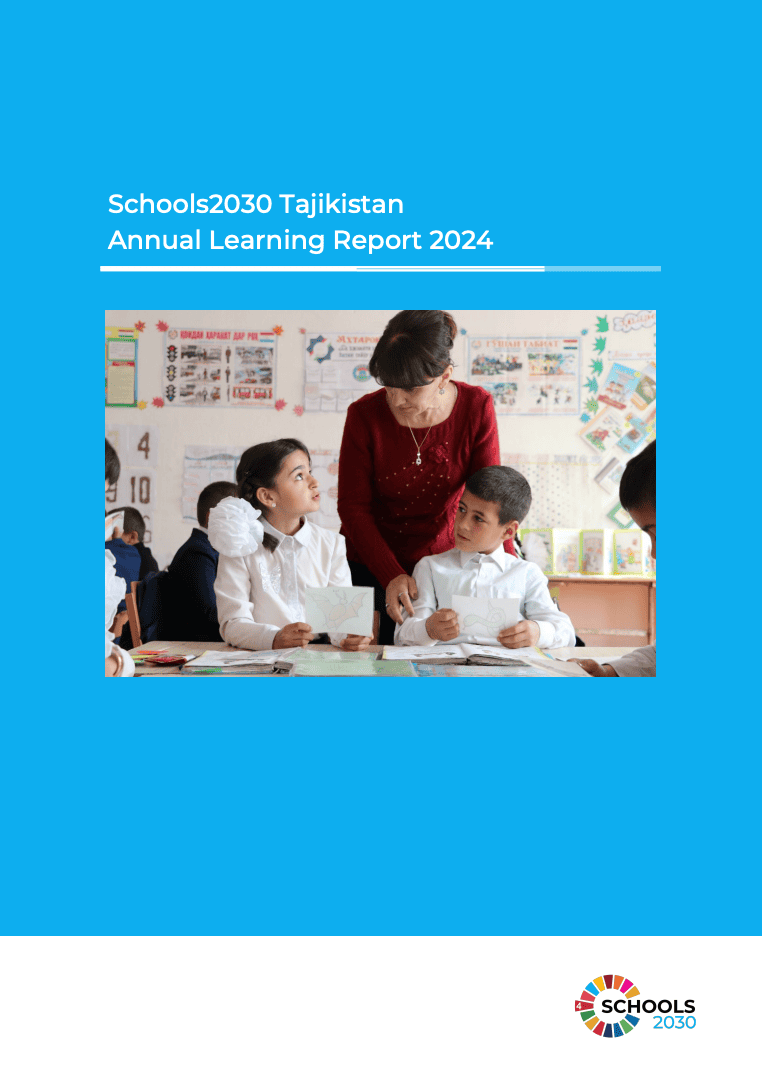
Learning Report 2024
Research Report
OUR TAJIK partners
Country Assessment Partners, Evaluation Partners and Learning Partners
In-country Assessment Partners initially supported the development of Schools2030 assessment tools and offer ongoing guidance for teachers in using them. Learning partners in each country track and measure the efficacy of the innovations and teacher professional development, and produce yearly reports with recommendations for how to make the programme stronger. Find out more about how our global and national partnerships work on our Coalition page.

National Advisory Committee members
Abdulzoda Ziyodullo Nazar
Deputy Minister of the Ministry of Science and Education in the Republic of Tajikistan
Asomiddinzoda Sharofiddin
Head of the General Secondary Education Department of the Ministry of Science and Education in the Republic of Tajikistan
Salomiyon Muhammaddovud
President of the Academy of Education in Tajikistan
Namozzoda Jamshed
Rector of the Republican In-service Teacher Training Institute
Asadullo Najmiddiniyon
Director of the Institute of Educational Development of the Academy of Education of Tajikistan named after Abdurahmoni Jomi
Mirzoshoh Sirojzoda
Deputy Head of the General Secondary education department of the Ministry of Science and Education in the Republic of Tajikistan
Safozoda Mahina
Leading specialist of the International Relations Department of the Ministry of Science and Education in the Republic of Tajikistan
Najmiddiyon Abdusattor
Deputy rector of the Republican In-service Teacher Training Institute on education and innovation
Sharipov Muhammadjon
Director of the Republican In-service Teacher Training Institute in Bokhtar city
Isomadinzoda Muhammad
Director of the branch of the state institution of Republican In-service Teacher Training Institute in Khujand city
Explore Schools2030 in our other countries.