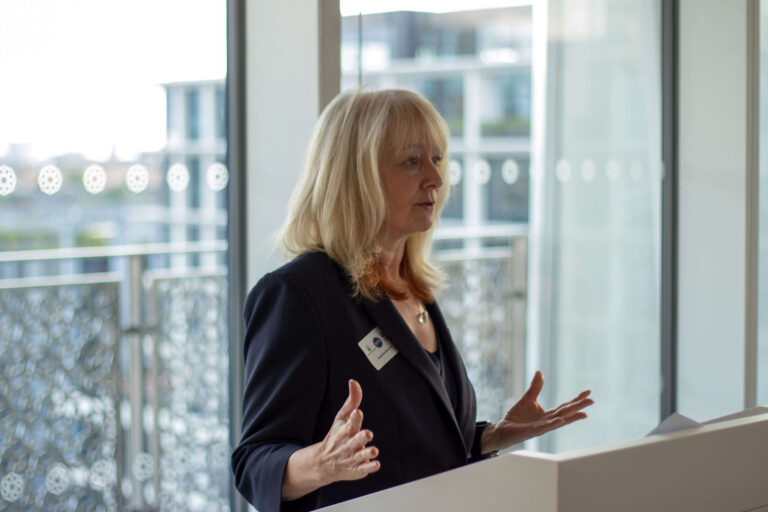
On 25 June 2026 – during London Climate Action Week, and on a day when more than 1,000 UK schools announced partial or full closures due to record-breaking heat – teachers, educators and policymakers from across the Schools2030 network came together for the third session of our 2026 Virtual Forum series: Growing a Green Generation – Teacher Innovation for People and Planet.
Chaired by Rupert Corbishley, Education Advisor at the Aga Khan Foundation, the session opened with a stark reminder: the UK is the sixth least climate-vulnerable country in the world, yet its schools were shutting their doors. For communities across the Schools2030 network – from the floodplains of Pakistan to the rising temperatures of sub-Saharan Africa – the effects of climate change are far more frequent and far more ferocious.
The questions at the heart of the session: what does effective teacher professional development look like when it comes to climate and environmental education? What does it mean for policy, for practice, and for the children in the classroom?
From Kyrgyzstan: Climate education as responsible citizenship
Dr Gulzada Duishebaeva, an education policy expert with over 35 years’ experience in education reform, opened with a view from Kyrgyzstan – a country where more than 90% of the land is mountainous, and where glacier retreat, water insecurity and natural disasters are all too common impacts of climate change.
For Gulzada, climate education is not a standalone subject. It is a cross-cutting theme that should run through every discipline, building not just knowledge, but problem-solving skills, critical thinking and, above all, responsible citizenship. Kyrgyzstan’s ongoing transition to competency-based education and a 12-year school system is creating a window of opportunity to embed this approach across the curriculum and into STEM education in particular.
“Teachers are the heart of progress,” she said. “Until we change a teacher’s skills, we cannot change anybody’s skills.”
From Kenya: Co-designing with teachers
Aisha Abeid, Senior Education Coordinator at the Aga Khan Foundation in Kenya, described a new green and gender course she is supporting 60 school teachers to co-design alongside partners at Teach2Empower. The process is deliberate: teachers test strategies, give feedback on what works and what doesn’t, and shape the course as it develops.
“Teachers are the experts when it comes to learning experiences in the classroom,” said Aisha. “You need to have empathy to understand that if they say this is not working, it is not working indeed.”
Three teachers from Mvita Primary School in Mombasa then shared their own experiences. Vallery Otuomo, a geography and agriculture teacher, described starting with activities that felt real and tangible to students – in this case, planting trees along the school field so that they could create areas for shade and having students document the work on a TikTok page to inspire others. Gloria Omenge, who teaches maths and integrated science, explained how she uses pie charts of greenhouse gas emission data to bring climate into her mathematics lessons; and how, outside the classroom, she is trying to grow flowers in Mombasa’s challenging soil. Their colleague Joseph spoke of ambitions to use the school greenhouse that could supply seedlings to the wider city.
From Tanzania: Climate action as a pedagogical partner
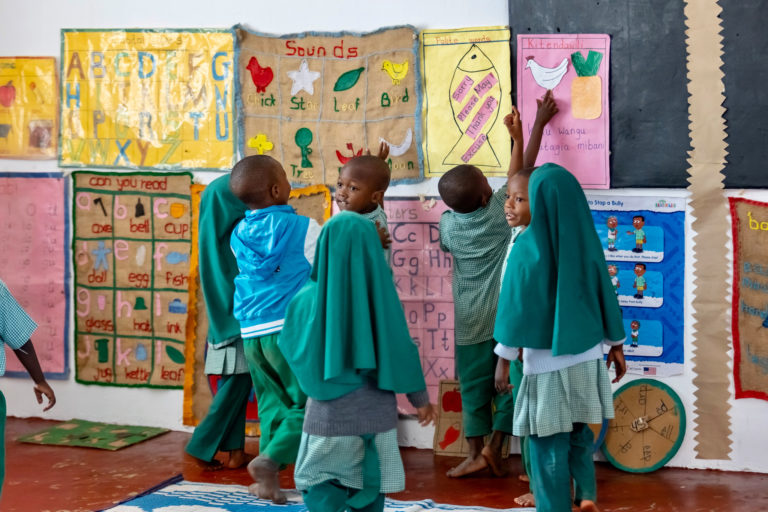
Shaibu Athuman, Schools2030 National Coordinator in Tanzania, outlined how human-centred design has been used since 2021 to support teachers in designing solutions to classroom challenges, producing more than 150 innovations to date. Since 2024, the approach has been extended to climate and environmental education, with teachers and students establishing micro-forests, vegetable gardens, tree nurseries and paper recycling systems across schools.
The shift, Shaibu explained, is not simply about establishing climate actions, but about integrating them into teaching and learning. A Kiswahili teacher, an English teacher, a mathematics teacher – any of them can now use a micro-forest or vegetable garden as a learning partner in their lesson plans. More than 150 teachers are doing exactly this, and over 100 climate-integrated lesson plans have been documented and are being shared with government officials and partner organisations.
Tanzania’s government has also developed national guidelines for integrating climate change management into the education sector. “We are ahead,” said Shaibu, “because we have evidence, and a lot of evidence, from our side.”
Lusajo Chanya, a history and ethics teacher at Nzasa Secondary School, then demonstrated what this looks like in practice, sharing how human-centred design has transformed her classroom, from building eco-latrines and planting school forests to seeing her students form an environmental club entirely on their own initiative. Watch the session to hear her tell it in her own words.
The wider conversation
The teacher presentations were followed by a panel discussion with Gulzada, Alex Banda from VVOB, and Marina Ader from UNESCO’s Greening Education Partnership.
Alex Banda, Strategic Education Advisor at VVOB and lead of the Teach2Empower programme, made the case for bringing green education and gender-responsive pedagogy together rather than treating them as separate training streams. “Climate change and gender inequality are interconnected societal realities that show up together in the same classroom,” he said. Fragmented professional development places an unnecessary burden on teachers; a unified approach is more effective and more sustainable. He also highlighted the critical role of school leaders: schools with engaged leadership are performing significantly better than those without.
Marina Ader, Education Planning Specialist at UNESCO, outlined the work of the Greening Education Partnership — a platform of more than 2,000 partners and 99 member countries working across four pillars: greening schools, greening curriculum, greening teacher training, and greening communities. She emphasised the need for climate education to move beyond science definitions and into action-oriented learning outcomes and for teacher training to resist the temptation of confining sustainability to a single module or elective. “If we train science teachers to teach climate and leave language or history teachers without the tools to do the same,” she said, “we are replicating the very siloed thinking we are trying to change.”
In the Q&A, Alex shared a simple but powerful example from the field: a maths word problem that began with picking plastic bottles from a beach, gently bringing environmental action into everyday learning. Shaibu described a school in Lindi that had been bare land before the programme; today it is green, with students sitting and reading under trees they planted themselves. Aisha spoke of teachers taking climate learning beyond their classrooms and into school assemblies, creating green consciousness across the whole school community.
Four takeaways
Closing the session, Rupert Corbishley drew together what he called the threads running through the conversation:
First, that teachers are at the heart of how climate and environmental education will be successfully delivered and should be treated as curriculum experts and research and development partners.
Second, that fragmentation must stop – in professional development, in the curriculum, and in the way we approach climate learning as a sector.
Third, that the real power of climate and environmental learning lies not just in building climate literacy, but in strengthening holistic learning outcomes: collaboration, critical thinking, problem-solving, agency.
And finally, that this work requires design for purpose – from lesson plans that translate complexity into meaningful learning, to national roadmaps that chart a clear path forward – and the partnerships to get there.
Watch the mini-series that accompanied this event – and join us for Part Four on 17 September 2026.